Environment etiketine sahip kayıtlar gösteriliyor. Tüm kayıtları göster

8 Mart 2015 Pazar

Expanding the Suez Canal: The Authoritarian's Task

Sinking cash into the cash cow: expanding the Suez Canal.
Authoritarian regimes are drawn to massive infrastructure projects like Americans are drawn to obesity-inducing lifestyles; this much is true. Their sheer scale flatters delusions of grandeur of their proponents. However, their size also tends to attract complaints about the scale of operations and the resulting ecological consequences. These being authoritarian regimes championing them, criticisms are casually brushed off. I suppose, then, that it was only a matter of time before the current Egyptian leadership decided on finally expanding the Suez Canal as a flagship project.

The expansion has been on the drawing board for a number of years. However, it's only now that the government-owned enterprise has decided to finally get it done. With few other sources of foreign-exchange earnings--tourism hasn't rebounded yet to pre-crisis levels despite some signs of recovery--this was perhaps inevitable.
Bulldozers push earth and dredgers spit mud round the clock at Egypt's Suez Canal in a race to quickly expand the strategic waterway for two-way traffic, a project trumpeted by President Abdel-Fattah el-Sissi to revive both the country's damaged economy and visions of nationalist glory.
While the government's goal of more than doubling annual canal revenues to some $13 billion in less than a decade appears overly ambitious, shippers and analysts say the reduction of waiting time to almost nothing will draw some vessels. Any major increase, however, depends on something unlikely to happen soon — a large jump in European demand fueling greater shipping from Asia.
There is a debate as to whether expanding the Suez Canal will result in more shipborne traffic going through it. One school of thought is that volume is ultimately dependent on the level of trade between the two continents it mostly links--Europe and Asia. Seen from this perspective, matters are not so optimistic with Europe's economy moribund and China's economy slowing down. Indeed, characterizing it as a vanity project is quite accurate:
"It all depends on the trade volume between East and West, not the capacity of the canal," said Xu Zhibin, managing director for the Egyptian affiliate of China's state-owned COSCO, one of the world's top container shippers. "Volume will rise if the European economy begins to boom ... As of now, I don't think that there will be an increase in volume."

The expansion's importance is more long term, as it will better position the canal to keep its prominence in the future. In the short term, it appears to be more of a prestige exercise to boost national pride after four years of demoralizing turmoil and to shore up the image of President el-Sissi as the savior of the nation [...] In a dramatic move after his election, he ordered that the Suez Canal expansion, envisaged as a three-year project, instead be completed in one year.
Another, more optimistic school of thought is that the volume of traffic passing through the expanded canal is not so much determined by Europe-Asia trade but by other microeconomic factors: the fees that will be charged for passage and the costs of fuel. Right now fuel is cheap and so many shipping lines are choosing to go around the Cape of Good Hope in circumnavigating the African continent. That is, the longer route (which requires more fuel) is offset by not having to pay the canal fee. That situation can readily change though depending on the course energy prices take:
The canal is also one of Egypt's biggest foreign currency earners, drawing in a record $5.5 billion in 2014. With the expansion, the canal authority projects it can double the number of ships transiting daily to 97 by 2023, boosting toll incomes to $13.2 billion that year. But hitting that target requires not just a jump in global economic growth. It depends on fuel prices and the canal's fee structure, all factors that shippers weigh to determine whether it's worth taking the canal or the long route around Africa...

"If petroleum and thus fuel prices increase, the canal becomes more attractive, but now they are decreasing, which means the opposite is true," said Xu, of COSCO, which on average sends a vessel a day through the canal. "If the tolls, which are based on the old oil prices of over $100 a barrel, increase, some shippers will want to travel via the Cape of Good Hope."
Naturally yould expect Egyptian authorities to be championing higher energy prices worldwide, but it's not something they can really influence. So it's all to play for whether this investment will pay off.

There are also ecological considerations to this expansion. Environmentalists are also wary of more invasive species being introduced to the Mediterranean: 
Because of the Suez and its expansion, the Mediterranean Sea’s problem with invasive species is becoming “worse than anywhere else on earth,” said Bella Galil, a senior scientist with Israel’s National Institute of Oceanography...

Dr. Galil said, “Marine invasions are forever,” because it is impossible to remove an invasive species from the sea after it has arrived. The sea and its complex food web, she added, are “teetering.”
Some invasive species hitch rides in the ballast water of ships, an issue that the International Maritime Organization is trying to address through new rules regarding the treatment of ballast water to remove stowaways. Others cling to ship hulls, but many creatures simply swim through the Suez Canal itself.

1 Mart 2015 Pazar

Hebei & Today's Super-Polluting, Overproducing China


The Once-ler would feel right at home in Hebei.
A significant part of the world-famous air pollution choking the Chinese capital of Beijing actually comes from nearby Hebei province. Hebei is a truly Dickensian place, with coal-fired plants blackening the skies, with additional help from steel mills, cement plants and more. The excesses of the industrial revolution never really left us; they just picked up sticks and moved to China. Given mounting concerns over pollution and overproduction, Hebei has been marked for dialing back of its dark, Satanic mills that manufacture hell on earth:
Last year the province’s economy was one of China’s worst-performing, growing 6.5 percent, below its 8 percent target. Hebei’s mills produce some 25 percent of China’s more than 800 million tons of steel. The province is one of the country’s biggest glass and cement manufacturers. All three industries face serious oversupply, much of it built up since cheap loans became available after the 2008 global financial crisis. China’s steel factories run at 72 percent of capacity: A mill generally has to run at 80 percent to make a profit.

Under pressure from top leaders, provincial authorities have promised to cut capacity in steelmaking and cement manufacturing by 60 million metric tons each by the end of 2017 and reduce coal use by 40 million tons.
The future, supposedly, lies in smaller steel plants--mini-mills, if you will--closer to the coasts which receive coal from Australia:
By the time Hebei finishes restructuring its industries, an estimated 200,000 steel jobs will be gone, the Hebei Provincial Development and Reform Commission says. The factory shutdowns fit with a national plan to consolidate steel production in larger, more efficient mills closer to the ports that bring in Australian iron ore, says Michael Komesaroff, principal of Urandaline Investments, a Melbourne-based consulting firm. “The transition is coming at a much faster rate and on a larger scale than had been previously anticipated. That’s making it much harder for everyone to manage,” Komesaroff says.
It will be interesting to see if China can transition from Hebei's high-pollution, heavy-industry model of economic growth since it epitomizes the PRC's old-style "commanding heights" approach, dominated as it is by state-planning. Having created a overproducing, super-polluting, Hebei, can the same sort of centralized planning deliver on a lean, mean and green Hebei? Perhaps state direction has run its course; or perhaps not. At any rate, the preponderance of half-finished apartment complexes also speaks to the misallocation of credit which has occurred post-global financial crisis in China to accompany the ills mentioned earlier.

The apparatchiks had them built but nobody came.

14 Ocak 2015 Çarşamba

How Cheap Oil Saved the Arctic From Drilling

Save us from those "saving" the Arctic from discontinued plans for oil and gas drilling there.
There has been much hot air--gas, if you will--expended in the past few years over the potential dangers of drilling for oil and gas near the Arctic circle. I myself am not fully convinced about the climate justice in first having Arctic oil reserves made available to human exploration by burning fossil fuels that have played a part is causing polar ice to melt, then obtaining more fuel to shrink the aforementioned polar ice anew. There's even been a high-profile campaign aimed at Lego (of all companies) to get Shell to stop exploring these areas.

The recent plunge in oil prices as massive production continues untrammeled is having interesting effects the world over--including the Arctic. As it turns out, northern climes where it was previously economic to explore and eventually drill way above $100/barrel are no longer so when you have predictions that we will soon have $40 oil at spot prices. So, environmentalists are rejoicing for now in the misfortune that has befallen the evil energy firms who endanger these ecologically sensitive areas with the possibility of oil leaks and so forth:
The Arctic -- spanning Russia, Norway, Greenland, the U.S. and Canada -- accounts for more than 20 percent of the world’s undiscovered oil and gas resources, including an estimated 134 billion barrels of crude and other liquids and 1,669 trillion cubic feet of natural gas, according to the U.S. Geological Survey. That’s almost as much oil as Iraq’s proved reserves at the end of 2013 and 50 percent more gas than Russia had booked, BP Plc (BP/)’s Statistical Review of World Energy shows.

Yet, explorers seeking a piece of the Arctic prize have been tripped up for years. After spending $6 billion searching for oil off Alaska over the past eight years, Royal Dutch Shell Plc (RDSA) in October asked for an extension of licenses as setbacks including a stranded oil rig and lawsuits risk delaying drilling further. Cairn Energy Plc (CNE) spent $1 billion exploring Greenland’s west coast in 2010 and 2011 without making commercial discoveries, and OAO Gazprom (OGZD) has shelved its Shtokman gas field in the Barents Sea indefinitely on cost challenges. 
The militants at Greenpeace, for one, are quite pleased with this turn of events:
Environmental group Greenpeace has occupied oil rigs from Norway to Russia, arguing a spill would cause irreparable damage to ecosystems that sustain animals from polar bears to birds and fish. The possibility that economically marginal fields such as Arctic deposits might be stranded as governments adopt stricter climate policies has also shaken some investors.

The Brent crude benchmark fell 1.9 percent to $45.70 a barrel, deepening losses from the lowest closing price since March 2009. Statoil declined 1.4 percent to 127.3 kroner at 9:50 a.m. in Oslo, extending losses to 35 percent since a June high. 
As oil companies cut spending to cope with falling prices, already costly and risky Arctic projects will fall down the priority list even if crude is expected to recover by the time production starts, Henderson said. Global capital expenditure will probably drop by more than 20 percent this year, according to a Jan. 9 note from Sanford C. Bernstein. Like Statoil, Dong Energy A/S and GDF Suez have returned Greenland licenses because exploration has become too expensive, Danish newspaper Politiken reported.
Until oil prices climb again and these firms begin reconsidering extraction in these marginal regions, I'd save my attention for...other things.

2 Ocak 2015 Cuma

The Enviro-Pope: "Sin" of Climate Change?

Having "greened" the Vatican, the Pope seeks to do the same the world over.
The land is mine and you are but aliens and my tenants. Throughout the country that you hold as a possession, you must provide for the redemption of the land - Lev. 25:23-24. For all its faults, there has never been much doubt that the Roman Catholic Church has been solidly in the environmentalist camp. After commencing on the installation of a massive solar panel in 2008 pictured above, the Vatican has solidified its (quasi-)national position as a leader in green energy by having the most solar power installed per capita.

The solar panel installation at the Vatican was initiated by Pope Francis' predecessor, Pope Benedict XVI. Now, however, the former is seeking to move past the immediate confines of the Vatican in bringing the environmental message to the faithful. Around July 2014, there were rumblings about how he was preparing an encyclical--typically a letter from the Pope to all the bishops--concerning environmental matters. Hence some consultations he held with them. For instance, Fr. Michael Anthony of the Franciscan order previewed this "green" encyclical:
The Pope himself brought up the issue of the environment. And he talked about his deep concern that we need, the Church needs, to find the way to respond, using the best of science. But also using the best of goodwill of all of humanity, to bring together a consensus on trying to respond to the crisis, the ecological crisis...

Keep in mind that the Pope, the Church, in October [2014], will have a Synod on family life. There will be a pre-Synod and then the Synod. So the Pope is gonna be very busy preparing for that Synod. So, some time after October, maybe November. He might wait until the beginning of the new year.
A few days ago, we received further news that these plans are on track. After visiting the Philippines later this month--especially emblematic of climate change concerns given the wake of supertyphoon Haiyan--the environmental encyclical is due out in March. Already there is talk of a new schism: Whereas the George W. Bush-esque evangelicals Stateside supported the Vatican's conservative stance on social issues, their climate change-denying ways are likely to come into open conflict:
Pope Francis is due to publish an encyclical he feels is so important it will be printed and distributed to parishioners in their pews. Pope Francis plans to publish his long awaited encyclical on the environment and he plans to tackle the issue of global warming head on...

This March, following a visit to the Philippines, Pope Francis will publish an encyclical on the environment that insiders say will tackle the issue of global warming head on. Pope Francis is hoping to have some impact when world leaders meet to discuss climate change in Paris next year. The encyclical will have one definite impact in the United States - it will chagrin conservatives in the U.S. who generally believe that global warming is a hoax.
There is a tendency to interpret the Vatican in terms of largely Amerocentric labels of conservative or liberal, Republican or Democrat, but we are reminded that these labels matter less in a less parochial, more global context:
Pope Francis, and the Church itself, defy political labels. The Church is far higher than any political persuasion and is concerned with Truth, not political preferences. The publication will be a reminder to American political conservatives that Pope Francis defies all attempt to label him as one thing or another. He is neither conservative, nor liberal, but he is Catholic. The coming encyclical is informed by the Vatican's Pontifical Academy of Sciences, the world's single-longest running scientific mission. The institution has already affirmed that global warming is real and a threat to people around the world, especially in developing nations. 
There is also much to be said about combining findings from science with guidance on the appropriate responses of the faithful to climate change:
It is easier to simply consign the issue to the dustbin of "myth" and stop thinking about it...However, finding the moral balance we need to strike between long and short term gains, between the dignity of individuals and the rights of others to generate a living through their labor, isn't a simple task. This is why the direction of Pope Francis and the Church, guided by the Holy Spirit, will be so welcome by most of the world. 
Note that in the title I have put "sin" in quotation marks since the wording of the encyclical on, yes, man-made climate change is yet uncertain. As a preview, possible climate change discussions would involve whether anthopogenic climate change constitutes a sin of omission (neglect) or the rather worse sin of commission. In turn, this and other distinctions hinge of how Biblical and other relevant texts place importance on environmental stewardship.

Say what you will about the Roman Catholic Church, but it undoubtedly takes the lead among religious authorities on this key topic. Meanwhile, watch this space come March as we await the forthcoming encyclical: videmus, speramus.

14 Ekim 2014 Salı

Brent Spar 2: Greenpeace, Lego & Shell's Betrayal

This WSJ feature is sponsored by, er, Shell.
Environmentalist activists are not infallible despite being ostensibly well-intentioned. Common failings include impractical courses of action as well as those which actually make the situation worse. With regard to the latter, Greenpeace has some history with energy titan Shell. In 1995, Greenpeace singled out Shell for the planned sinking of an exhausted oil platform, Brent Spar. Greenpeace argued that it was better to bring the platform on land and dispose it from there at considerable additional expense. After making a huge racket, Shell eventually bowed to the environmentalists. However, this action was foolish and misguided. In a study published in the prestigious journal Nature, it was explained how sinking the platform into the sea as originally planned was actually the ecologically-friendly alternative:
However, the true scandal may have never made it to the public: In June 1995, a study was published in the scientific journal “Nature”. This study stated that the impact on the environment by sinking the Brent Spar would have been minimal and the authors even said it would have been a gift to the eco-system. In September 1995, Greenpeace had to publish publicly that the 5,500 tons of leftovers of oil they assumed to be in the Brent Spar, was too much. In October 1995, the assessment of the Brent Spar by a Norwegian independent institution found that it was only 75 to 100 tons of oil. This is 1.36% – 1.82% of the amount assumed by Greenpeace. In retrospective, it seems to be true that sinking the Brent Spar would have been the best option, also ecologically.
Good job, Greenpeace. Nowadays, we have "Brent Spar Round 2" as Greenpeace has singled out Shell again for its role in Arctic drilling and targeted Lego for creating toy sets which feature Shell gas stations and the like via a viral YouTube video. Always loving irony, the WSJ feature on this incident was preceded by--you guessed it--a Shell video playing up its alternative energy portfolio (see picture above). Anyway, on to the matter...
A 1-minute, 45-second video has ended a long-term relationship between Lego and Royal Dutch Shell. The Danish toymaker said today that it will not renew a co-promotion deal with Shell, after a Greenpeace video linking Lego with the oil company’s Arctic drilling program went viral.

The video, which shows an Arctic landscape built of Lego blocks being swallowed up in a pool of black oil, “may have created misunderstandings among our stakeholders about the way we operate,” Lego Chief Executive Jørgen Vig Knudstorp said in a statement. Greenpeace has been pressing Lego to end a partnership signed in 2011, in which co-branded Lego toy cars are sold at Shell stations in some countries.

Greenpeace, in a statement on its website, called the decision “fantastic news.” In a statement issued by its London press service, Shell said it did not comment on contractual matters. “Our latest co-promotion with Lego has been a great success and will continue to be as we roll it out in more countries across the world,” the statement said.
I myself have some distaste for Arctic drilling, but I certainly don't think that targeting Lego is ideal. After all, remember that Lego pieces are made of acrylonitrile butadiene styrene (ABS). ABS is a petroleum-based product, i.e. a "petrochemical" derived from fossil fuels.

Lego disowning petroleum-based products is like McDonalds disowning meat production. Ironic, and worst of all, dumb. First off, Greenpeace should not have targeted Lego, a marketer of petroleum-based products. Second, Lego was doubly stupid to give in since it undermines the whole business model of selling petrochemical-based toy elements. Makes you sad, doesn't it?

6 Temmuz 2014 Pazar

Does Gazprom Fund European Anti-Fracking Activists?

Paid for by Gazprom?
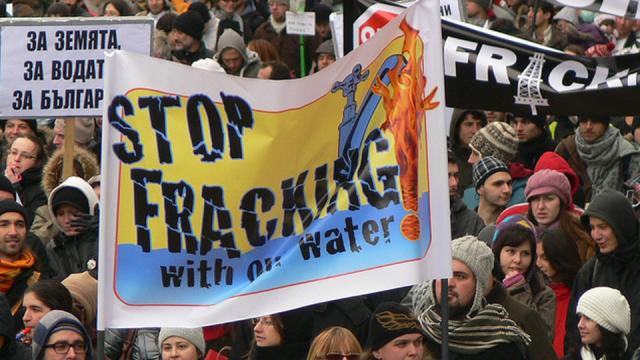
As far as conspiracy theories involving Russia go, this one takes the cake. Unlike the United States which has experienced a renaissance in energy production through the use of hydraulic fracturing or "fracking" in common parlance, Europe has not warmed to the technology. Many of the objections come from environmentalists who express concern over water usage, water pollution, earthquakes and so on. A few weeks ago, however, NATO Secretary-General Anders Fogh Rasmussen said that Russia was working to sabotage European energy independence from its oil and gas by undermining support for fracking. The alleged preferred means? Covert Russian funding for environmental groups:
Anders Fogh Rasmussen, secretary-general of the North Atlantic Treaty Organisation (Nato), and former premier of Denmark, told the Chatham House thinktank in London on Thursday that Vladimir Putin’s government was behind attempts to discredit fracking, according to reports.

Rasmussen said: “I have met allies who can report that Russia, as part of their sophisticated information and disinformation operations, engaged actively with so-called non-governmental organisations - environmental organisations working against shale gas - to maintain European dependence on imported Russian gas.” He declined to give details of those operations, saying: “That is my interpretation.”
For obvious reasons, NATO is at pains to point out that Rasmussen is expressing an opinion and not the position of the organization. That said, he explicitly identifies unusual Russian "concern" about the hazards of shale gas:
I would put it to you, though, that the real question, or the real power and the real leverage Russia has is its position as a key gas supplier to Europe. And indeed I would have to respectfully put it to you that a far better use of resources by Europe, and particularly the European Union, would be to invest heavily in shale gas production.

And indeed I would suggest to you that it would be far easier to sell that notion, especially, let's face it, the shale revolution is a technology and a triumph of innovation. To spend money on that would be… produce a far higher return than defence expenditure. Just a final footnote. Mr. Putin on one occasion actually lectured Germany about the environmental hazards of shale. So he’s well aware of the strategic value of the shale revolution.
What is especially odd is how Putin becomes an environmentalist all of a sudden when Europe has the technology within its grasp to wean itself off Russian energy. In the context of climate change, for instance, it couldn't care less about the environment. Let's just say it is self-interested in raising environmental concerns for this particular issue that can hurt its core economic interests. For them, it's every which way but lose. Meanwhile, the "Russian collaborator" taunt is being leveled against all sorts of European environmental protesters:
[Romanian protester] Munteanu says she has been accused of taking bribes from Russian companies to participate in the demonstrations. She says that she suspects the local authorities, interested in dividends from the shale gas drilling, were spreading such rumours. "They are welcome to come to my home and check that I haven't been taking money," she says.

Munteanu and her neighbours are not the only anti-fracking protesters accused of taking money from Russia to campaign against shale gas. Anti-fracking protests across Europe have come under fire in local and international media. Most recently, the secretary-general of NATO, Anders Fogh Rasmussen was quoted as saying that Russia has engaged with environmental organisations working against shale gas in its efforts to keep Europe dependent on its gas exports. 
Meanwhile, Russians are being fingered behind strident anti-fracking rhetoric:
At the same time, Russia and its gas giant Gazprom have also established a strong lobby to protect their interests in Europe, including employing former German Chancellor Gerhard Schroeder. Russia has pushed for major projects to expand delivery of natural gas to Europe, including Nord Stream and South Stream pipelines. The construction of the latter was recently shelved in Bulgaria after pressure from the EU.

According to Krassen Stanchev, a Bulgarian economist and head of the Institute for Market Economics, the influence of Russia and Gazprom in Bulgaria surfaced during parliamentary debates over a bill to ban shale gas exploration, which was passed in 2012. "The whole procedure and arguments are obvious evidence of corruption in the Parliament, [under the form of] serving the interests of Gazprom by all parliamentary factions," he said. 
Interesting stuff. The timing of the emergence of environmental movements--i.e., when Russia started to see the commercial threat--may be suspect:
But one thing has for years puzzled energy experts: Well-organized and well-funded environmental opposition to fracking in Europe sprang up suddenly in countries such as Bulgaria and Ukraine, which had shown little prior concern for the environment but which are heavily dependent on Russia for energy supplies. Similar movements have also targeted Europe's plans to build pipelines that would offer an alternative to reliance on Moscow.

"It's very concrete; it relates to both opposition to shale and also trying to block any alternative pipelines with environmental challenges," said Brenda Shaffer, an energy expert at Georgetown University. "There is a lot of evidence here; countries like Bulgaria, Romania, Ukraine being at the vanguard of the environmental movement is enough for it to be conspicuous," she said.
My opinion is that regardless of mooted Russian meddling, [real] environmental opposition is strong enough in core EU states to dissuade fracking from becoming a significant source of energy for Europe in the near future.

11 Haziran 2014 Çarşamba

Good Environmental News From China (Really)

China often gets a bum rap for its environmental performance. This can be unfair as it is with the US continuously harping on the bad air in Beijing when, in reality, the world's most polluted cities in terms of particulates are instead concentrated in the Indian subcontinent. Yes, its overall performance leaves something to be desired, but this is somewhat mitigated by its less-developed status as per the principle of common but differentiated responsibilities and respective capabilities (CBDR/RC). Moreover, there are areas where China is actually doing quite well environmentally-speaking.

A case in point is afforestation, or planting trees in areas that did not have them. China's top-down political economy has well-known drawbacks, among them excessive prioritization of growth by officials at the expense of environmental stewardship. On the other hand, efforts to promote afforestation appear to have benefited the environment. Once decided on afforestation from public pressure and fears of deforestation, China began planting trees in droves. Studies suggest benefits are already evident even if locating where to plant trees is an important consideration:
China has the largest afforested area in the world. Afforestation not only contributes to increased carbon storage but also alters local albedo and turbulent energy fluxes, which offers feedback on the local and regional climate. This study presents previously unidentified observational evidence of the effect of large-scale afforestation on land surface temperature (LST) in China. Afforestation decreases daytime LST, because of enhanced evapotranspiration, and increases nighttime LST. This nighttime warming tends to offset daytime cooling in dry regions. These results suggest it is necessary to carefully consider where to plant trees to achieve potential climatic benefits in future afforestation projects. 
Still, others caution that these afforestation efforts are bound to fail since tree varieties are not often planted in areas suited for them, and the resulting monocultures leave afforested areas vulnerable:
More recently, however, the nation appeared to be reversing that trend, largely with massive campaigns to plant trees. In the first decade of the new millennium, China annually increased its forest cover by 11,500 square miles, an area the size of Massachusetts, according to a 2011 report from the United Nations.

But scientists and conservation groups are beginning to voice concerns about the long-term viability of significant aspects of China’s reforestation push. Of greatest concern is the planting of large swaths of non-native tree species, many of which perish because their water needs are too great for the arid regions in which they are planted. China also is cultivating large monoculture plantations that harbor little biodiversity.
Nor are the planting practices of China particularly efficient, they say:
To be sure, trees have been planted, with millions of seeds dropped from airplanes and millions more small seedlings manually planted. But in an extensive analysis of such “afforestation” efforts published last year in Earth Science Reviews, Beijing Forestry University scientist Shixiong Cao and five co-authors say that on-the-ground surveys have shown that, over time, as many as 85 percent of the plantings fail.
 I think the afforestation effort is admirable even if fine-tuning is involved in a number of respects. First and most obviously, selecting areas which yield climate benefits systematically instead of just seeding vast areas willy-nilly is welcome. Second, tailoring tree varieties to these areas is another good idea. Third, mixing varieties to avoid monoculture is also potentially welcome. Still, it's good to know that even China has some environmental success stories. Go ask the World Bank.

4 Haziran 2014 Çarşamba

Sympathy for the Pirate? Gulf of Aden Overfishing

Give a man no fish to catch...and he grabs an AK-47 & boards a skiff?
Fisheries management does not top the list of attention-grabbing international studies topics, but maybe we should pay more attention to it. (Unless you're an environmental studies or geography studies major perhaps.) Increased patrolling in the Gulf of Aden by various international forces coupled with better-prepared transit by commercial vessels--don't hog the shoreline, don't overload the boat so its deck sags and is easy to get ahold of, increase speed through the danger area, etc. have done their part in reducing maritime piracy. That said, the danger still hasn't entirely gone away:
The World Bank noted that "piracy imposed a hidden tax on world trade [...] Piracy costs the global economy roughly US$18 billion a year in increased trade costs — an amount that dwarfs the estimated $53 million average annual ransom paid since 2005," the bank said in a 2013 report. "It's expensive, so the day when the shipping companies say 'That's enough,' the whole thing can kick off again quite quickly," warned [Eurocrat] de Poncins.

And given that attacks are becoming rare, ship owners and captains are starting to let their guard down, EU Naval Force officials say, reporting that ships are again navigating at slower speeds and sailing closer to the coast in order to save fuel. "We are becoming victims of our own success," said Lieutenant Michael Quinn of Atalanta, adding, however, that "the conditions on the Somali coast have not changed and industry must not relax."

The EU Naval Force's mandate applies only to the sea; it is not authorised to launch land attacks on the pirates who still control, notably in Puntland, large sections of the Somali coast. Clan militia, pirate networks, and criminal gangs share power in this country deprived of an effective government since 1991.
As long as the factors which drove piracy remain--lawlessness, civil breakdown and a lack of "legitimate" livelihoods--the problem cannot be entirely solved since there will always be those willing to risk being caught in the absence of other alternatives. One of the more intriguing arguments has been that these pirates were formerly fishers driven to hijacking vessels by large commercial (read: Asian and Western) vessels overfishing the Gulf of Aden. There is some geographic evidence that this area has been overfished [1, 2] and the argument goes like this:
In looking at the fisheries maps, I noticed that the coast of Somalia was one of those places where overfishing had taken place; in a subsequent conversation with a colleague I learned that one hypothesis about the Somali pirates was that they were unemployed fishermen, who had to find another way of earning a living now that they had no place available to catch fish. At the time, this was a hypothesis and not backed up with a scientific survey; advocates never really mentioned the threat of piracy as a reason why we shouldn’t overfish our oceans to the point of depletion.

The theory held my attention though, and after a little research I found a map of global shipping lanes and looked for other places where a confluence of routes brought cargo ships close to countries with weak legal structures.  West Africa matched the criteria, a region whose overfishing had been highlighted both on the overfishing maps as well as in the documentary, “The End of the Line.”
More formally, this is the "lack of fisheries management" (due to absent governance) argument:
The relatively small area in which fishing takes place means that most important fisheries resources can be considered as shared stocks. Many are truly highly migratory, for example the tuna and small shoaling pelagic species of the Region. However, overfishing by industrial trawlers in the Gulf of Aden nearshore waters during the 1970s and 1980s has depleted some valuable resources, such as cuttlefish and deep sea lobsters. These stocks have not fully recovered, due primarily to a lack of effective fisheries management. 
However, the World Bank report cited earlier (warning: large download) disagrees with this notion:
Somalis often argue that piracy started off as self-defense by impoverished fishermen against international fleets fishing illegally in their waters. Over time, even as piracy evolved into a much broader business and despite the fact that fisheries were never a leading economic activity in Somalia, this “Robin Hook” (Shortland 2011) interpretation has by now become a powerful legitimizing narrative...

Moreover, the analysis finds no evidence of overfishing. While illegal fishing has often been associated with overfishing and the depletion of stocks available to Somali fishermen, the data do not reflect that. It was found that high total tuna production in a given year does not presage low production the next year either for an individual fleet or in the aggregate. In fact, at the aggregate level there is solid evidence that high tuna catches in one year predict high catches the next year. If stock depletion were a major problem, the productivity of the fleets remaining in piracy-affected waters should be higher after the piracy surge because so many fleets moved to safer water. However, no productivity boost can be seen in the data.
I do not think the World Bank report's argument is conclusive. It basically goes like this: since years when the Gulf of Aden area experienced elevated catches were not followed by lean years, then these waters were not "overfished" to begin with. The World Bank is more concerned with flow-level data (# of fishes caught annually) when overfishing is more a stock-level phenomenon (# of fishes left in a particular marine area). True, there is a problem of data availability regarding the true level of stocks in the Gulf of Aden area given that few international organizations currently operate there since "Somalia" is largely a collection of warlord-occupied lands.

This much the World Bank and I could probably agree on, though: If "legitimate" livelihoods were to be had in Somalia, then many of these folks wouldn't resort to this kind of low-probability opportunism. Just as cutting the "supply side" didn't work in the war on drugs, so too is the piracy problem not solvable by focusing mostly on force. 

13 Mayıs 2014 Salı

China, India, US & Pol Eco of Pollution Statistics

We've been conditioned to believe that Chinese cities are the world's most polluted. After all, what would you expect from an authoritarian regime that brooks no dissent--especially about how damaged the environment is? With China becoming the world's factory--it seems every other consumer good is made there nowadays--this expectation is further reinforced. We all know who the environment's bad guys are...or do we, really?

Well surprise, surprise: actually, the country with the dubious distinction of having the most polluted cities in the world in terms of air quality is India, not China. Yes, precisely--the world's largest democracy that supposedly focuses on "clean" services like business process outsourcing is numero uno globally. The World Health Organization stats speak for themselves after I chart the concentration of particulate matter 2.5 micrometers or smaller in the air of these cities (PM2.5) that are particularly dangerous since they can penetrate deeply into our lungs. More information from the 2014 report can be found here. The top 15 are:
As per the country's travel campaign, it's incredible India although not in the manner intended. There's not even a contest going by this measure since Beijing, China ranks 77th worldwide among WHO monitoring stations (a PM2.5 of 56). As you can see, it's almost a lockout for the Indian subcontinent save for Qatar and Iran. Yes, Beijing PM2.5 peaks at unbelievably high levels with some regularity, but on average, particulates in these cities on the Indian subcontinent are much more plentiful. Statistically speaking, fixating on Chinese pollution by mentioning Beijing's spikes in PM2.5 is unwarranted. True, China is plenty polluted in many other ways--water, arable land and so forth--but on the measure it is most commonly criticized on, there are others doing much worse.

What, then, explains popular beliefs that China is the world's most polluted country? There is likely a political economy of statistics at play. The United States--a large democracy and service-oriented economy just like India--would of course prefer that a communist and authoritarian system be blamed for intolerably high pollution. CCP authorities hide how bad the situation is, etc. Hence the American Embassy in Beijing providing its own air quality stats to "embarrass" Chinese authorities over their environmental destruction:
Despite Beijing’s widespread reputation of having some of the most polluted air of any major city in the world, an examination of daily pollution figures collected from both cities suggests that New Delhi’s air is more laden with dangerous small particles of pollution, more often, than Beijing’s. Lately, a very bad air day in Beijing is about an average one in New Delhi...

The United States Embassy in Beijing posts on Twitter the readings of its air monitor, helping to spur awareness of the problem. The readings have more than 35,000 followers. The United States does not release similar readings from its New Delhi Embassy, saying the Indian government releases its own figures [my emphasis].
Aside from the questionable assertion that the Chinese government does not collect its own pollution figures, that Indian authorities do is also a convenient excuse:
“It’s always puzzled me that the focus is always on China and not India,” said Dr. Angel Hsu, director of the environmental performance measurement program at the Yale Center for Environmental Law and Policy. “China has realized that it can’t hide behind its usual opacity, whereas India gets no pressure to release better data. So there simply isn’t good public data on India like there is for China.”
Putting 2 and 2 together, the picture we arrive at is that American scaremongering about Beijing's air quality is undoubtedly responsible for part of this misplaced focus. In order to bash an ideological rival, it harps on pollution in a city whose pollution isn't nearly as bad as that of others--like chummy India whom it shares nuclear technology with. Petty American political points scoring, however, distracts focus from where the real problems lie. What to do with air pollution on the Indian subcontinent is a particularly urgent one for serious-minded people to tackle. If you are genuinely concerned about the environment, blindly listening to frivolous Americans will lead you astray. I won't even go into who exactly buys all those China-made products.

The political economy of pollution statistics it is.

22 Nisan 2014 Salı

Achtung Baby: Real Dangers of German Denuclearization

Chalk this one up as a victory of politics over common sense. Imagine adopting an energy policy that (1) leaves you vulnerable to the whims of vainglorious and unreliable energy suppliers, (2) raises the costs of energy provision, and (3) pollutes the environment more as you return to coal burning, and (4) opens you up to litigation for forsaking agreed-to contracts to maintain nuclear power plants. As it so happens, one of the most rational nations on Earth, Germany, is doing precisely that.

In the wake of the 2011 Tohoku earthquake in Japan, European countries have reassessed their use of nuclear power. The French who already rely on nukes for about three-quarters of their power sensibly shrugged off this concern, correctly reasoning that they were not in the earthquake-prone Pacific ring of fire and had more robust designs. They've even built more plants since. The Germans, however, took fright for reasons that are obscure to me. What, then, have been the negative implications of Germany's decision to phase out nukes by 2022? Let us count the ways...

1. Heightened reliance on energy from a dodgy chap with Cold War fantasies - so Vladimir Putin is a swell guy for frightening EU countries and boosting bond prices. However, he is hardly a reliable economic partner. As Germany mothballs more nuclear plants, its reliance on Russia will increase unless it significantly boosts production from alternative sources--fracking, renewable energy, etc:
Germany, faced with the possibility that restricted energy supply from Russia could undermine its efforts to end nuclear power, needs to reduce its reliance on Russian energy and compensate the loss with renewable energy, Steinmeier said. Germany, which imports one-third of its natural gas from Russia, has decided to phase out all of the country's nuclear reactors by the end of 2022 in the wake of the nuclear accident at the Fukushima Daiichi power plant that broke out in Japan in 2011.
2. Increased costs of energy provision will hit German industry squarely in the gut - as one of the world's genuine manufacturing powerhouses, Germany is set to endure a largely self-inflicted setback. German researchers have modeled the impacts of denuclearization and state:
The model analysis with the electricity market model MICOES shows that the nuclear phase-out has a visible effect on the wholesale electricity prices that will increase compared to the situation with a lifetime extension of nuclear power by 11% in 2015 and 23% in 2020.
3. The quite frankly idiotic German phase-out not only increases environmentally unfriendly coal burning in Germany but also coal and nuclear production in neighboring countries that are ramping up to fill German energy demand. Net result? Zero improvement in cleaning up the air in Europe or making nuclear power "safe" as production is shifted to neighboring countries whose technologies are generally less advanced than Germany's (with the exception of the French):
Previously a net exporter of electricity, Germany now imports as much electricity as it sells abroad. Removing so much German electricity from the market has benefited power companies in neighboring countries that rely heavily on coal and nuclear power, thereby undermining Germany's environmental goals and its nuclear safety concerns.
Although abandoning nuclear power is expected to eventually clear the way for the development of renewable energy, in which Germany is already a world leader, the environmental effect so far has been problematic. Last year's shuttering of eight of the country's 17 reactors has led to an increase in carbon dioxide emissions of 25 million tons annually in Europe, said Laszlo Varro of the International Energy Agency, a European intergovernmental organization.

4. You get your pants sued off by reneging on commitments made by previous governments to run nuclear plants - Germany is hardly our idea of a country high in "political risk," but it may be so in energy. Sweden's state-owned power company Vattenfall has taken the German government to task for doing just that:
In May 2012 the Swedish energy company Vattenfall filed a request for arbitration against Germany at the International Centre for the Settlement of Investment Disputes (ICSID), housed at the World Bank in Washington, D.C., because of Germany’s decision to phase out nuclear energy. Vattenfall relies on its rights under the Energy Charter Treaty, an international trade and investment agreement in the energy sector.

This treaty, like many international investment agreements, grants foreign investors the right to bypass the domestic courts of the host country and to directly file a complaint to an ad hoc international tribunal to challenge proposed government regulations. Vattenfall is expected to claim well over €700 million in compensation in response to the closure of the nuclear power plants Krümmel and Brunsbüttel.
So much for German rationality in all walks of life. They have added to their energy costs, boosted their carbon emissions, reduced their trade surplus as energy imports rise, shifted externalities to neighbors who sell Germany power produced by coal and nukes, and rely more on the wiles of an unpredictable chap named Putin. It's a lose-lose-lose-lose proposition that constitutes the real dangers to denuclearization. 

7 Kasım 2013 Perşembe

American Exceptionalism: Why So Few Diesel Cars?

It routinely surprises insular Yanks who dare venture abroad that the rest of us are quite fond of diesel cars. In this day and age of dear fuel, improved mileage has it attractions. Americans would beg to differ: They shake! They stink! That's what trucks run on! are among the things you hear them say. Such stereotypes hold only for older generations (up to, say, Eighties vintage) of passenger vehicles. By the Nineties, consumers elsewhere embraced advances in diesel technology that have made them the fuel of choice not only on fuel saving grounds but also performance given the wider torque spread of cars running diesel. Nowadays, of course, the poshest of brands--Audi, BMW, Mercedes-Benz, etc--feature model ranges replete with diesel models. They certainly don't shake, stink, or run like trucks anymore...from Auntie:
A 1.6-litre turbodiesel delivers the torque surge of a much larger gasoline engine, yet with the fuel efficiency of a much smaller one. In the UK, diesel sales account for more than half of all cars sold, and even with a stat like that, Britain lags the rest of Europe, which has long preferred diesel to gas.

So why would more Americans not drive diesels? From the European perspective, it would suit the driving style of the States perfectly, with lots of relaxed muscle available at low rpms to cruise vast interstate networks that are the envy of the world. Better mileage means fewer fill-ups, and the on-paper improvements in fuel economy would, overnight, take the US fleet one massive step toward President Obama’s targeted 54.5 mpg national average by 2025. Simply stated, diesel should “work” in the US.
EPA rules on mileage will probably "force" US consumers to adopt diesels alike Europeans have. OTOH, you can argue that the US market is more primitive in this respect, resembling a pre-enlightened Europe:
In the UK of the 1980s, diesel drivers were outcasts. They were required to fill up around the back of the station, over by the truckers, to be looked upon by gasoline burners with a mixture of pity and smugness. And that presumed diesel drivers could even find somewhere to fill up, as not every filling station bothered to stock their fuel.

This sheer lack of availability led to great variability in pricing. As the only filling-station proprietor in 25 miles to stock diesel, Mr. Smith could subsequently charge more or less whatever he wanted. A survey of diesel prices in the US illustrates a similarly maddening snapshot of how scarcity can produce wide price fluctuations, with pump prices varying by up to 50 cents a gallon. But with more diesel purchasers, the laws of the marketplace would kick in, bringing prices into greater alignment.
Given the need for low-sulphur refining, diesel would not necessarily become cheaper than premium in the US. It is pricier on the other side of the Pond, too, but although Europeans gripe about it, they still know the savings add up. Diesel generally returns 30% better mileage than gas, and in the dominion of $8 gallons, this is no small advantage.
So the Yanks are a bunch of eco-primitives; tell me something new about these folks who still debate about whether climate change exists when the rest of the world has moved on to doing something about it. 

21 Ekim 2013 Pazartesi

Contrarian Thoughts: Depopulation's Benefits

The essence of dramatic tragedy is not unhappiness. It resides in the solemnity of the remorseless working of things - Alfred North Whitehead as quoted by Garrett Hardin in The Tragedy of the Commons

While doing research on an environmentally-related issue, it occurred to me to re-read the famous article concerning the tragedy of the commons by Garrett Hardin. Unbeknownst to many, he was not only concerned with collective environmental abuse but also overpopulation--on which he voiced many politically incorrect opinions. However, questions of demography remain foremost as the world's population has zoomed past 7 billion and the consequences of anthropogenic activity on the environment capture the world's attention.

In many recent posts, I have treated "Detroitification" as shorthand for demise. Fewer and fewer people implies lower and lower economic growth. But, what if we recognize the finitude of economic growth as a consequence of finite resources? It would follow that fewer people may be more desirable. What's more, overpopulating a country, town or what else have you may be a strategy of maximizing one's welfare while reducing that of the broader (world) community--precisely, a tragedy of the commons:
Work calories are used not only for what we call work in common speech; they are also required for all forms of enjoyment, from swimming and automobile racing to playing music and writing poetry. If our goal is to maximize population it is obvious what we must do: We must make the work calories per person approach as close to zero as possible. No gourmet meals, no vacations, no sports, no music, no literature, no art. ... I think that everyone will grant, without argument or proof, that maximizing population does not maximize goods.
Hardin's potential insight is that the more people = more economic growth equation does not hold at a global level given the proverbial limits to growth. Consider, also, the world situation circa 1968 when the article was written:
Has any cultural group solved this practical problem at the present time, even on an intuitive level? One simple fact proves that none has: there is no prosperous population in the world today that has, and has had for some time, a growth rate of zero. Any people that has intuitively identified its optimum point will soon reach it, after which its growth rate becomes and remains zero. 

Of course, a positive growth rate might be taken as evidence that a population is below its optimum. However, by any reasonable standards, the most rapidly growing populations on earth today are (in general) the most miserable. This association (which need not be invariable) casts doubt on the optimistic assumption that the positive growth rate of a population is evidence that it has yet to reach its optimum.
In 2013 we have reached the point where there are any number of "prosperous" populations which have growth rates approaching zero in Western Europe as well as the East Asian tigers--Hong Kong, Singapore, South Korea and Taiwan. And then there's Japan which is already depopulating at a fairly rapid clip but remains the world's third largest economy.

Instead of feeling sorry for them or bemoaning their lack of growth, perhaps the environmentally and morally appropriate response would be to welcome their contribution to sustainability. In effect, they sacrifice national well-being by old metrics alike GDP growth for the sake of not lessening the world's carrying capacity.

Just a thought for you from a reading on Hardin.

8 Eylül 2013 Pazar

China: #1 in Shale Gas Reserves, Paltry Production

Much has been made of the United States growing energy independence as it taps shale gas reserves at home. A salutary effect has been reducing the trade imbalance America is legendary for. However, the US is far from the only country with a lot of shale gas reserves. China purportedly has the most, but it has been quite slow in tapping these reserves. The numbers tell the story of China's backwardness:
Beijing has struggled to find a way to emulate the frenetic exploration and production activity of the shale gas boom in the United States, and the latest setback makes reaching even a modest 2015 output target of 6.5 billion cubic metres (bcm) unlikely. This is only a fraction of the 224 bcm of shale gas the United States produced in 2011, and would amount to just 6 percent of China’s total current output of natural gas.
Why this sloth? There are environmental concerns over fracking in places such as Europe, but let's just say they are outweighed in China's case by the more immediate cause of energy security. Others would even argue that shale gas is less polluting than burning coal. So China lags behind despite its even larger dependence on imported energy. It's a combination of various things, with less readily accessible reserves and uncertain land ownership featuring large:
When [Shell] began a multibillion-dollar effort to tap China shale gas a few years ago, it seemed like a can't-miss wager. China has the world's most extensive shale gas reserves, biggest energy market, and a government pushing for expanded gas production.But for Shell and its state-controlled partner, China National Petroleum Corp. the reality on the ground makes its bet look riskier.

The region's rough terrain, poor infrastructure and deeply buried gas formations present tough technical challenges. The area is so densely populated and intensely farmed that drilling sites are being built within 360 feet of homes in villages like Maoba—upsetting residents who complain of noise, dust and environmental concerns. To ease the way, Shell and its partners are compensating local residents and local government officials for using their land and roads and other inconveniences.
You would have thought that in an authoritarian regime alike China, it's easier to excavate since the state owns more land and can evict people if it is deemed necessary, but no: it's proven easier to pay US (private) landowners for mining for shale gas. By contrast, in China you have militant residents who do not want to deal with the mess of fracking since they will not benefit directly from state-owned resources. I argue that a lot of their environmental complaints would be mitigated otherwise. Such difficulties are compounded by rudimentary infrastructure in parts of China with lots of shale and an unclear regulatory framework:
Some shale-rich countries, including China, are short on developed roads, water and drilling contractors trained in modern safety standards. Others like France and Bulgaria have put up legal barriers to the hydraulic fracturing needed to extract shale gas. And unlike in the U.S., where landowners generally own rights to gas beneath their property, minerals in many countries are owned by the state, giving residents little financial incentive to support drilling near their homes [...]

Regulatory concerns also heighten China risks. The country hasn't finalized fracking regulations. And to fight inflation, the government controls prices at which gas may be sold, which could weigh on profits.
So there are still areas China is falling behind the United States. Good governance champions will highlight that the unclear regulatory framework for this industry in China is harming prospects for mining shale reserves.

30 Haziran 2013 Pazar

Ecuador's Eco-Econ Gimmick: Pay Us NOT to Drill

Ah, Ecuador, home of central bankers with fake degrees and would-be destination of Edward "And the Truth Shall Set You Free" Snowden. Regardless of its harrumphing and chest-thumping, there's no getting away from the fact that Ecuador is a really, really hard-up nation. Just a few days ago, some faction of the Ecuadorian government claimed that it would unilaterally walk away from trade preferences given to it by the United States. More recently, though, Rafael Correa has implied that no such thing will happen and that Edward Snowden is not being granted asylum in Ecuador. Can't afford to upset the flower growers who provide one of Ecuador's few sources of foreign exchange, right?

So what is it, really? Let's just say these guys lurch from flights of fancy to the cold light of reality in the blink of an eye. Speaking of which, our friends over at the Bulletin of Atomic Scientists have an interesting feature wherein Ecuador's government--supposedly mindful of the environmental consequences of oil drilling but dependent on oil revenues at the same time--has a unique gambit to solve the environment / state revenue quandary. Get this: it is asking others to pay it NOT to drill, baby, drill in its ecotourism sanctuary known as Yasuni National Park:
This poses a quandary for Ecuador, a poor country that relies heavily on oil exports for income but is also an eco-tourism destination. As oil development continues to push deeper into the Ecuadorian rainforest, the government has put forth a unique proposal to protect a still-pristine tract covering about 700 square miles: It has invited other nations—most pointedly, those that grew rich on fossil fuels and are now worried about global climate change—to pay to leave the oil underground. At a time when the United States and other relatively wealthy nations are doing far too little to combat climate change, Ecuador’s proposal represents an innovative way to reduce emissions, and to protect habitat for monkeys, other wildlife, and indigenous humans in the process...

One-fifth of Ecuador’s known oil reserves are located beneath the three easternmost blocks of Yasuní National Park—the Ishpingo, Tambococha, and Tiputini sections, collectively known as ITT. They lie beyond the Tiputini Biodiversity Station in a remote area populated by only a few small groups of native people, some of whom live in voluntary isolation from the rest of the world. In a proposal called the Yasuní ITT Initiative, Ecuadorian president Rafael Correa has offered to forego oil drilling in these blocks in exchange for $3.6 billion from the international community. In so doing, the country would leave some 850 million barrels of oil untouched, and about 400 million tons of carbon dioxide un-emitted.
And how many takers have there been for this blackm...indecent prop...flimf...rack...I mean, financial arrangment? Few and far between. You see, it estimates the value of its 846 million barrels of recoverable oil in Yasuni National Park at $7.2 billion. If it collects half this amount in contributions for it not to drill by 2024, it won't do so. Otherwise, you know the, ah, drill::
The initiative was announced in 2010 and is hugely popular within Ecuador, but only a few European and South American nations have agreed to support it, promising about $50 million to the fund so far. Major outreach efforts just began this year, though, and Ecuador has a 13-year timeline for reaching its $3.6 billion goal.
The financial details on this fund to keep Ecuador from drilling are hosted by UNDP. You can even make a donation there if you wish. Me? I am generally sceptical of all things that have the words "official" and "Ecuador" in some combination.

Maybe that Snowden guy will "expose" the contrivances behind this plot if and when it becomes evident to him that he's been well and truly spurned by Ecuador.

21 Haziran 2013 Cuma

2013=1997? Volatile Asian Markets + SE Asia Haze


There is something about Asia that seemingly brings on the confluence of cataclysmic financial and environmental events . In 1997, the Asian financial crisis devastated wide swathes of the region in a credit crunch of epic proportions. To further the doomsday mood, the Indonesia-Malaysia-Singapore area was blanketed with suffocating smog emanating from Indonesia's recurrent forest fires. So, not only did market plunges in the values of stocks and bonds take your breath away, but so did inhaling the thick smog.

More recently, some family friends working in Singapore were scheduled to leave for Manila but ran into delays when one of their young'uns had to see a doctor due to the heavy haze blanketing the Indonesia-Malaysia-Singapore area once more. You would have hoped that Southeast Asian nations had dealt with transboundary haze in a satisfactory manner sixteen years later, but no: Forest fires still occur that devastate large areas of the Indonesian rainforest, supposedly started by slash-and-burn tactics of subsistence farmers. For, the easiest way to clear forest cover remains to set in on fire; pity if that fire goes of control.

As it so happens, the Indonesia-Malaysia-Singapore "tri-smog area" is also experiencing financial turmoil as markets here in Asia are being rocked hard. As you probably know, there is much whiplash in bond, currency and equity markets here due to uncertainty over whether the US Federal Reserve will stop buying Treasuries by the tens of billions each month via quantitative easing. There is also uncertainty over the extent of Japan's own version of quantitative easing--for how long and how much? We're sure they would like to continue, but at what cost to Japan's purse? With interest rate expectations being adjusted upwards, it becomes more difficult to borrow money to speculate in stocks. In turn, the dollar is strengthening somewhat as some international investors reconsider their portfolio investments in Asia and head home.

[Cough...cough] Meanwhile, the blame game over smog is leading to a heated war of words between Singaporean and Malaysian officials [ahem...hem]. Amid the suffocating smog, Singapore's environment minister says Indonesia has "no right" to harm the health of his countrymen as the city-state's air quality has become the worst it's ever been, 1997 notwithstanding [choke...gasp!]:
"No country or corporation has the right to pollute the air at the expense of Singaporeans' health and well-being," Singapore's Environment and Water Resources Minister Vivian Balakrishnan said on his Facebook page.

Balakrishnan said Singapore had sent officials to an emergency haze meeting in the Indonesian capital, Jakarta. At 1:00 pm local time on Thursday, the city-state's pollution standards index (PSI) soared to a new high of 371, indicating air quality had deteriorated to "hazardous" levels, and exceeding the previous record set on Wednesday night.

A PSI reading above 300 indicates "hazardous" air, while a reading between 201 and 300 means "very unhealthy". The top PSI readings in Singapore over the past two days have exceeded the peak of 226 reached in 1997 when smog from Indonesian fires disrupted shipping and air travel across Southeast Asia.
OTOH, Indonesian officials think the (pampered?) Singaporeans to be a bunch of whingers--and worse.
Earlier on Thursday, Agung Laksono, the minister who is coordinating Indonesia's response to the haze crisis, accused Singapore of "behaving like a child" by complaining about severe haze from raging forest fires on Sumatra island that has cloaked the city-state. "Singapore should not be behaving like a child and making all this noise," he told reporters in Jakarta. Laksono was responding to Singapore's demands earlier on Thursday for "definitive" action by Indonesia to quell forest fires raging in Sumatra...
Agung Laksono said "It's not what Indonesians want, it's nature."
This being the IPE Zone, what's particularly interesting are Indonesian accusations that Singaporean firms in search of palm oil plantations may be responsible for these fires. What's more, even Singaporean authorities cannot discount this possibility altogether. Indonesian officials have thus tried to deflect blame by suggesting companies based in Singapore may be partly to blame for the fires. To which the Singaporean authorities say, (surprise!) prove it:
"It can easily last for several weeks and quite possibly longer until the dry season ends in Sumatra,"  [Singaporean PM] Lee Hsien Loong said on Thursday, warning of action if Singapore-linked companies were behind the burning. "On the scale of it, it's unlikely to be just small stakeholders slashing and burning."

Singapore has said it wants Indonesia to provide maps of land concessions so it can act against firms that allow slash-and-burn land clearing. The illegal burning of forest on Indonesia's Sumatra island, to the west of Singapore and Malaysia, to clear land for palm oil plantations is a chronic problem, particularly during the June to September dry season...
Indonesian officials have tried to deflect blame by suggesting companies based in Singapore may be partly to blame for the fires. Singapore has said it wants Indonesia to provide maps of land concessions so it can act against firms that allow slash-and-burn land clearing. The illegal burning of forest on Indonesia's Sumatra island, to the west of Singapore and Malaysia, to clear land for palm oil plantations is a chronic problem, particularly during the June to September dry season.
Let's just say this matter is not, ah, clearing up soon. So, on top of financial disturbances we have logistic ones as shipping, transportation and travel are adversely affected on a region-wide basis. Having rather bad memories of 1997, I honestly hope they can sort this issue once and for all to prevent future recurrences. Moreover, the simultaneous occurrence of financial and environmental volatility honestly disturbs me a lot given how much buck passing is happening:
"The slash-and-burn technique being used is the cheapest land-clearing method and it is not only used by local farmers, but also employees of palm oil investors including Singaporean and Malaysian companies,'' Hadi Daryanto, a senior official at Indonesia's Forestry Ministry, told Indonesian media. "We hope the governments of Malaysia and Singapore will tell their investors to adopt proper measures so we can solve this problem together.''
A few years back, LSE IDEAS hosted an event in Southeast Asia asking whether the region was up to the challenge of dealing with environmental issues. My erstwhile boss Munir Majid concluded, in so many words, no. It was thus with no small amount of disappointment that I find his words to be correct no matter how bad the truth hurts as Southeast Asia is once again being blanketed in unbreathable smog. Have the root causes of these fires been identified? No. Have sanctions been put into place to place to deter those responsible? No, for again we still aren't quite sure who the violators really are. Have Southeast Asian authorities been working together to deal with transboundary haze? No, they are bickering instead and trading barbs. Alas, read on to hear more of this sad story: Despite ASEAN coming up with an agreement to deal with transboundary haze pollution in 2002, let's say it hasn't quite worked as intended. 

25 Mart 2013 Pazartesi

Island Lovin': Chasing Revenue in Cyprus, Falklands

No pina coladas for you I'm afraid. On today's blogging menu are--can you believe it--tax cheats and squid. In the past I've enumerated the generic ways island nations or protectorates generate revenues:
  1. tourism
  2. tax havens (paradis fiscaux)
  3. offshore gambling sites
  4. flags of convenience
  5. nationality for sale
How it managed to get into the EU despite unresolved conflicts between its Greek and Turkish parts aside, there is not much of a mystery about what is happening in Cyprus. Like that of Greece which it highly resembles, Cyprus has few competitive advantages. What's more, after the global financial crisis, it has not been able to take much advantage of traditional revenue-generating measures listed above. End result? Ho-hum, another Eurozone banking crisis.

What is notable here however is the EU's apparent willingness to destroy a pillar of the Cypriot, erm, "economy": its status as a tax haven for wealthy Russians. Alike Iceland, the creation of an outsized financial industry relative to the "real" economy did not bode well when global economic conditions turned sour. Sure it does the touristy and shipping stuff as well, but its bread and butter has really been (dodgy?) finance. With the EU-IMF bailout in place, things will change drastically in this respect:
The overall impact will be a dramatic change for Cyprus’s economy. Over the past 30 years, since the fall of the Berlin Wall, the island has banked on its ability to attract money from Russia and elsewhere as an offshore center. Oversight has been tightened up since Cyprus joined the E.U. in 2004, but it remains relatively lax by international standards, and foreign companies pay a flat tax rate of just 10%. For a while the strategy seemed to work well; Cyprus built up a gargantuan banking industry, which is currently about five times the size of its total economy, according to Standard & Poor’s.

About one-third of the $88 billion in deposits in those banks are from Russians, who have increasingly used the island’s banking system as a tax-sheltered conduit for their financial transactions worldwide. Indeed, Cyprus shows up in international statistics as a huge investor in Russia itself, as a result of “round-tripping” by Russians who didn’t entrust their money to their own national banking system. According to European Central Bank statistics, more than 40% of the deposits in Cyprus banks are in excess of $650,000
Estimates vary as to the Russian portion of deposits in Cyprus; another source says it's more like 40% for a total of $32 billion. Whatever the source, the EU-IMF brokered deal is going to inflict a massive haircut on deposits over EUR 100,000 not covered by insurance since (a) the losers are not EU citizens anyway and (b) the European Union has been cracking down hard on tax havens anyway after the global financial crisis to shore up member states' revenue losses. There was some loose talk about how Russia might offer an alternative (read: more attractive) bailout package to the Cypriots, but it has not materialized.

So, to pile on more woes, Cyprus needs to find another way to make ends meet now that the EU has effectively scuttled its status as a tax haven.

---------------------------

Another island economy which is having some challenges making ends meet are the Falklands. Obviously, it does not have many natural trade partners in South America since it's not only the Argentines who regard its British rule as an imperial-era throwback but nearly everyone else in the Southern hemisphere. Apparently, the list I prepared above was incomplete since the Falklands have been relying on fishing licenses for squid for revenues:
Squid licenses have provided about half the Falklands government's revenues over the years, ever since it showed it meant business by chasing an unlicensed Vietnamese shrimper all the way to South African waters, and firing into its hull along the way.  
That said, the Falkands conflict has created difficulties for this potentially lucrative activity insofar as both the British and the Argentines are suffering from the presence of a huge flotilla of illegal fishing vessels in search of squid that is said to be of largely Chinese origin. And speaking of their conflict, Argentina's navy hasn't fully recovered from the Falklands War, making it even more difficult to deter poachers:
Argentina pulled out of a fisheries management organization it had shared with Falklands in 2005. The lack of cooperation has left both sides ill-equipped to deal with the fleet scooping up squid just beyond their maritime boundaries, and sometimes within. "It's like the Wild West out there," said Milko Schvartzman, who campaigns against overfishing for Greenpeace International. "There are more than 200 boats out there all the time," and many routinely follow squid into Argentina's economic exclusion zone, he added. "Unfortunately the Argentine government doesn't have the naval capacity to continually control this area."

The Falklands are defended by British warships, planes and submarines, giving the fisheries agency considerable muscle to enforce licenses in its waters. But Argentina's navy has never recovered from its 1982 war against Britain for the islands, and its coast guard has just eight ships to cover more than 1 million square miles (2,800,000 square kilometers) of ocean, said its chief of maritime traffic, Mario Farinon.

Farinon says the lack of seizures doesn't mean Argentina isn't trying. The coast guard always has at least one enforcement boat monitoring the squid fleet," he said, and "the important thing is not capturing them, but preventing them from coming in." Still, the problem is so big that it can be seen from space: Images of the Earth at night, taken by a NASA satellite last year, show darkness at sea the world over, except for this spot in the South Atlantic. There, 200 miles from the nearest coasts, the lights of this renegade fleet shine as brilliantly as a city.
As literally a common pool resource, both the Falklands and Argentina are harmed by the latter's inability to prevent overfishing as squid stocks diminish. After all, why pay for a fishing license what you can get for free in Argentina's supposed area of jurisdiction? It's interesting how formal Argentina-China economic cooperation in currencies is set against the backdrop of the latter being unwilling to discourage this kind of rampant poaching.

Make no mistake: island life ain't one of permanent vacation. Go ask the Cypriots or the Falklanders.
Environment etiketine sahip kayıtlar gösteriliyor. Tüm kayıtları göster

8 Mart 2015 Pazar

Expanding the Suez Canal: The Authoritarian's Task

Sinking cash into the cash cow: expanding the Suez Canal.
Authoritarian regimes are drawn to massive infrastructure projects like Americans are drawn to obesity-inducing lifestyles; this much is true. Their sheer scale flatters delusions of grandeur of their proponents. However, their size also tends to attract complaints about the scale of operations and the resulting ecological consequences. These being authoritarian regimes championing them, criticisms are casually brushed off. I suppose, then, that it was only a matter of time before the current Egyptian leadership decided on finally expanding the Suez Canal as a flagship project.

The expansion has been on the drawing board for a number of years. However, it's only now that the government-owned enterprise has decided to finally get it done. With few other sources of foreign-exchange earnings--tourism hasn't rebounded yet to pre-crisis levels despite some signs of recovery--this was perhaps inevitable.
Bulldozers push earth and dredgers spit mud round the clock at Egypt's Suez Canal in a race to quickly expand the strategic waterway for two-way traffic, a project trumpeted by President Abdel-Fattah el-Sissi to revive both the country's damaged economy and visions of nationalist glory.
While the government's goal of more than doubling annual canal revenues to some $13 billion in less than a decade appears overly ambitious, shippers and analysts say the reduction of waiting time to almost nothing will draw some vessels. Any major increase, however, depends on something unlikely to happen soon — a large jump in European demand fueling greater shipping from Asia.
There is a debate as to whether expanding the Suez Canal will result in more shipborne traffic going through it. One school of thought is that volume is ultimately dependent on the level of trade between the two continents it mostly links--Europe and Asia. Seen from this perspective, matters are not so optimistic with Europe's economy moribund and China's economy slowing down. Indeed, characterizing it as a vanity project is quite accurate:
"It all depends on the trade volume between East and West, not the capacity of the canal," said Xu Zhibin, managing director for the Egyptian affiliate of China's state-owned COSCO, one of the world's top container shippers. "Volume will rise if the European economy begins to boom ... As of now, I don't think that there will be an increase in volume."

The expansion's importance is more long term, as it will better position the canal to keep its prominence in the future. In the short term, it appears to be more of a prestige exercise to boost national pride after four years of demoralizing turmoil and to shore up the image of President el-Sissi as the savior of the nation [...] In a dramatic move after his election, he ordered that the Suez Canal expansion, envisaged as a three-year project, instead be completed in one year.
Another, more optimistic school of thought is that the volume of traffic passing through the expanded canal is not so much determined by Europe-Asia trade but by other microeconomic factors: the fees that will be charged for passage and the costs of fuel. Right now fuel is cheap and so many shipping lines are choosing to go around the Cape of Good Hope in circumnavigating the African continent. That is, the longer route (which requires more fuel) is offset by not having to pay the canal fee. That situation can readily change though depending on the course energy prices take:
The canal is also one of Egypt's biggest foreign currency earners, drawing in a record $5.5 billion in 2014. With the expansion, the canal authority projects it can double the number of ships transiting daily to 97 by 2023, boosting toll incomes to $13.2 billion that year. But hitting that target requires not just a jump in global economic growth. It depends on fuel prices and the canal's fee structure, all factors that shippers weigh to determine whether it's worth taking the canal or the long route around Africa...

"If petroleum and thus fuel prices increase, the canal becomes more attractive, but now they are decreasing, which means the opposite is true," said Xu, of COSCO, which on average sends a vessel a day through the canal. "If the tolls, which are based on the old oil prices of over $100 a barrel, increase, some shippers will want to travel via the Cape of Good Hope."
Naturally yould expect Egyptian authorities to be championing higher energy prices worldwide, but it's not something they can really influence. So it's all to play for whether this investment will pay off.

There are also ecological considerations to this expansion. Environmentalists are also wary of more invasive species being introduced to the Mediterranean: 
Because of the Suez and its expansion, the Mediterranean Sea’s problem with invasive species is becoming “worse than anywhere else on earth,” said Bella Galil, a senior scientist with Israel’s National Institute of Oceanography...

Dr. Galil said, “Marine invasions are forever,” because it is impossible to remove an invasive species from the sea after it has arrived. The sea and its complex food web, she added, are “teetering.”
Some invasive species hitch rides in the ballast water of ships, an issue that the International Maritime Organization is trying to address through new rules regarding the treatment of ballast water to remove stowaways. Others cling to ship hulls, but many creatures simply swim through the Suez Canal itself.

1 Mart 2015 Pazar

Hebei & Today's Super-Polluting, Overproducing China


The Once-ler would feel right at home in Hebei.
A significant part of the world-famous air pollution choking the Chinese capital of Beijing actually comes from nearby Hebei province. Hebei is a truly Dickensian place, with coal-fired plants blackening the skies, with additional help from steel mills, cement plants and more. The excesses of the industrial revolution never really left us; they just picked up sticks and moved to China. Given mounting concerns over pollution and overproduction, Hebei has been marked for dialing back of its dark, Satanic mills that manufacture hell on earth:
Last year the province’s economy was one of China’s worst-performing, growing 6.5 percent, below its 8 percent target. Hebei’s mills produce some 25 percent of China’s more than 800 million tons of steel. The province is one of the country’s biggest glass and cement manufacturers. All three industries face serious oversupply, much of it built up since cheap loans became available after the 2008 global financial crisis. China’s steel factories run at 72 percent of capacity: A mill generally has to run at 80 percent to make a profit.

Under pressure from top leaders, provincial authorities have promised to cut capacity in steelmaking and cement manufacturing by 60 million metric tons each by the end of 2017 and reduce coal use by 40 million tons.
The future, supposedly, lies in smaller steel plants--mini-mills, if you will--closer to the coasts which receive coal from Australia:
By the time Hebei finishes restructuring its industries, an estimated 200,000 steel jobs will be gone, the Hebei Provincial Development and Reform Commission says. The factory shutdowns fit with a national plan to consolidate steel production in larger, more efficient mills closer to the ports that bring in Australian iron ore, says Michael Komesaroff, principal of Urandaline Investments, a Melbourne-based consulting firm. “The transition is coming at a much faster rate and on a larger scale than had been previously anticipated. That’s making it much harder for everyone to manage,” Komesaroff says.
It will be interesting to see if China can transition from Hebei's high-pollution, heavy-industry model of economic growth since it epitomizes the PRC's old-style "commanding heights" approach, dominated as it is by state-planning. Having created a overproducing, super-polluting, Hebei, can the same sort of centralized planning deliver on a lean, mean and green Hebei? Perhaps state direction has run its course; or perhaps not. At any rate, the preponderance of half-finished apartment complexes also speaks to the misallocation of credit which has occurred post-global financial crisis in China to accompany the ills mentioned earlier.

The apparatchiks had them built but nobody came.

14 Ocak 2015 Çarşamba

How Cheap Oil Saved the Arctic From Drilling

Save us from those "saving" the Arctic from discontinued plans for oil and gas drilling there.
There has been much hot air--gas, if you will--expended in the past few years over the potential dangers of drilling for oil and gas near the Arctic circle. I myself am not fully convinced about the climate justice in first having Arctic oil reserves made available to human exploration by burning fossil fuels that have played a part is causing polar ice to melt, then obtaining more fuel to shrink the aforementioned polar ice anew. There's even been a high-profile campaign aimed at Lego (of all companies) to get Shell to stop exploring these areas.

The recent plunge in oil prices as massive production continues untrammeled is having interesting effects the world over--including the Arctic. As it turns out, northern climes where it was previously economic to explore and eventually drill way above $100/barrel are no longer so when you have predictions that we will soon have $40 oil at spot prices. So, environmentalists are rejoicing for now in the misfortune that has befallen the evil energy firms who endanger these ecologically sensitive areas with the possibility of oil leaks and so forth:
The Arctic -- spanning Russia, Norway, Greenland, the U.S. and Canada -- accounts for more than 20 percent of the world’s undiscovered oil and gas resources, including an estimated 134 billion barrels of crude and other liquids and 1,669 trillion cubic feet of natural gas, according to the U.S. Geological Survey. That’s almost as much oil as Iraq’s proved reserves at the end of 2013 and 50 percent more gas than Russia had booked, BP Plc (BP/)’s Statistical Review of World Energy shows.

Yet, explorers seeking a piece of the Arctic prize have been tripped up for years. After spending $6 billion searching for oil off Alaska over the past eight years, Royal Dutch Shell Plc (RDSA) in October asked for an extension of licenses as setbacks including a stranded oil rig and lawsuits risk delaying drilling further. Cairn Energy Plc (CNE) spent $1 billion exploring Greenland’s west coast in 2010 and 2011 without making commercial discoveries, and OAO Gazprom (OGZD) has shelved its Shtokman gas field in the Barents Sea indefinitely on cost challenges. 
The militants at Greenpeace, for one, are quite pleased with this turn of events:
Environmental group Greenpeace has occupied oil rigs from Norway to Russia, arguing a spill would cause irreparable damage to ecosystems that sustain animals from polar bears to birds and fish. The possibility that economically marginal fields such as Arctic deposits might be stranded as governments adopt stricter climate policies has also shaken some investors.

The Brent crude benchmark fell 1.9 percent to $45.70 a barrel, deepening losses from the lowest closing price since March 2009. Statoil declined 1.4 percent to 127.3 kroner at 9:50 a.m. in Oslo, extending losses to 35 percent since a June high. 
As oil companies cut spending to cope with falling prices, already costly and risky Arctic projects will fall down the priority list even if crude is expected to recover by the time production starts, Henderson said. Global capital expenditure will probably drop by more than 20 percent this year, according to a Jan. 9 note from Sanford C. Bernstein. Like Statoil, Dong Energy A/S and GDF Suez have returned Greenland licenses because exploration has become too expensive, Danish newspaper Politiken reported.
Until oil prices climb again and these firms begin reconsidering extraction in these marginal regions, I'd save my attention for...other things.

2 Ocak 2015 Cuma

The Enviro-Pope: "Sin" of Climate Change?

Having "greened" the Vatican, the Pope seeks to do the same the world over.
The land is mine and you are but aliens and my tenants. Throughout the country that you hold as a possession, you must provide for the redemption of the land - Lev. 25:23-24. For all its faults, there has never been much doubt that the Roman Catholic Church has been solidly in the environmentalist camp. After commencing on the installation of a massive solar panel in 2008 pictured above, the Vatican has solidified its (quasi-)national position as a leader in green energy by having the most solar power installed per capita.

The solar panel installation at the Vatican was initiated by Pope Francis' predecessor, Pope Benedict XVI. Now, however, the former is seeking to move past the immediate confines of the Vatican in bringing the environmental message to the faithful. Around July 2014, there were rumblings about how he was preparing an encyclical--typically a letter from the Pope to all the bishops--concerning environmental matters. Hence some consultations he held with them. For instance, Fr. Michael Anthony of the Franciscan order previewed this "green" encyclical:
The Pope himself brought up the issue of the environment. And he talked about his deep concern that we need, the Church needs, to find the way to respond, using the best of science. But also using the best of goodwill of all of humanity, to bring together a consensus on trying to respond to the crisis, the ecological crisis...

Keep in mind that the Pope, the Church, in October [2014], will have a Synod on family life. There will be a pre-Synod and then the Synod. So the Pope is gonna be very busy preparing for that Synod. So, some time after October, maybe November. He might wait until the beginning of the new year.
A few days ago, we received further news that these plans are on track. After visiting the Philippines later this month--especially emblematic of climate change concerns given the wake of supertyphoon Haiyan--the environmental encyclical is due out in March. Already there is talk of a new schism: Whereas the George W. Bush-esque evangelicals Stateside supported the Vatican's conservative stance on social issues, their climate change-denying ways are likely to come into open conflict:
Pope Francis is due to publish an encyclical he feels is so important it will be printed and distributed to parishioners in their pews. Pope Francis plans to publish his long awaited encyclical on the environment and he plans to tackle the issue of global warming head on...

This March, following a visit to the Philippines, Pope Francis will publish an encyclical on the environment that insiders say will tackle the issue of global warming head on. Pope Francis is hoping to have some impact when world leaders meet to discuss climate change in Paris next year. The encyclical will have one definite impact in the United States - it will chagrin conservatives in the U.S. who generally believe that global warming is a hoax.
There is a tendency to interpret the Vatican in terms of largely Amerocentric labels of conservative or liberal, Republican or Democrat, but we are reminded that these labels matter less in a less parochial, more global context:
Pope Francis, and the Church itself, defy political labels. The Church is far higher than any political persuasion and is concerned with Truth, not political preferences. The publication will be a reminder to American political conservatives that Pope Francis defies all attempt to label him as one thing or another. He is neither conservative, nor liberal, but he is Catholic. The coming encyclical is informed by the Vatican's Pontifical Academy of Sciences, the world's single-longest running scientific mission. The institution has already affirmed that global warming is real and a threat to people around the world, especially in developing nations. 
There is also much to be said about combining findings from science with guidance on the appropriate responses of the faithful to climate change:
It is easier to simply consign the issue to the dustbin of "myth" and stop thinking about it...However, finding the moral balance we need to strike between long and short term gains, between the dignity of individuals and the rights of others to generate a living through their labor, isn't a simple task. This is why the direction of Pope Francis and the Church, guided by the Holy Spirit, will be so welcome by most of the world. 
Note that in the title I have put "sin" in quotation marks since the wording of the encyclical on, yes, man-made climate change is yet uncertain. As a preview, possible climate change discussions would involve whether anthopogenic climate change constitutes a sin of omission (neglect) or the rather worse sin of commission. In turn, this and other distinctions hinge of how Biblical and other relevant texts place importance on environmental stewardship.

Say what you will about the Roman Catholic Church, but it undoubtedly takes the lead among religious authorities on this key topic. Meanwhile, watch this space come March as we await the forthcoming encyclical: videmus, speramus.

14 Ekim 2014 Salı

Brent Spar 2: Greenpeace, Lego & Shell's Betrayal

This WSJ feature is sponsored by, er, Shell.
Environmentalist activists are not infallible despite being ostensibly well-intentioned. Common failings include impractical courses of action as well as those which actually make the situation worse. With regard to the latter, Greenpeace has some history with energy titan Shell. In 1995, Greenpeace singled out Shell for the planned sinking of an exhausted oil platform, Brent Spar. Greenpeace argued that it was better to bring the platform on land and dispose it from there at considerable additional expense. After making a huge racket, Shell eventually bowed to the environmentalists. However, this action was foolish and misguided. In a study published in the prestigious journal Nature, it was explained how sinking the platform into the sea as originally planned was actually the ecologically-friendly alternative:
However, the true scandal may have never made it to the public: In June 1995, a study was published in the scientific journal “Nature”. This study stated that the impact on the environment by sinking the Brent Spar would have been minimal and the authors even said it would have been a gift to the eco-system. In September 1995, Greenpeace had to publish publicly that the 5,500 tons of leftovers of oil they assumed to be in the Brent Spar, was too much. In October 1995, the assessment of the Brent Spar by a Norwegian independent institution found that it was only 75 to 100 tons of oil. This is 1.36% – 1.82% of the amount assumed by Greenpeace. In retrospective, it seems to be true that sinking the Brent Spar would have been the best option, also ecologically.
Good job, Greenpeace. Nowadays, we have "Brent Spar Round 2" as Greenpeace has singled out Shell again for its role in Arctic drilling and targeted Lego for creating toy sets which feature Shell gas stations and the like via a viral YouTube video. Always loving irony, the WSJ feature on this incident was preceded by--you guessed it--a Shell video playing up its alternative energy portfolio (see picture above). Anyway, on to the matter...
A 1-minute, 45-second video has ended a long-term relationship between Lego and Royal Dutch Shell. The Danish toymaker said today that it will not renew a co-promotion deal with Shell, after a Greenpeace video linking Lego with the oil company’s Arctic drilling program went viral.

The video, which shows an Arctic landscape built of Lego blocks being swallowed up in a pool of black oil, “may have created misunderstandings among our stakeholders about the way we operate,” Lego Chief Executive Jørgen Vig Knudstorp said in a statement. Greenpeace has been pressing Lego to end a partnership signed in 2011, in which co-branded Lego toy cars are sold at Shell stations in some countries.

Greenpeace, in a statement on its website, called the decision “fantastic news.” In a statement issued by its London press service, Shell said it did not comment on contractual matters. “Our latest co-promotion with Lego has been a great success and will continue to be as we roll it out in more countries across the world,” the statement said.
I myself have some distaste for Arctic drilling, but I certainly don't think that targeting Lego is ideal. After all, remember that Lego pieces are made of acrylonitrile butadiene styrene (ABS). ABS is a petroleum-based product, i.e. a "petrochemical" derived from fossil fuels.

Lego disowning petroleum-based products is like McDonalds disowning meat production. Ironic, and worst of all, dumb. First off, Greenpeace should not have targeted Lego, a marketer of petroleum-based products. Second, Lego was doubly stupid to give in since it undermines the whole business model of selling petrochemical-based toy elements. Makes you sad, doesn't it?

6 Temmuz 2014 Pazar

Does Gazprom Fund European Anti-Fracking Activists?

Paid for by Gazprom?
As far as conspiracy theories involving Russia go, this one takes the cake. Unlike the United States which has experienced a renaissance in energy production through the use of hydraulic fracturing or "fracking" in common parlance, Europe has not warmed to the technology. Many of the objections come from environmentalists who express concern over water usage, water pollution, earthquakes and so on. A few weeks ago, however, NATO Secretary-General Anders Fogh Rasmussen said that Russia was working to sabotage European energy independence from its oil and gas by undermining support for fracking. The alleged preferred means? Covert Russian funding for environmental groups:
Anders Fogh Rasmussen, secretary-general of the North Atlantic Treaty Organisation (Nato), and former premier of Denmark, told the Chatham House thinktank in London on Thursday that Vladimir Putin’s government was behind attempts to discredit fracking, according to reports.

Rasmussen said: “I have met allies who can report that Russia, as part of their sophisticated information and disinformation operations, engaged actively with so-called non-governmental organisations - environmental organisations working against shale gas - to maintain European dependence on imported Russian gas.” He declined to give details of those operations, saying: “That is my interpretation.”
For obvious reasons, NATO is at pains to point out that Rasmussen is expressing an opinion and not the position of the organization. That said, he explicitly identifies unusual Russian "concern" about the hazards of shale gas:
I would put it to you, though, that the real question, or the real power and the real leverage Russia has is its position as a key gas supplier to Europe. And indeed I would have to respectfully put it to you that a far better use of resources by Europe, and particularly the European Union, would be to invest heavily in shale gas production.

And indeed I would suggest to you that it would be far easier to sell that notion, especially, let's face it, the shale revolution is a technology and a triumph of innovation. To spend money on that would be… produce a far higher return than defence expenditure. Just a final footnote. Mr. Putin on one occasion actually lectured Germany about the environmental hazards of shale. So he’s well aware of the strategic value of the shale revolution.
What is especially odd is how Putin becomes an environmentalist all of a sudden when Europe has the technology within its grasp to wean itself off Russian energy. In the context of climate change, for instance, it couldn't care less about the environment. Let's just say it is self-interested in raising environmental concerns for this particular issue that can hurt its core economic interests. For them, it's every which way but lose. Meanwhile, the "Russian collaborator" taunt is being leveled against all sorts of European environmental protesters:
[Romanian protester] Munteanu says she has been accused of taking bribes from Russian companies to participate in the demonstrations. She says that she suspects the local authorities, interested in dividends from the shale gas drilling, were spreading such rumours. "They are welcome to come to my home and check that I haven't been taking money," she says.

Munteanu and her neighbours are not the only anti-fracking protesters accused of taking money from Russia to campaign against shale gas. Anti-fracking protests across Europe have come under fire in local and international media. Most recently, the secretary-general of NATO, Anders Fogh Rasmussen was quoted as saying that Russia has engaged with environmental organisations working against shale gas in its efforts to keep Europe dependent on its gas exports. 
Meanwhile, Russians are being fingered behind strident anti-fracking rhetoric:
At the same time, Russia and its gas giant Gazprom have also established a strong lobby to protect their interests in Europe, including employing former German Chancellor Gerhard Schroeder. Russia has pushed for major projects to expand delivery of natural gas to Europe, including Nord Stream and South Stream pipelines. The construction of the latter was recently shelved in Bulgaria after pressure from the EU.

According to Krassen Stanchev, a Bulgarian economist and head of the Institute for Market Economics, the influence of Russia and Gazprom in Bulgaria surfaced during parliamentary debates over a bill to ban shale gas exploration, which was passed in 2012. "The whole procedure and arguments are obvious evidence of corruption in the Parliament, [under the form of] serving the interests of Gazprom by all parliamentary factions," he said. 
Interesting stuff. The timing of the emergence of environmental movements--i.e., when Russia started to see the commercial threat--may be suspect:
But one thing has for years puzzled energy experts: Well-organized and well-funded environmental opposition to fracking in Europe sprang up suddenly in countries such as Bulgaria and Ukraine, which had shown little prior concern for the environment but which are heavily dependent on Russia for energy supplies. Similar movements have also targeted Europe's plans to build pipelines that would offer an alternative to reliance on Moscow.

"It's very concrete; it relates to both opposition to shale and also trying to block any alternative pipelines with environmental challenges," said Brenda Shaffer, an energy expert at Georgetown University. "There is a lot of evidence here; countries like Bulgaria, Romania, Ukraine being at the vanguard of the environmental movement is enough for it to be conspicuous," she said.
My opinion is that regardless of mooted Russian meddling, [real] environmental opposition is strong enough in core EU states to dissuade fracking from becoming a significant source of energy for Europe in the near future.

11 Haziran 2014 Çarşamba

Good Environmental News From China (Really)

China often gets a bum rap for its environmental performance. This can be unfair as it is with the US continuously harping on the bad air in Beijing when, in reality, the world's most polluted cities in terms of particulates are instead concentrated in the Indian subcontinent. Yes, its overall performance leaves something to be desired, but this is somewhat mitigated by its less-developed status as per the principle of common but differentiated responsibilities and respective capabilities (CBDR/RC). Moreover, there are areas where China is actually doing quite well environmentally-speaking.

A case in point is afforestation, or planting trees in areas that did not have them. China's top-down political economy has well-known drawbacks, among them excessive prioritization of growth by officials at the expense of environmental stewardship. On the other hand, efforts to promote afforestation appear to have benefited the environment. Once decided on afforestation from public pressure and fears of deforestation, China began planting trees in droves. Studies suggest benefits are already evident even if locating where to plant trees is an important consideration:
China has the largest afforested area in the world. Afforestation not only contributes to increased carbon storage but also alters local albedo and turbulent energy fluxes, which offers feedback on the local and regional climate. This study presents previously unidentified observational evidence of the effect of large-scale afforestation on land surface temperature (LST) in China. Afforestation decreases daytime LST, because of enhanced evapotranspiration, and increases nighttime LST. This nighttime warming tends to offset daytime cooling in dry regions. These results suggest it is necessary to carefully consider where to plant trees to achieve potential climatic benefits in future afforestation projects. 
Still, others caution that these afforestation efforts are bound to fail since tree varieties are not often planted in areas suited for them, and the resulting monocultures leave afforested areas vulnerable:
More recently, however, the nation appeared to be reversing that trend, largely with massive campaigns to plant trees. In the first decade of the new millennium, China annually increased its forest cover by 11,500 square miles, an area the size of Massachusetts, according to a 2011 report from the United Nations.

But scientists and conservation groups are beginning to voice concerns about the long-term viability of significant aspects of China’s reforestation push. Of greatest concern is the planting of large swaths of non-native tree species, many of which perish because their water needs are too great for the arid regions in which they are planted. China also is cultivating large monoculture plantations that harbor little biodiversity.
Nor are the planting practices of China particularly efficient, they say:
To be sure, trees have been planted, with millions of seeds dropped from airplanes and millions more small seedlings manually planted. But in an extensive analysis of such “afforestation” efforts published last year in Earth Science Reviews, Beijing Forestry University scientist Shixiong Cao and five co-authors say that on-the-ground surveys have shown that, over time, as many as 85 percent of the plantings fail.
 I think the afforestation effort is admirable even if fine-tuning is involved in a number of respects. First and most obviously, selecting areas which yield climate benefits systematically instead of just seeding vast areas willy-nilly is welcome. Second, tailoring tree varieties to these areas is another good idea. Third, mixing varieties to avoid monoculture is also potentially welcome. Still, it's good to know that even China has some environmental success stories. Go ask the World Bank.

4 Haziran 2014 Çarşamba

Sympathy for the Pirate? Gulf of Aden Overfishing

Give a man no fish to catch...and he grabs an AK-47 & boards a skiff?
Fisheries management does not top the list of attention-grabbing international studies topics, but maybe we should pay more attention to it. (Unless you're an environmental studies or geography studies major perhaps.) Increased patrolling in the Gulf of Aden by various international forces coupled with better-prepared transit by commercial vessels--don't hog the shoreline, don't overload the boat so its deck sags and is easy to get ahold of, increase speed through the danger area, etc. have done their part in reducing maritime piracy. That said, the danger still hasn't entirely gone away:
The World Bank noted that "piracy imposed a hidden tax on world trade [...] Piracy costs the global economy roughly US$18 billion a year in increased trade costs — an amount that dwarfs the estimated $53 million average annual ransom paid since 2005," the bank said in a 2013 report. "It's expensive, so the day when the shipping companies say 'That's enough,' the whole thing can kick off again quite quickly," warned [Eurocrat] de Poncins.

And given that attacks are becoming rare, ship owners and captains are starting to let their guard down, EU Naval Force officials say, reporting that ships are again navigating at slower speeds and sailing closer to the coast in order to save fuel. "We are becoming victims of our own success," said Lieutenant Michael Quinn of Atalanta, adding, however, that "the conditions on the Somali coast have not changed and industry must not relax."

The EU Naval Force's mandate applies only to the sea; it is not authorised to launch land attacks on the pirates who still control, notably in Puntland, large sections of the Somali coast. Clan militia, pirate networks, and criminal gangs share power in this country deprived of an effective government since 1991.
As long as the factors which drove piracy remain--lawlessness, civil breakdown and a lack of "legitimate" livelihoods--the problem cannot be entirely solved since there will always be those willing to risk being caught in the absence of other alternatives. One of the more intriguing arguments has been that these pirates were formerly fishers driven to hijacking vessels by large commercial (read: Asian and Western) vessels overfishing the Gulf of Aden. There is some geographic evidence that this area has been overfished [1, 2] and the argument goes like this:
In looking at the fisheries maps, I noticed that the coast of Somalia was one of those places where overfishing had taken place; in a subsequent conversation with a colleague I learned that one hypothesis about the Somali pirates was that they were unemployed fishermen, who had to find another way of earning a living now that they had no place available to catch fish. At the time, this was a hypothesis and not backed up with a scientific survey; advocates never really mentioned the threat of piracy as a reason why we shouldn’t overfish our oceans to the point of depletion.

The theory held my attention though, and after a little research I found a map of global shipping lanes and looked for other places where a confluence of routes brought cargo ships close to countries with weak legal structures.  West Africa matched the criteria, a region whose overfishing had been highlighted both on the overfishing maps as well as in the documentary, “The End of the Line.”
More formally, this is the "lack of fisheries management" (due to absent governance) argument:
The relatively small area in which fishing takes place means that most important fisheries resources can be considered as shared stocks. Many are truly highly migratory, for example the tuna and small shoaling pelagic species of the Region. However, overfishing by industrial trawlers in the Gulf of Aden nearshore waters during the 1970s and 1980s has depleted some valuable resources, such as cuttlefish and deep sea lobsters. These stocks have not fully recovered, due primarily to a lack of effective fisheries management. 
However, the World Bank report cited earlier (warning: large download) disagrees with this notion:
Somalis often argue that piracy started off as self-defense by impoverished fishermen against international fleets fishing illegally in their waters. Over time, even as piracy evolved into a much broader business and despite the fact that fisheries were never a leading economic activity in Somalia, this “Robin Hook” (Shortland 2011) interpretation has by now become a powerful legitimizing narrative...

Moreover, the analysis finds no evidence of overfishing. While illegal fishing has often been associated with overfishing and the depletion of stocks available to Somali fishermen, the data do not reflect that. It was found that high total tuna production in a given year does not presage low production the next year either for an individual fleet or in the aggregate. In fact, at the aggregate level there is solid evidence that high tuna catches in one year predict high catches the next year. If stock depletion were a major problem, the productivity of the fleets remaining in piracy-affected waters should be higher after the piracy surge because so many fleets moved to safer water. However, no productivity boost can be seen in the data.
I do not think the World Bank report's argument is conclusive. It basically goes like this: since years when the Gulf of Aden area experienced elevated catches were not followed by lean years, then these waters were not "overfished" to begin with. The World Bank is more concerned with flow-level data (# of fishes caught annually) when overfishing is more a stock-level phenomenon (# of fishes left in a particular marine area). True, there is a problem of data availability regarding the true level of stocks in the Gulf of Aden area given that few international organizations currently operate there since "Somalia" is largely a collection of warlord-occupied lands.

This much the World Bank and I could probably agree on, though: If "legitimate" livelihoods were to be had in Somalia, then many of these folks wouldn't resort to this kind of low-probability opportunism. Just as cutting the "supply side" didn't work in the war on drugs, so too is the piracy problem not solvable by focusing mostly on force. 

13 Mayıs 2014 Salı

China, India, US & Pol Eco of Pollution Statistics

We've been conditioned to believe that Chinese cities are the world's most polluted. After all, what would you expect from an authoritarian regime that brooks no dissent--especially about how damaged the environment is? With China becoming the world's factory--it seems every other consumer good is made there nowadays--this expectation is further reinforced. We all know who the environment's bad guys are...or do we, really?

Well surprise, surprise: actually, the country with the dubious distinction of having the most polluted cities in the world in terms of air quality is India, not China. Yes, precisely--the world's largest democracy that supposedly focuses on "clean" services like business process outsourcing is numero uno globally. The World Health Organization stats speak for themselves after I chart the concentration of particulate matter 2.5 micrometers or smaller in the air of these cities (PM2.5) that are particularly dangerous since they can penetrate deeply into our lungs. More information from the 2014 report can be found here. The top 15 are:
As per the country's travel campaign, it's incredible India although not in the manner intended. There's not even a contest going by this measure since Beijing, China ranks 77th worldwide among WHO monitoring stations (a PM2.5 of 56). As you can see, it's almost a lockout for the Indian subcontinent save for Qatar and Iran. Yes, Beijing PM2.5 peaks at unbelievably high levels with some regularity, but on average, particulates in these cities on the Indian subcontinent are much more plentiful. Statistically speaking, fixating on Chinese pollution by mentioning Beijing's spikes in PM2.5 is unwarranted. True, China is plenty polluted in many other ways--water, arable land and so forth--but on the measure it is most commonly criticized on, there are others doing much worse.

What, then, explains popular beliefs that China is the world's most polluted country? There is likely a political economy of statistics at play. The United States--a large democracy and service-oriented economy just like India--would of course prefer that a communist and authoritarian system be blamed for intolerably high pollution. CCP authorities hide how bad the situation is, etc. Hence the American Embassy in Beijing providing its own air quality stats to "embarrass" Chinese authorities over their environmental destruction:
Despite Beijing’s widespread reputation of having some of the most polluted air of any major city in the world, an examination of daily pollution figures collected from both cities suggests that New Delhi’s air is more laden with dangerous small particles of pollution, more often, than Beijing’s. Lately, a very bad air day in Beijing is about an average one in New Delhi...

The United States Embassy in Beijing posts on Twitter the readings of its air monitor, helping to spur awareness of the problem. The readings have more than 35,000 followers. The United States does not release similar readings from its New Delhi Embassy, saying the Indian government releases its own figures [my emphasis].
Aside from the questionable assertion that the Chinese government does not collect its own pollution figures, that Indian authorities do is also a convenient excuse:
“It’s always puzzled me that the focus is always on China and not India,” said Dr. Angel Hsu, director of the environmental performance measurement program at the Yale Center for Environmental Law and Policy. “China has realized that it can’t hide behind its usual opacity, whereas India gets no pressure to release better data. So there simply isn’t good public data on India like there is for China.”
Putting 2 and 2 together, the picture we arrive at is that American scaremongering about Beijing's air quality is undoubtedly responsible for part of this misplaced focus. In order to bash an ideological rival, it harps on pollution in a city whose pollution isn't nearly as bad as that of others--like chummy India whom it shares nuclear technology with. Petty American political points scoring, however, distracts focus from where the real problems lie. What to do with air pollution on the Indian subcontinent is a particularly urgent one for serious-minded people to tackle. If you are genuinely concerned about the environment, blindly listening to frivolous Americans will lead you astray. I won't even go into who exactly buys all those China-made products.

The political economy of pollution statistics it is.

22 Nisan 2014 Salı

Achtung Baby: Real Dangers of German Denuclearization

Chalk this one up as a victory of politics over common sense. Imagine adopting an energy policy that (1) leaves you vulnerable to the whims of vainglorious and unreliable energy suppliers, (2) raises the costs of energy provision, and (3) pollutes the environment more as you return to coal burning, and (4) opens you up to litigation for forsaking agreed-to contracts to maintain nuclear power plants. As it so happens, one of the most rational nations on Earth, Germany, is doing precisely that.

In the wake of the 2011 Tohoku earthquake in Japan, European countries have reassessed their use of nuclear power. The French who already rely on nukes for about three-quarters of their power sensibly shrugged off this concern, correctly reasoning that they were not in the earthquake-prone Pacific ring of fire and had more robust designs. They've even built more plants since. The Germans, however, took fright for reasons that are obscure to me. What, then, have been the negative implications of Germany's decision to phase out nukes by 2022? Let us count the ways...

1. Heightened reliance on energy from a dodgy chap with Cold War fantasies - so Vladimir Putin is a swell guy for frightening EU countries and boosting bond prices. However, he is hardly a reliable economic partner. As Germany mothballs more nuclear plants, its reliance on Russia will increase unless it significantly boosts production from alternative sources--fracking, renewable energy, etc:
Germany, faced with the possibility that restricted energy supply from Russia could undermine its efforts to end nuclear power, needs to reduce its reliance on Russian energy and compensate the loss with renewable energy, Steinmeier said. Germany, which imports one-third of its natural gas from Russia, has decided to phase out all of the country's nuclear reactors by the end of 2022 in the wake of the nuclear accident at the Fukushima Daiichi power plant that broke out in Japan in 2011.
2. Increased costs of energy provision will hit German industry squarely in the gut - as one of the world's genuine manufacturing powerhouses, Germany is set to endure a largely self-inflicted setback. German researchers have modeled the impacts of denuclearization and state:
The model analysis with the electricity market model MICOES shows that the nuclear phase-out has a visible effect on the wholesale electricity prices that will increase compared to the situation with a lifetime extension of nuclear power by 11% in 2015 and 23% in 2020.
3. The quite frankly idiotic German phase-out not only increases environmentally unfriendly coal burning in Germany but also coal and nuclear production in neighboring countries that are ramping up to fill German energy demand. Net result? Zero improvement in cleaning up the air in Europe or making nuclear power "safe" as production is shifted to neighboring countries whose technologies are generally less advanced than Germany's (with the exception of the French):
Previously a net exporter of electricity, Germany now imports as much electricity as it sells abroad. Removing so much German electricity from the market has benefited power companies in neighboring countries that rely heavily on coal and nuclear power, thereby undermining Germany's environmental goals and its nuclear safety concerns.
Although abandoning nuclear power is expected to eventually clear the way for the development of renewable energy, in which Germany is already a world leader, the environmental effect so far has been problematic. Last year's shuttering of eight of the country's 17 reactors has led to an increase in carbon dioxide emissions of 25 million tons annually in Europe, said Laszlo Varro of the International Energy Agency, a European intergovernmental organization.

4. You get your pants sued off by reneging on commitments made by previous governments to run nuclear plants - Germany is hardly our idea of a country high in "political risk," but it may be so in energy. Sweden's state-owned power company Vattenfall has taken the German government to task for doing just that:
In May 2012 the Swedish energy company Vattenfall filed a request for arbitration against Germany at the International Centre for the Settlement of Investment Disputes (ICSID), housed at the World Bank in Washington, D.C., because of Germany’s decision to phase out nuclear energy. Vattenfall relies on its rights under the Energy Charter Treaty, an international trade and investment agreement in the energy sector.

This treaty, like many international investment agreements, grants foreign investors the right to bypass the domestic courts of the host country and to directly file a complaint to an ad hoc international tribunal to challenge proposed government regulations. Vattenfall is expected to claim well over €700 million in compensation in response to the closure of the nuclear power plants Krümmel and Brunsbüttel.
So much for German rationality in all walks of life. They have added to their energy costs, boosted their carbon emissions, reduced their trade surplus as energy imports rise, shifted externalities to neighbors who sell Germany power produced by coal and nukes, and rely more on the wiles of an unpredictable chap named Putin. It's a lose-lose-lose-lose proposition that constitutes the real dangers to denuclearization. 

7 Kasım 2013 Perşembe

American Exceptionalism: Why So Few Diesel Cars?

It routinely surprises insular Yanks who dare venture abroad that the rest of us are quite fond of diesel cars. In this day and age of dear fuel, improved mileage has it attractions. Americans would beg to differ: They shake! They stink! That's what trucks run on! are among the things you hear them say. Such stereotypes hold only for older generations (up to, say, Eighties vintage) of passenger vehicles. By the Nineties, consumers elsewhere embraced advances in diesel technology that have made them the fuel of choice not only on fuel saving grounds but also performance given the wider torque spread of cars running diesel. Nowadays, of course, the poshest of brands--Audi, BMW, Mercedes-Benz, etc--feature model ranges replete with diesel models. They certainly don't shake, stink, or run like trucks anymore...from Auntie:
A 1.6-litre turbodiesel delivers the torque surge of a much larger gasoline engine, yet with the fuel efficiency of a much smaller one. In the UK, diesel sales account for more than half of all cars sold, and even with a stat like that, Britain lags the rest of Europe, which has long preferred diesel to gas.

So why would more Americans not drive diesels? From the European perspective, it would suit the driving style of the States perfectly, with lots of relaxed muscle available at low rpms to cruise vast interstate networks that are the envy of the world. Better mileage means fewer fill-ups, and the on-paper improvements in fuel economy would, overnight, take the US fleet one massive step toward President Obama’s targeted 54.5 mpg national average by 2025. Simply stated, diesel should “work” in the US.
EPA rules on mileage will probably "force" US consumers to adopt diesels alike Europeans have. OTOH, you can argue that the US market is more primitive in this respect, resembling a pre-enlightened Europe:
In the UK of the 1980s, diesel drivers were outcasts. They were required to fill up around the back of the station, over by the truckers, to be looked upon by gasoline burners with a mixture of pity and smugness. And that presumed diesel drivers could even find somewhere to fill up, as not every filling station bothered to stock their fuel.

This sheer lack of availability led to great variability in pricing. As the only filling-station proprietor in 25 miles to stock diesel, Mr. Smith could subsequently charge more or less whatever he wanted. A survey of diesel prices in the US illustrates a similarly maddening snapshot of how scarcity can produce wide price fluctuations, with pump prices varying by up to 50 cents a gallon. But with more diesel purchasers, the laws of the marketplace would kick in, bringing prices into greater alignment.
Given the need for low-sulphur refining, diesel would not necessarily become cheaper than premium in the US. It is pricier on the other side of the Pond, too, but although Europeans gripe about it, they still know the savings add up. Diesel generally returns 30% better mileage than gas, and in the dominion of $8 gallons, this is no small advantage.
So the Yanks are a bunch of eco-primitives; tell me something new about these folks who still debate about whether climate change exists when the rest of the world has moved on to doing something about it. 

21 Ekim 2013 Pazartesi

Contrarian Thoughts: Depopulation's Benefits

The essence of dramatic tragedy is not unhappiness. It resides in the solemnity of the remorseless working of things - Alfred North Whitehead as quoted by Garrett Hardin in The Tragedy of the Commons

While doing research on an environmentally-related issue, it occurred to me to re-read the famous article concerning the tragedy of the commons by Garrett Hardin. Unbeknownst to many, he was not only concerned with collective environmental abuse but also overpopulation--on which he voiced many politically incorrect opinions. However, questions of demography remain foremost as the world's population has zoomed past 7 billion and the consequences of anthropogenic activity on the environment capture the world's attention.

In many recent posts, I have treated "Detroitification" as shorthand for demise. Fewer and fewer people implies lower and lower economic growth. But, what if we recognize the finitude of economic growth as a consequence of finite resources? It would follow that fewer people may be more desirable. What's more, overpopulating a country, town or what else have you may be a strategy of maximizing one's welfare while reducing that of the broader (world) community--precisely, a tragedy of the commons:
Work calories are used not only for what we call work in common speech; they are also required for all forms of enjoyment, from swimming and automobile racing to playing music and writing poetry. If our goal is to maximize population it is obvious what we must do: We must make the work calories per person approach as close to zero as possible. No gourmet meals, no vacations, no sports, no music, no literature, no art. ... I think that everyone will grant, without argument or proof, that maximizing population does not maximize goods.
Hardin's potential insight is that the more people = more economic growth equation does not hold at a global level given the proverbial limits to growth. Consider, also, the world situation circa 1968 when the article was written:
Has any cultural group solved this practical problem at the present time, even on an intuitive level? One simple fact proves that none has: there is no prosperous population in the world today that has, and has had for some time, a growth rate of zero. Any people that has intuitively identified its optimum point will soon reach it, after which its growth rate becomes and remains zero. 

Of course, a positive growth rate might be taken as evidence that a population is below its optimum. However, by any reasonable standards, the most rapidly growing populations on earth today are (in general) the most miserable. This association (which need not be invariable) casts doubt on the optimistic assumption that the positive growth rate of a population is evidence that it has yet to reach its optimum.
In 2013 we have reached the point where there are any number of "prosperous" populations which have growth rates approaching zero in Western Europe as well as the East Asian tigers--Hong Kong, Singapore, South Korea and Taiwan. And then there's Japan which is already depopulating at a fairly rapid clip but remains the world's third largest economy.

Instead of feeling sorry for them or bemoaning their lack of growth, perhaps the environmentally and morally appropriate response would be to welcome their contribution to sustainability. In effect, they sacrifice national well-being by old metrics alike GDP growth for the sake of not lessening the world's carrying capacity.

Just a thought for you from a reading on Hardin.

8 Eylül 2013 Pazar

China: #1 in Shale Gas Reserves, Paltry Production

Much has been made of the United States growing energy independence as it taps shale gas reserves at home. A salutary effect has been reducing the trade imbalance America is legendary for. However, the US is far from the only country with a lot of shale gas reserves. China purportedly has the most, but it has been quite slow in tapping these reserves. The numbers tell the story of China's backwardness:
Beijing has struggled to find a way to emulate the frenetic exploration and production activity of the shale gas boom in the United States, and the latest setback makes reaching even a modest 2015 output target of 6.5 billion cubic metres (bcm) unlikely. This is only a fraction of the 224 bcm of shale gas the United States produced in 2011, and would amount to just 6 percent of China’s total current output of natural gas.
Why this sloth? There are environmental concerns over fracking in places such as Europe, but let's just say they are outweighed in China's case by the more immediate cause of energy security. Others would even argue that shale gas is less polluting than burning coal. So China lags behind despite its even larger dependence on imported energy. It's a combination of various things, with less readily accessible reserves and uncertain land ownership featuring large:
When [Shell] began a multibillion-dollar effort to tap China shale gas a few years ago, it seemed like a can't-miss wager. China has the world's most extensive shale gas reserves, biggest energy market, and a government pushing for expanded gas production.But for Shell and its state-controlled partner, China National Petroleum Corp. the reality on the ground makes its bet look riskier.

The region's rough terrain, poor infrastructure and deeply buried gas formations present tough technical challenges. The area is so densely populated and intensely farmed that drilling sites are being built within 360 feet of homes in villages like Maoba—upsetting residents who complain of noise, dust and environmental concerns. To ease the way, Shell and its partners are compensating local residents and local government officials for using their land and roads and other inconveniences.
You would have thought that in an authoritarian regime alike China, it's easier to excavate since the state owns more land and can evict people if it is deemed necessary, but no: it's proven easier to pay US (private) landowners for mining for shale gas. By contrast, in China you have militant residents who do not want to deal with the mess of fracking since they will not benefit directly from state-owned resources. I argue that a lot of their environmental complaints would be mitigated otherwise. Such difficulties are compounded by rudimentary infrastructure in parts of China with lots of shale and an unclear regulatory framework:
Some shale-rich countries, including China, are short on developed roads, water and drilling contractors trained in modern safety standards. Others like France and Bulgaria have put up legal barriers to the hydraulic fracturing needed to extract shale gas. And unlike in the U.S., where landowners generally own rights to gas beneath their property, minerals in many countries are owned by the state, giving residents little financial incentive to support drilling near their homes [...]

Regulatory concerns also heighten China risks. The country hasn't finalized fracking regulations. And to fight inflation, the government controls prices at which gas may be sold, which could weigh on profits.
So there are still areas China is falling behind the United States. Good governance champions will highlight that the unclear regulatory framework for this industry in China is harming prospects for mining shale reserves.

30 Haziran 2013 Pazar

Ecuador's Eco-Econ Gimmick: Pay Us NOT to Drill

Ah, Ecuador, home of central bankers with fake degrees and would-be destination of Edward "And the Truth Shall Set You Free" Snowden. Regardless of its harrumphing and chest-thumping, there's no getting away from the fact that Ecuador is a really, really hard-up nation. Just a few days ago, some faction of the Ecuadorian government claimed that it would unilaterally walk away from trade preferences given to it by the United States. More recently, though, Rafael Correa has implied that no such thing will happen and that Edward Snowden is not being granted asylum in Ecuador. Can't afford to upset the flower growers who provide one of Ecuador's few sources of foreign exchange, right?

So what is it, really? Let's just say these guys lurch from flights of fancy to the cold light of reality in the blink of an eye. Speaking of which, our friends over at the Bulletin of Atomic Scientists have an interesting feature wherein Ecuador's government--supposedly mindful of the environmental consequences of oil drilling but dependent on oil revenues at the same time--has a unique gambit to solve the environment / state revenue quandary. Get this: it is asking others to pay it NOT to drill, baby, drill in its ecotourism sanctuary known as Yasuni National Park:
This poses a quandary for Ecuador, a poor country that relies heavily on oil exports for income but is also an eco-tourism destination. As oil development continues to push deeper into the Ecuadorian rainforest, the government has put forth a unique proposal to protect a still-pristine tract covering about 700 square miles: It has invited other nations—most pointedly, those that grew rich on fossil fuels and are now worried about global climate change—to pay to leave the oil underground. At a time when the United States and other relatively wealthy nations are doing far too little to combat climate change, Ecuador’s proposal represents an innovative way to reduce emissions, and to protect habitat for monkeys, other wildlife, and indigenous humans in the process...

One-fifth of Ecuador’s known oil reserves are located beneath the three easternmost blocks of Yasuní National Park—the Ishpingo, Tambococha, and Tiputini sections, collectively known as ITT. They lie beyond the Tiputini Biodiversity Station in a remote area populated by only a few small groups of native people, some of whom live in voluntary isolation from the rest of the world. In a proposal called the Yasuní ITT Initiative, Ecuadorian president Rafael Correa has offered to forego oil drilling in these blocks in exchange for $3.6 billion from the international community. In so doing, the country would leave some 850 million barrels of oil untouched, and about 400 million tons of carbon dioxide un-emitted.
And how many takers have there been for this blackm...indecent prop...flimf...rack...I mean, financial arrangment? Few and far between. You see, it estimates the value of its 846 million barrels of recoverable oil in Yasuni National Park at $7.2 billion. If it collects half this amount in contributions for it not to drill by 2024, it won't do so. Otherwise, you know the, ah, drill::
The initiative was announced in 2010 and is hugely popular within Ecuador, but only a few European and South American nations have agreed to support it, promising about $50 million to the fund so far. Major outreach efforts just began this year, though, and Ecuador has a 13-year timeline for reaching its $3.6 billion goal.
The financial details on this fund to keep Ecuador from drilling are hosted by UNDP. You can even make a donation there if you wish. Me? I am generally sceptical of all things that have the words "official" and "Ecuador" in some combination.

Maybe that Snowden guy will "expose" the contrivances behind this plot if and when it becomes evident to him that he's been well and truly spurned by Ecuador.

21 Haziran 2013 Cuma

2013=1997? Volatile Asian Markets + SE Asia Haze


There is something about Asia that seemingly brings on the confluence of cataclysmic financial and environmental events . In 1997, the Asian financial crisis devastated wide swathes of the region in a credit crunch of epic proportions. To further the doomsday mood, the Indonesia-Malaysia-Singapore area was blanketed with suffocating smog emanating from Indonesia's recurrent forest fires. So, not only did market plunges in the values of stocks and bonds take your breath away, but so did inhaling the thick smog.

More recently, some family friends working in Singapore were scheduled to leave for Manila but ran into delays when one of their young'uns had to see a doctor due to the heavy haze blanketing the Indonesia-Malaysia-Singapore area once more. You would have hoped that Southeast Asian nations had dealt with transboundary haze in a satisfactory manner sixteen years later, but no: Forest fires still occur that devastate large areas of the Indonesian rainforest, supposedly started by slash-and-burn tactics of subsistence farmers. For, the easiest way to clear forest cover remains to set in on fire; pity if that fire goes of control.

As it so happens, the Indonesia-Malaysia-Singapore "tri-smog area" is also experiencing financial turmoil as markets here in Asia are being rocked hard. As you probably know, there is much whiplash in bond, currency and equity markets here due to uncertainty over whether the US Federal Reserve will stop buying Treasuries by the tens of billions each month via quantitative easing. There is also uncertainty over the extent of Japan's own version of quantitative easing--for how long and how much? We're sure they would like to continue, but at what cost to Japan's purse? With interest rate expectations being adjusted upwards, it becomes more difficult to borrow money to speculate in stocks. In turn, the dollar is strengthening somewhat as some international investors reconsider their portfolio investments in Asia and head home.

[Cough...cough] Meanwhile, the blame game over smog is leading to a heated war of words between Singaporean and Malaysian officials [ahem...hem]. Amid the suffocating smog, Singapore's environment minister says Indonesia has "no right" to harm the health of his countrymen as the city-state's air quality has become the worst it's ever been, 1997 notwithstanding [choke...gasp!]:
"No country or corporation has the right to pollute the air at the expense of Singaporeans' health and well-being," Singapore's Environment and Water Resources Minister Vivian Balakrishnan said on his Facebook page.

Balakrishnan said Singapore had sent officials to an emergency haze meeting in the Indonesian capital, Jakarta. At 1:00 pm local time on Thursday, the city-state's pollution standards index (PSI) soared to a new high of 371, indicating air quality had deteriorated to "hazardous" levels, and exceeding the previous record set on Wednesday night.

A PSI reading above 300 indicates "hazardous" air, while a reading between 201 and 300 means "very unhealthy". The top PSI readings in Singapore over the past two days have exceeded the peak of 226 reached in 1997 when smog from Indonesian fires disrupted shipping and air travel across Southeast Asia.
OTOH, Indonesian officials think the (pampered?) Singaporeans to be a bunch of whingers--and worse.
Earlier on Thursday, Agung Laksono, the minister who is coordinating Indonesia's response to the haze crisis, accused Singapore of "behaving like a child" by complaining about severe haze from raging forest fires on Sumatra island that has cloaked the city-state. "Singapore should not be behaving like a child and making all this noise," he told reporters in Jakarta. Laksono was responding to Singapore's demands earlier on Thursday for "definitive" action by Indonesia to quell forest fires raging in Sumatra...
Agung Laksono said "It's not what Indonesians want, it's nature."
This being the IPE Zone, what's particularly interesting are Indonesian accusations that Singaporean firms in search of palm oil plantations may be responsible for these fires. What's more, even Singaporean authorities cannot discount this possibility altogether. Indonesian officials have thus tried to deflect blame by suggesting companies based in Singapore may be partly to blame for the fires. To which the Singaporean authorities say, (surprise!) prove it:
"It can easily last for several weeks and quite possibly longer until the dry season ends in Sumatra,"  [Singaporean PM] Lee Hsien Loong said on Thursday, warning of action if Singapore-linked companies were behind the burning. "On the scale of it, it's unlikely to be just small stakeholders slashing and burning."

Singapore has said it wants Indonesia to provide maps of land concessions so it can act against firms that allow slash-and-burn land clearing. The illegal burning of forest on Indonesia's Sumatra island, to the west of Singapore and Malaysia, to clear land for palm oil plantations is a chronic problem, particularly during the June to September dry season...
Indonesian officials have tried to deflect blame by suggesting companies based in Singapore may be partly to blame for the fires. Singapore has said it wants Indonesia to provide maps of land concessions so it can act against firms that allow slash-and-burn land clearing. The illegal burning of forest on Indonesia's Sumatra island, to the west of Singapore and Malaysia, to clear land for palm oil plantations is a chronic problem, particularly during the June to September dry season.
Let's just say this matter is not, ah, clearing up soon. So, on top of financial disturbances we have logistic ones as shipping, transportation and travel are adversely affected on a region-wide basis. Having rather bad memories of 1997, I honestly hope they can sort this issue once and for all to prevent future recurrences. Moreover, the simultaneous occurrence of financial and environmental volatility honestly disturbs me a lot given how much buck passing is happening:
"The slash-and-burn technique being used is the cheapest land-clearing method and it is not only used by local farmers, but also employees of palm oil investors including Singaporean and Malaysian companies,'' Hadi Daryanto, a senior official at Indonesia's Forestry Ministry, told Indonesian media. "We hope the governments of Malaysia and Singapore will tell their investors to adopt proper measures so we can solve this problem together.''
A few years back, LSE IDEAS hosted an event in Southeast Asia asking whether the region was up to the challenge of dealing with environmental issues. My erstwhile boss Munir Majid concluded, in so many words, no. It was thus with no small amount of disappointment that I find his words to be correct no matter how bad the truth hurts as Southeast Asia is once again being blanketed in unbreathable smog. Have the root causes of these fires been identified? No. Have sanctions been put into place to place to deter those responsible? No, for again we still aren't quite sure who the violators really are. Have Southeast Asian authorities been working together to deal with transboundary haze? No, they are bickering instead and trading barbs. Alas, read on to hear more of this sad story: Despite ASEAN coming up with an agreement to deal with transboundary haze pollution in 2002, let's say it hasn't quite worked as intended. 

25 Mart 2013 Pazartesi

Island Lovin': Chasing Revenue in Cyprus, Falklands

No pina coladas for you I'm afraid. On today's blogging menu are--can you believe it--tax cheats and squid. In the past I've enumerated the generic ways island nations or protectorates generate revenues:
  1. tourism
  2. tax havens (paradis fiscaux)
  3. offshore gambling sites
  4. flags of convenience
  5. nationality for sale
How it managed to get into the EU despite unresolved conflicts between its Greek and Turkish parts aside, there is not much of a mystery about what is happening in Cyprus. Like that of Greece which it highly resembles, Cyprus has few competitive advantages. What's more, after the global financial crisis, it has not been able to take much advantage of traditional revenue-generating measures listed above. End result? Ho-hum, another Eurozone banking crisis.

What is notable here however is the EU's apparent willingness to destroy a pillar of the Cypriot, erm, "economy": its status as a tax haven for wealthy Russians. Alike Iceland, the creation of an outsized financial industry relative to the "real" economy did not bode well when global economic conditions turned sour. Sure it does the touristy and shipping stuff as well, but its bread and butter has really been (dodgy?) finance. With the EU-IMF bailout in place, things will change drastically in this respect:
The overall impact will be a dramatic change for Cyprus’s economy. Over the past 30 years, since the fall of the Berlin Wall, the island has banked on its ability to attract money from Russia and elsewhere as an offshore center. Oversight has been tightened up since Cyprus joined the E.U. in 2004, but it remains relatively lax by international standards, and foreign companies pay a flat tax rate of just 10%. For a while the strategy seemed to work well; Cyprus built up a gargantuan banking industry, which is currently about five times the size of its total economy, according to Standard & Poor’s.

About one-third of the $88 billion in deposits in those banks are from Russians, who have increasingly used the island’s banking system as a tax-sheltered conduit for their financial transactions worldwide. Indeed, Cyprus shows up in international statistics as a huge investor in Russia itself, as a result of “round-tripping” by Russians who didn’t entrust their money to their own national banking system. According to European Central Bank statistics, more than 40% of the deposits in Cyprus banks are in excess of $650,000
Estimates vary as to the Russian portion of deposits in Cyprus; another source says it's more like 40% for a total of $32 billion. Whatever the source, the EU-IMF brokered deal is going to inflict a massive haircut on deposits over EUR 100,000 not covered by insurance since (a) the losers are not EU citizens anyway and (b) the European Union has been cracking down hard on tax havens anyway after the global financial crisis to shore up member states' revenue losses. There was some loose talk about how Russia might offer an alternative (read: more attractive) bailout package to the Cypriots, but it has not materialized.

So, to pile on more woes, Cyprus needs to find another way to make ends meet now that the EU has effectively scuttled its status as a tax haven.

---------------------------

Another island economy which is having some challenges making ends meet are the Falklands. Obviously, it does not have many natural trade partners in South America since it's not only the Argentines who regard its British rule as an imperial-era throwback but nearly everyone else in the Southern hemisphere. Apparently, the list I prepared above was incomplete since the Falklands have been relying on fishing licenses for squid for revenues:
Squid licenses have provided about half the Falklands government's revenues over the years, ever since it showed it meant business by chasing an unlicensed Vietnamese shrimper all the way to South African waters, and firing into its hull along the way.  
That said, the Falkands conflict has created difficulties for this potentially lucrative activity insofar as both the British and the Argentines are suffering from the presence of a huge flotilla of illegal fishing vessels in search of squid that is said to be of largely Chinese origin. And speaking of their conflict, Argentina's navy hasn't fully recovered from the Falklands War, making it even more difficult to deter poachers:
Argentina pulled out of a fisheries management organization it had shared with Falklands in 2005. The lack of cooperation has left both sides ill-equipped to deal with the fleet scooping up squid just beyond their maritime boundaries, and sometimes within. "It's like the Wild West out there," said Milko Schvartzman, who campaigns against overfishing for Greenpeace International. "There are more than 200 boats out there all the time," and many routinely follow squid into Argentina's economic exclusion zone, he added. "Unfortunately the Argentine government doesn't have the naval capacity to continually control this area."

The Falklands are defended by British warships, planes and submarines, giving the fisheries agency considerable muscle to enforce licenses in its waters. But Argentina's navy has never recovered from its 1982 war against Britain for the islands, and its coast guard has just eight ships to cover more than 1 million square miles (2,800,000 square kilometers) of ocean, said its chief of maritime traffic, Mario Farinon.

Farinon says the lack of seizures doesn't mean Argentina isn't trying. The coast guard always has at least one enforcement boat monitoring the squid fleet," he said, and "the important thing is not capturing them, but preventing them from coming in." Still, the problem is so big that it can be seen from space: Images of the Earth at night, taken by a NASA satellite last year, show darkness at sea the world over, except for this spot in the South Atlantic. There, 200 miles from the nearest coasts, the lights of this renegade fleet shine as brilliantly as a city.
As literally a common pool resource, both the Falklands and Argentina are harmed by the latter's inability to prevent overfishing as squid stocks diminish. After all, why pay for a fishing license what you can get for free in Argentina's supposed area of jurisdiction? It's interesting how formal Argentina-China economic cooperation in currencies is set against the backdrop of the latter being unwilling to discourage this kind of rampant poaching.

Make no mistake: island life ain't one of permanent vacation. Go ask the Cypriots or the Falklanders.