26 Temmuz 2014 Cumartesi

Diversification, or Macau Can't Live on Gambling Alone

Can Manny help Macau diversify from gambling?
Let's get ready to ruuuuumble: To be sure, if you compare Macau to Las Vegas in terms of gaming revenues, it's a first-round TKO for the Chinese gaming town. Since the turn of the millennium, Macau has left the former home of gambling in the dust as revenues have increased at a rapid clip. However, all good things must come to an end. Given Macau's reliance on punters (Brit-speak for gamblers) from the mainland, the growth slowdown there was bound to have knock-on effects for the Asian betting mecca. For the first time since the PRC bean counters have kept monthly tallies of Macau gaming revenues (in 2010), they fell in June 2014 year-on-year:
Gambling revenue in Macau fell 3.7 percent in June on an annual basis, the first decline in more than four years, with analysts saying the soccer World Cup had diverted gamblers and their hefty bets away from the world's largest casino hub...

Gambling revenue from Macau's 35 casinos fell to 27.2 billion patacas in June ($3.4 billion) from 28.3 billion patacas a year earlier, according to data released by the Macau government on Tuesday. Analysts were expecting a drop of between 4-6 percent. Chinese punters have instead been wagering on the football competition in Brazil. Authorities arrested 22 people on June 18 for their involvement in an illicit soccer betting ring according to Macau police. Betting slips the ring received in one week reached as much as HK$5 billion ($645.19 million) and the average daily amount of betting was more than HK$700 million.
Aside from Chinese bettors preferring to wager on the World Cup, PRC authorities have further cracked down on the amounts that can be taken out of the mainland to gamble in Macau. Why limit the stakes? Simple: officials (read: Communist Party members) have been--embarrassingly if unsurprisingly--among the high rollers in Macau, using public monies to gamble there. While there was previously a loophole allowing patrons to abuse payment systems to transfer money from the mainland above imposed limits, stricter monitoring is closing it:
Over the past two months, global investors have pared bets on stocks geared to Macau after a raft of regulatory curbs sparked concerns about slowing revenue growth. Among the measures are restrictions on the use of state bank card UnionPay, which Chinese nationals use to get out millions of yuan. Legally they are only allowed to take 20,000 yuan ($3,200) out of China per day. To get around this, they pretend to purchase expensive items from stores using their UnionPay cards and instead of actually receiving the items, they get cash.
There are a boatload of other reasons offered dealing with either nannyism or harder times in the PRC:
While restrictions on UnionPay are unlikely to significantly impinge on revenue growth, analysts remain cautious on the sector in the near term, citing weighing economic factors like constrained liquidity, softening housing prices and concerns over the integrity of debt collateral, all of which are likely to add pressure on Macau's high-roller VIP segment. A smoking ban, set to come into effect by October, and restrictions on transit visas, are also issues that may impact the number of visitors in the coming months.
As the post title implies, the authorities are now looking to broaden the reasons why tourists would visit Macau outside of gambling. To be fair, it is in this respect that Macau falls well short of Las Vegas. Think of music--Celine Dion and Elton John aren't playing in Macau, are they? Shows are also in short supply such as elaborate circuses and the like. Macau is trying to bring in more sporting events too such as with the Manny Pacquiao vs. Brandon Rios fight help late last year and Pacquiao's forthcoming match against undefeated Chris Algieri scheduled for 22 November.
Local authorities and top officials in Beijing are pushing to diversify Macau away from its reliance on gaming. The expansion of shows like Melco Crown's House of Dancing Water and Sands China's boxing events are intended to attract a wider visitor base who come to Macau for leisure and tourism rather than to play at the felted baccarat tables.
Is it just me or does "House of Dancing Water" sound stereotypically Asian? Anyway, the first thing they teach you in business school is "portfolio diversification," or that you should not put all your eggs in one basket. Whether it concerns commodity-based economies like Zambia or service-based economies like Macau, the advice is generally sound. To some extent Las Vegas has been "Disneyfied" in not being the seedy, dark gambling den it used to be. Rather, Las Vegas and Macau aim to be more business-friendly (think conventions) and family-friendly (think theme parks) destinations. Las Vegas has almost completed this transition; whether Macau can follow suit is an open question.

24 Temmuz 2014 Perşembe

Russia Fun: Ruling on $100B Yukos Expropriation Claim

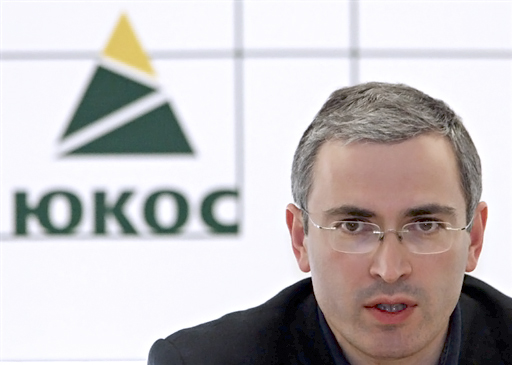
Those were the days--and some hope to bring them back.
Five years later, we are about to hear the decision on Russia's liabilities from expropriating Yukos. Readers will remember Mikhail Khodorkovsky, formerly a favored oligarch who then irked Vladimir Putin by entering politics. Shortly thereafter Khodorkovsky was thrown in jail, the firm he controlled was dismembered, and its assets were subsumed by the state-owned giant oil concern Rosneft. In post-USSR Russia, the unspoken arrangement among the beneficiaries of the fire-sale of state-owned commodities firms was that they could enjoy their, er, unusually acquired fortunes for as long as they did not criticize the men who made it possible. This guy had other bright ideas in biting the hand that fed.

While Khodorkovsky has become the poster boy for Putin's arbitrariness and venality, there were other shareholders adversely affected by the expropriation. The case they made to recoup lost investment--they claim over a whopping $100 billion--is about to be ruled on by the Permanent Court of Arbitration which handles these sorts of cases:
Russia will discover next week how much it may be asked to pay for the confiscation a decade ago of Mikhail Khodorkovsky’s Yukos Oil Co., then the country’s biggest oil producer. The Permanent Court of Arbitration in The Hague will rule on July 28 on a $103 billion damages claim the company’s former owners filed against Russia in 2007, Tim Osborne, head of GML Ltd., former holding company of Yukos, said by e-mail. Court official Willemijn van Banning said by phone she couldn’t comment on the date for the ruling.
As you know, Putin and Co. play hardball. They are not going to fork over whatever compensation is determined gladly. What most observers expect to occur is for Russia to balk at payment of an amount rather less than $100 billion. This intransigence will result in a fight to freeze Rosneft assets waged the world over to provide compensation:
GML has a good chance of winning partial damages, according to Gus Van Harten, a professor specializing in arbitration at York University’s Osgoode Hall Law School in Canada. There’s “very limited room” for appeal and Russia will resist paying, so any amount awarded would trigger a global legal battle to seize state property, including assets of OAO Rosneft (ROSN), which acquired most of Yukos in a series of forced auctions, Van Harten said.
The largest shareholder that brought the case, former Yukos holding company GML, is composed largely of other Russians who benefited greatly from the fire-sale of Soviet era energy assets. Ironically, Russia is being taken to task by those who it enriched prior to the state reincorporating what it previously owned. Russian politics are weird. Given its rich human capital, you would have hoped that the country moved past extractive industries and diversified into others from those that make it reliant on commodity-based industries.

Rather, the back-and-forth between the state and those it (questionably) enriched goes on and on. The resource curse lives on in Russia, then, as the emphasis of its political economy centers on nasty quarrels over redistributing existing wealth as opposed to generating more wealth from other industries. The rents may have increased since the Soviet era, but the assets generating those rents--hydrocarbons--are continuously dwindling.

7/28 UPDATE: The ruling has now been issued amounting to a fairly stunning $50 billion. I am absolutely certain the Russians will not be handing this money over easily. Expect legal machinations aplenty--appeals, stays, and so forth. While those are going on, energy assets which can be frozen to help recoup this expropriation award like those of Rosneft worldwide will be contested tooth and nail. A great game of cat and mouse has just begun.

23 Temmuz 2014 Çarşamba

Sisi's No Sissy: Ending Egypt's Unsustainable Subsidies

His sartorial choices may have been Oppa Moammar Style, but Sisi has made a good start.
For the record, let us recall how Egyptian President Abdul Fattah El-Sisi came into power. First, he overthrew the popularly-elected Muslim Brotherhood President Mohamad Morsi over the declining security situation in the country. Next, he successfully ran for the post of the person he mounted a coup d'etat against--there is no other appropriate term--and threw Morsi and his Muslim Brotherhood flunkies in jail to boot. Zero tolerance for intolerance, right? After the disorder of the post-Mubarak period, the part of the electorate that bothered to show up for the most recent elections wanted some (surprise!) Mubarak-style law-and-order by electing another military man.

Yet Sisi may be the leader with the clout to finally kill of financially unsustainable energy and food subsidies that had bedeviled Mubarak and Morsi before him. Both his predecessors vowed to undertake these reforms, but ultimately crumbled in the face of sustained domestic pressure. You can even say with a great deal of accuracy that Sisi out-Mubaraks Mubarak: he is even more vicious in suppressing the Muslim Brotherhood by branding it a terrorist organization in pursuing a secular path. More pointedly, he has finally begun implementing much-delayed reforms. Things have begun with removing fuel subsidies:
So it was a surprise when, as one of his first major policy initiatives, President Abdel Fattah el-Sisi sharply raised fuel prices two weeks ago [by 70%], cutting deeply into energy subsidies, the most expensive single part of the government’s sprawling and expensive subsidy system. Even more surprising, perhaps, has been the absence of widespread civil unrest...

While experts on Egypt’s economy praised the boldness of the move, there was also criticism of how it was put into effect, and of a lack of a clear plan to ease the burden on the country’s most vulnerable citizens. There was no easy way to fix the subsidy program in a country where half the population lives around or below the poverty line and relies on government support. Any mistakes carried considerable risks for the government, which faces a more impatient nation since President Hosni Mubarak was thrown out of office by protesters demanding “bread, freedom and social justice...”
Make no mistake: the causes of Egypt's repeat visits to the IMF largely lie with these subsidies:
The decades-old system, which provides subsidies for energy and food, including sugar, flour and tea, had eaten up more than 26 percent of the national budget annually. It also was criticized for inefficiency, benefiting companies, for instance, rather than Egypt’s poorest citizens. Reforming the system was seen as an attempt by the Egyptian government not just to plug a budget deficit that reached more than 12 percent of G.D.P., but also to impress international lenders, like the International Monetary Fund, as the country searched for new financing beyond the generous sums provided over the last year by wealthy Persian Gulf states.
After initially taking a holier-than-thou attitude towards the Morsi coup, the US now recognizes that Sisi is a far more useful character than his hapless predecessor. Aside from restarting military aid (coup, what "coup"?), the Yanks are probably glad that someone has gotten around to tackling the subsidies issue so that Egypt may finally stop resorting to emergency lending from the Washington-based lender.

Next up given a newly pliant Egyptian public after years of being battered by civil disorder is to remove food subsidies. This may be slightly trickier to pull off technically and politically:
Egypt spends more than $4 billion a year on food subsidies, on which millions of poverty-stricken Egyptians depend. One cash-strapped government after another has resisted tackling problems in the system, fearful of a backlash from the public...
President Abdel Fattah al-Sisi and Prime Minister Ibrahim Mehleb have not announced similar drastic cuts to the food subsidy system but reforms to the way the government hands out the subsidy have been in the making since April in an attempt to decrease waste and corruption.

Under the new system Egyptians use electronic smart cards for bread purchases and around 20 different subsidised goods at grocery stores across the country. The cards follow a points system which raises incentives for Egyptians to buy only as much subsidised bread as they need, helping reduce spending on wheat by as much as five billion Egyptian pounds ($699 million), Hanafi said.
Sisi is likely feeling out the terrain here. Test the waters and all that. Obviously, fuel is less crucial to survival than food. So, he is starting off with smaller reforms to first limit the supply of subsidized foodstuffs made available. In a few months, though, do not be surprised if these subsidies are removed just as the fuel subsidies were.

The white people will come around as they usually do for people who can get things done in a manner that they cannot such as stabilize the law and order situation and wean these countries off the IMF dole. You may have reservations about his anti-democratic methods, but hey, there is something to be said about respecting authoritarian regimes like Sisi's that achieved office through the ballot box no matter what else.

21 Temmuz 2014 Pazartesi

Adios Sochi Grand Prix 2014, Russia World Cup 2018?

Geography is against Russia retaining these events without scrutiny.
This is not exactly a pleasant post to write given the circumstances, but it's something that will be the subject of discussion anyway in the coming months and perhaps years. First, as I wrote a few weeks ago, the first Russian Grand Prix is scheduled on the Formula One calendar for October 12. Even as its business elites are preparing for the worst as the full weight of Western sanctions passed (and yet to pass_ disrupt their abilities to conduct business abroad, Russian race organizers are adamant that show must go on:
Organizers insist Russia's first Formula One Grand Prix will go ahead as planned despite an airliner being shot down in the conflict zone in eastern Ukraine.

Malaysian Airlines Flight 17 from Amsterdam to Kuala Lumpur crashed Thursday in eastern Ukraine. All 298 people on board are believed to have been killed. Ukraine accused pro-Russian separatists of shooting the plane down, something the rebels deny.

The promoters of the Oct. 12 Russian Grand Prix in Sochi told The Associated Press in a statement Friday that "all the preparations are on track and run according to the schedule," and that "organisers are confident that the inaugural Russian Grand Prix will be comfortable for all."
All I can say is that the organizers of the Bahrain Grand Prix were making similar noises prior to the 2011 race being canceled against the backdrop of anti-monarchy protests during the Arab Spring. Self-evidently, the disorder in Sochi's case emanates not from internal turmoil--Chechnya is far away--but from the weight of disapproval from foreign powers-that-be. In motorsports, they reside in Great Britain.. As the graphic above indicates, 7 out of 11 Formula One constructors are headquartered in the UK (never mind that the car brands themselves are "foreign"; their F1 facilities are mainly in the Blighty. 

I am obviously not clairvoyant as to what the culpability of Russia is in the downing of Malaysia Airlines MH17. Nor do I know what Russia's response will be if and when an international body finds the weight of evidence implicates Russia. However, I do know this: if Russia is designated a "state sponsor of terrorism" or something similar that results in severed trade ties as UK Defence Minister Michael Fallon suggests, there is no chance whatsoever that the race will proceed as planned. It will be curtains for the race and much else that is Russian-invested in Europe. Aside from most of the teams being UK-headquartered, commercial sponsors scare easily.
* * * 
Tis sad talking about real generals instead of the Oranje Generaal, but we are where we are.
Next, consider the 2018 World Cup. Unlike the IOC with its Olympic events behind the Iron Curtain--the most memorable being the 1980 Summer Games in Moscow, USSR and the 1984 Winter in Sarajevo, Yugoslavia--there were never any FIFA World Cup events held behind the Iron Curtain. (See this interesting story behind IOC politics during the Cold War.) Obviously, large-scale disapproval of Russian involvement will also torpedo Russia hosting the next World Cup even if it's only 4 years away. Being designated a state sponsor of terror or being taken to the International Criminal Court and the like will scare any sensible commercial sponsor away. 

Russia has also rubbed one of football's powers the wrong way--the Netherlands. With a majority of the passengers aboard MH17 coming from the Netherlands [193/298], it has been deeply affected by current events. That said, the Netherlands also has significant commercial ties with Russia alike many other Western European countries. What to do, then? If Russian involvement is found, then trade ties will probably not be enough to quell Dutch frustrations. For obvious reasons, Dutch input will be crucial in forming the international response to Russia.
And while the disaster has touched so many here, the government is also mindful that Russia is the country’s third-largest trade partner and that business is growing, especially natural gas.
“We are a small country, dependent on our exports, and unlike the United States, we cannot always react from our moral high grounds,” [opposition leader Alexander] Pechtold said. “Still, if it is proven that the Russians have their fingerprints on this horrible event, we cannot look in the other direction.”
Also consider that the Dutch national team is one of football's most famous draws. In Yank-speak, the World Cup without the Netherlands participating is like the Lone Ranger without Tonto. (Sorry Dutch readers; if your team had won at least one World Cup final in three tries, I'd say the World Cup without the Netherlands is like the Simpsons without Bart.) As the worst-affected country, the Netherlands is not a pushover being a NATO member and fielding one of football's most recognizable squads in sporting terms. End result? You can safely conclude that the Dutch will play a significant role in determining the fate of the 2018 Russia World Cup.

UPDATE: The highly reliable Christian Science Monitor explains why EU sanctions will likely be shaped by the Dutch. Also notice how the Russia-aligned rebels are now providing passenger remains to the Dutch.

What makes a good economist?

20 Temmuz 2014 Pazar

Bhagwati: PRC's Corruption 'Developmental', India's Isn't

Corruption is one of the most studied phenomena given its ubiquity in developing countries. If corruption did not occur on a significant scale in these countries, then they would probably be classified as developed. That said, there are many debates about corruption. At one extreme, there is a "zero tolerance" approach that suggests all forms of using public office for private gain are unwelcome and should be discouraged. On the other hand, others would say that there are different forms of corruption--some of which are potentially beneficial such as "speed money" which hastens the processing of documentation in slow-moving and unwieldy bureaucracies.

It is a perhaps unfortunate sign of its developmental status that India features large as a setting for debates on corruption. In a recent "Lunch with the FT" feature, economist Jagdish Bhagwati explains how Chinese-style corruption is preferable to Indian-style corruption. In effect, the former is efficiency-promoting whereas the latter is not":
I ask [Bhagwati] if he thinks the country can get back on track after several mediocre years. Once there was an idea, now mostly forgotten, that the “tortoise” India could eventually overtake the “hare” – China. “That’s an exaggeration, I think,” [Bhagwati] says. A crucial difference between the two countries is the type of corruption they have. India’s is classic “rent-seeking”, where people jostle to grab a cut of existing wealth. “The Chinese have what I call profit-sharing corruption”: the Communist party puts a straw into the milkshake so “they have an interest in having the milkshake grow larger”.
You can certainly have a debate about whether "developmental corruption" is an oxymoron or otherwise. Those who espouse a "zero tolerance" approach--typically Americans and their acolytes at development banks and other international organizations--would agree. However, a more pragmatic view looks at how corruption relates to how conflicting interests are resolved. If corruption does not engender additional economic activity in a zero-sum sort of setting, then it is not beneficial in the sense most understand it. This is the Indian scenario according to Bhagwati: little growth and much fighting over what resources already exist. However, there is a possibility--admittedly rarer--in which corruption occurs after economic growth has been generated in the absence of significant spoils to quarrel over beforehand. This is the Chinese scenario.


19 Temmuz 2014 Cumartesi

MNCs and Setting Cambodia's Minimum Wage

Textile workers of Cambodia unite to mixed consequences.
Economics textbooks will tell you that the cost of labor is determined when the downward-sloping demand curve for labor meets the upward-sloping supply curve of workers. Their intersection is called the "market-clearing" wage. Governments may introduce "distortions" however in the form of minimum wages when the market-clearing wage is deemed insufficient to meet the needs of the workers or are otherwise below what is normatively acceptable.

In Cambodia, however, the cost of labor may be determined more by external forces. Namely, pressure from multinational corporations that subcontract textile manufacturing to the country. At present, 80% of Cambodia's exports revenues supposedly come from garments. Hence, Cambodia is yet another country in our region that sees manufacturing garments as a stepping stone to development. Fair enough, but it seems the workers are discontent with the wages:
Textile workers in Cambodia have been demonstrating for weeks demanding a monthly minimum wage of around 115 euros. Violent clashes broke out during protests that took place last December and in January. According to human rights organizations, five protesters were shot dead by the police and many more were seriously injured. Twenty-three people were arrested. David Welsh of "Solidarity Center," a labor rights organization in Phnom Penh, is concerned about the recent developments. "This is a gross violation of trade union rights in the largest and most important economic sector of the country. This has nothing to do with the rule of law," said Welsh.
The crux of their complaint is that the government is failing to enforce the minimum wage suggested by a commission that it convened regarding the matter:
Last autumn, the Cambodian government set up a commission to stipulate a statutory minimum wage for the textile sector. The commission's report concluded that, depending on the location of the factory, the living wage should range between 111 and 127 euros. But the minimum wage for workers at the beginning of this year was set at only 73 euros. "The government has ignored the findings of its own commission. Because of this, the unions called for protests. Although political parties took the topic on board, the demonstrations were controlled solely by workers," said activist Welsh.
Even in Cambodia, the loudest labor activist is some white guy. It figures. More importantly, though, some other white guys--namely foreign firms subcontracting work--may be the ultimate arbiters of the wage level. Their fear, of course, is that foreign NGOs will fault them for running "sweatshops." Add the political violence into the mix and there is considerable reputation risk for these Western retailers:
“We can see frequent industrial conflicts coming here,” an H&M representative told the Cambodia Daily in February. “We need a sourcing country that is predictable [and] stable.” During the spring, Levi Strauss cut back on its orders to Cambodia because of the risk of more trouble and more disruption...


H&M, Levi, Gap (GPS), and other companies met with government officials in Phnom Penh this week to discuss their concerns about political unrest. Afterward, Levi spokeswoman Amber McCasland said the company supports the government’s efforts, which “should lead to the announcement of a new minimum wage as soon as possible.” On Friday the Cambodian high court convicted the workers and activists—and then gave them suspended sentences and freed them. “The verdict today is clearly connected to the political situation and pressure from the big brands,” said Am Sam Sath of the rights group Licadho.
Not for the first time, the wage levels of a labor-intensive manufacturing industry in a poor country will in no small part be set by the corporate social responsibility debates in rich countries. 

26 Temmuz 2014 Cumartesi

Diversification, or Macau Can't Live on Gambling Alone

Can Manny help Macau diversify from gambling?
Let's get ready to ruuuuumble: To be sure, if you compare Macau to Las Vegas in terms of gaming revenues, it's a first-round TKO for the Chinese gaming town. Since the turn of the millennium, Macau has left the former home of gambling in the dust as revenues have increased at a rapid clip. However, all good things must come to an end. Given Macau's reliance on punters (Brit-speak for gamblers) from the mainland, the growth slowdown there was bound to have knock-on effects for the Asian betting mecca. For the first time since the PRC bean counters have kept monthly tallies of Macau gaming revenues (in 2010), they fell in June 2014 year-on-year:
Gambling revenue in Macau fell 3.7 percent in June on an annual basis, the first decline in more than four years, with analysts saying the soccer World Cup had diverted gamblers and their hefty bets away from the world's largest casino hub...

Gambling revenue from Macau's 35 casinos fell to 27.2 billion patacas in June ($3.4 billion) from 28.3 billion patacas a year earlier, according to data released by the Macau government on Tuesday. Analysts were expecting a drop of between 4-6 percent. Chinese punters have instead been wagering on the football competition in Brazil. Authorities arrested 22 people on June 18 for their involvement in an illicit soccer betting ring according to Macau police. Betting slips the ring received in one week reached as much as HK$5 billion ($645.19 million) and the average daily amount of betting was more than HK$700 million.
Aside from Chinese bettors preferring to wager on the World Cup, PRC authorities have further cracked down on the amounts that can be taken out of the mainland to gamble in Macau. Why limit the stakes? Simple: officials (read: Communist Party members) have been--embarrassingly if unsurprisingly--among the high rollers in Macau, using public monies to gamble there. While there was previously a loophole allowing patrons to abuse payment systems to transfer money from the mainland above imposed limits, stricter monitoring is closing it:
Over the past two months, global investors have pared bets on stocks geared to Macau after a raft of regulatory curbs sparked concerns about slowing revenue growth. Among the measures are restrictions on the use of state bank card UnionPay, which Chinese nationals use to get out millions of yuan. Legally they are only allowed to take 20,000 yuan ($3,200) out of China per day. To get around this, they pretend to purchase expensive items from stores using their UnionPay cards and instead of actually receiving the items, they get cash.
There are a boatload of other reasons offered dealing with either nannyism or harder times in the PRC:
While restrictions on UnionPay are unlikely to significantly impinge on revenue growth, analysts remain cautious on the sector in the near term, citing weighing economic factors like constrained liquidity, softening housing prices and concerns over the integrity of debt collateral, all of which are likely to add pressure on Macau's high-roller VIP segment. A smoking ban, set to come into effect by October, and restrictions on transit visas, are also issues that may impact the number of visitors in the coming months.
As the post title implies, the authorities are now looking to broaden the reasons why tourists would visit Macau outside of gambling. To be fair, it is in this respect that Macau falls well short of Las Vegas. Think of music--Celine Dion and Elton John aren't playing in Macau, are they? Shows are also in short supply such as elaborate circuses and the like. Macau is trying to bring in more sporting events too such as with the Manny Pacquiao vs. Brandon Rios fight help late last year and Pacquiao's forthcoming match against undefeated Chris Algieri scheduled for 22 November.
Local authorities and top officials in Beijing are pushing to diversify Macau away from its reliance on gaming. The expansion of shows like Melco Crown's House of Dancing Water and Sands China's boxing events are intended to attract a wider visitor base who come to Macau for leisure and tourism rather than to play at the felted baccarat tables.
Is it just me or does "House of Dancing Water" sound stereotypically Asian? Anyway, the first thing they teach you in business school is "portfolio diversification," or that you should not put all your eggs in one basket. Whether it concerns commodity-based economies like Zambia or service-based economies like Macau, the advice is generally sound. To some extent Las Vegas has been "Disneyfied" in not being the seedy, dark gambling den it used to be. Rather, Las Vegas and Macau aim to be more business-friendly (think conventions) and family-friendly (think theme parks) destinations. Las Vegas has almost completed this transition; whether Macau can follow suit is an open question.

24 Temmuz 2014 Perşembe

Russia Fun: Ruling on $100B Yukos Expropriation Claim

Those were the days--and some hope to bring them back.
Five years later, we are about to hear the decision on Russia's liabilities from expropriating Yukos. Readers will remember Mikhail Khodorkovsky, formerly a favored oligarch who then irked Vladimir Putin by entering politics. Shortly thereafter Khodorkovsky was thrown in jail, the firm he controlled was dismembered, and its assets were subsumed by the state-owned giant oil concern Rosneft. In post-USSR Russia, the unspoken arrangement among the beneficiaries of the fire-sale of state-owned commodities firms was that they could enjoy their, er, unusually acquired fortunes for as long as they did not criticize the men who made it possible. This guy had other bright ideas in biting the hand that fed.

While Khodorkovsky has become the poster boy for Putin's arbitrariness and venality, there were other shareholders adversely affected by the expropriation. The case they made to recoup lost investment--they claim over a whopping $100 billion--is about to be ruled on by the Permanent Court of Arbitration which handles these sorts of cases:
Russia will discover next week how much it may be asked to pay for the confiscation a decade ago of Mikhail Khodorkovsky’s Yukos Oil Co., then the country’s biggest oil producer. The Permanent Court of Arbitration in The Hague will rule on July 28 on a $103 billion damages claim the company’s former owners filed against Russia in 2007, Tim Osborne, head of GML Ltd., former holding company of Yukos, said by e-mail. Court official Willemijn van Banning said by phone she couldn’t comment on the date for the ruling.
As you know, Putin and Co. play hardball. They are not going to fork over whatever compensation is determined gladly. What most observers expect to occur is for Russia to balk at payment of an amount rather less than $100 billion. This intransigence will result in a fight to freeze Rosneft assets waged the world over to provide compensation:
GML has a good chance of winning partial damages, according to Gus Van Harten, a professor specializing in arbitration at York University’s Osgoode Hall Law School in Canada. There’s “very limited room” for appeal and Russia will resist paying, so any amount awarded would trigger a global legal battle to seize state property, including assets of OAO Rosneft (ROSN), which acquired most of Yukos in a series of forced auctions, Van Harten said.
The largest shareholder that brought the case, former Yukos holding company GML, is composed largely of other Russians who benefited greatly from the fire-sale of Soviet era energy assets. Ironically, Russia is being taken to task by those who it enriched prior to the state reincorporating what it previously owned. Russian politics are weird. Given its rich human capital, you would have hoped that the country moved past extractive industries and diversified into others from those that make it reliant on commodity-based industries.

Rather, the back-and-forth between the state and those it (questionably) enriched goes on and on. The resource curse lives on in Russia, then, as the emphasis of its political economy centers on nasty quarrels over redistributing existing wealth as opposed to generating more wealth from other industries. The rents may have increased since the Soviet era, but the assets generating those rents--hydrocarbons--are continuously dwindling.

7/28 UPDATE: The ruling has now been issued amounting to a fairly stunning $50 billion. I am absolutely certain the Russians will not be handing this money over easily. Expect legal machinations aplenty--appeals, stays, and so forth. While those are going on, energy assets which can be frozen to help recoup this expropriation award like those of Rosneft worldwide will be contested tooth and nail. A great game of cat and mouse has just begun.

23 Temmuz 2014 Çarşamba

Sisi's No Sissy: Ending Egypt's Unsustainable Subsidies

His sartorial choices may have been Oppa Moammar Style, but Sisi has made a good start.
For the record, let us recall how Egyptian President Abdul Fattah El-Sisi came into power. First, he overthrew the popularly-elected Muslim Brotherhood President Mohamad Morsi over the declining security situation in the country. Next, he successfully ran for the post of the person he mounted a coup d'etat against--there is no other appropriate term--and threw Morsi and his Muslim Brotherhood flunkies in jail to boot. Zero tolerance for intolerance, right? After the disorder of the post-Mubarak period, the part of the electorate that bothered to show up for the most recent elections wanted some (surprise!) Mubarak-style law-and-order by electing another military man.

Yet Sisi may be the leader with the clout to finally kill of financially unsustainable energy and food subsidies that had bedeviled Mubarak and Morsi before him. Both his predecessors vowed to undertake these reforms, but ultimately crumbled in the face of sustained domestic pressure. You can even say with a great deal of accuracy that Sisi out-Mubaraks Mubarak: he is even more vicious in suppressing the Muslim Brotherhood by branding it a terrorist organization in pursuing a secular path. More pointedly, he has finally begun implementing much-delayed reforms. Things have begun with removing fuel subsidies:
So it was a surprise when, as one of his first major policy initiatives, President Abdel Fattah el-Sisi sharply raised fuel prices two weeks ago [by 70%], cutting deeply into energy subsidies, the most expensive single part of the government’s sprawling and expensive subsidy system. Even more surprising, perhaps, has been the absence of widespread civil unrest...

While experts on Egypt’s economy praised the boldness of the move, there was also criticism of how it was put into effect, and of a lack of a clear plan to ease the burden on the country’s most vulnerable citizens. There was no easy way to fix the subsidy program in a country where half the population lives around or below the poverty line and relies on government support. Any mistakes carried considerable risks for the government, which faces a more impatient nation since President Hosni Mubarak was thrown out of office by protesters demanding “bread, freedom and social justice...”
Make no mistake: the causes of Egypt's repeat visits to the IMF largely lie with these subsidies:
The decades-old system, which provides subsidies for energy and food, including sugar, flour and tea, had eaten up more than 26 percent of the national budget annually. It also was criticized for inefficiency, benefiting companies, for instance, rather than Egypt’s poorest citizens. Reforming the system was seen as an attempt by the Egyptian government not just to plug a budget deficit that reached more than 12 percent of G.D.P., but also to impress international lenders, like the International Monetary Fund, as the country searched for new financing beyond the generous sums provided over the last year by wealthy Persian Gulf states.
After initially taking a holier-than-thou attitude towards the Morsi coup, the US now recognizes that Sisi is a far more useful character than his hapless predecessor. Aside from restarting military aid (coup, what "coup"?), the Yanks are probably glad that someone has gotten around to tackling the subsidies issue so that Egypt may finally stop resorting to emergency lending from the Washington-based lender.

Next up given a newly pliant Egyptian public after years of being battered by civil disorder is to remove food subsidies. This may be slightly trickier to pull off technically and politically:
Egypt spends more than $4 billion a year on food subsidies, on which millions of poverty-stricken Egyptians depend. One cash-strapped government after another has resisted tackling problems in the system, fearful of a backlash from the public...
President Abdel Fattah al-Sisi and Prime Minister Ibrahim Mehleb have not announced similar drastic cuts to the food subsidy system but reforms to the way the government hands out the subsidy have been in the making since April in an attempt to decrease waste and corruption.

Under the new system Egyptians use electronic smart cards for bread purchases and around 20 different subsidised goods at grocery stores across the country. The cards follow a points system which raises incentives for Egyptians to buy only as much subsidised bread as they need, helping reduce spending on wheat by as much as five billion Egyptian pounds ($699 million), Hanafi said.
Sisi is likely feeling out the terrain here. Test the waters and all that. Obviously, fuel is less crucial to survival than food. So, he is starting off with smaller reforms to first limit the supply of subsidized foodstuffs made available. In a few months, though, do not be surprised if these subsidies are removed just as the fuel subsidies were.

The white people will come around as they usually do for people who can get things done in a manner that they cannot such as stabilize the law and order situation and wean these countries off the IMF dole. You may have reservations about his anti-democratic methods, but hey, there is something to be said about respecting authoritarian regimes like Sisi's that achieved office through the ballot box no matter what else.
21 Temmuz 2014 Pazartesi

Adios Sochi Grand Prix 2014, Russia World Cup 2018?

Geography is against Russia retaining these events without scrutiny.
This is not exactly a pleasant post to write given the circumstances, but it's something that will be the subject of discussion anyway in the coming months and perhaps years. First, as I wrote a few weeks ago, the first Russian Grand Prix is scheduled on the Formula One calendar for October 12. Even as its business elites are preparing for the worst as the full weight of Western sanctions passed (and yet to pass_ disrupt their abilities to conduct business abroad, Russian race organizers are adamant that show must go on:
Organizers insist Russia's first Formula One Grand Prix will go ahead as planned despite an airliner being shot down in the conflict zone in eastern Ukraine.

Malaysian Airlines Flight 17 from Amsterdam to Kuala Lumpur crashed Thursday in eastern Ukraine. All 298 people on board are believed to have been killed. Ukraine accused pro-Russian separatists of shooting the plane down, something the rebels deny.

The promoters of the Oct. 12 Russian Grand Prix in Sochi told The Associated Press in a statement Friday that "all the preparations are on track and run according to the schedule," and that "organisers are confident that the inaugural Russian Grand Prix will be comfortable for all."
All I can say is that the organizers of the Bahrain Grand Prix were making similar noises prior to the 2011 race being canceled against the backdrop of anti-monarchy protests during the Arab Spring. Self-evidently, the disorder in Sochi's case emanates not from internal turmoil--Chechnya is far away--but from the weight of disapproval from foreign powers-that-be. In motorsports, they reside in Great Britain.. As the graphic above indicates, 7 out of 11 Formula One constructors are headquartered in the UK (never mind that the car brands themselves are "foreign"; their F1 facilities are mainly in the Blighty. 

I am obviously not clairvoyant as to what the culpability of Russia is in the downing of Malaysia Airlines MH17. Nor do I know what Russia's response will be if and when an international body finds the weight of evidence implicates Russia. However, I do know this: if Russia is designated a "state sponsor of terrorism" or something similar that results in severed trade ties as UK Defence Minister Michael Fallon suggests, there is no chance whatsoever that the race will proceed as planned. It will be curtains for the race and much else that is Russian-invested in Europe. Aside from most of the teams being UK-headquartered, commercial sponsors scare easily.
* * * 
Tis sad talking about real generals instead of the Oranje Generaal, but we are where we are.
Next, consider the 2018 World Cup. Unlike the IOC with its Olympic events behind the Iron Curtain--the most memorable being the 1980 Summer Games in Moscow, USSR and the 1984 Winter in Sarajevo, Yugoslavia--there were never any FIFA World Cup events held behind the Iron Curtain. (See this interesting story behind IOC politics during the Cold War.) Obviously, large-scale disapproval of Russian involvement will also torpedo Russia hosting the next World Cup even if it's only 4 years away. Being designated a state sponsor of terror or being taken to the International Criminal Court and the like will scare any sensible commercial sponsor away. 

Russia has also rubbed one of football's powers the wrong way--the Netherlands. With a majority of the passengers aboard MH17 coming from the Netherlands [193/298], it has been deeply affected by current events. That said, the Netherlands also has significant commercial ties with Russia alike many other Western European countries. What to do, then? If Russian involvement is found, then trade ties will probably not be enough to quell Dutch frustrations. For obvious reasons, Dutch input will be crucial in forming the international response to Russia.
And while the disaster has touched so many here, the government is also mindful that Russia is the country’s third-largest trade partner and that business is growing, especially natural gas.
“We are a small country, dependent on our exports, and unlike the United States, we cannot always react from our moral high grounds,” [opposition leader Alexander] Pechtold said. “Still, if it is proven that the Russians have their fingerprints on this horrible event, we cannot look in the other direction.”
Also consider that the Dutch national team is one of football's most famous draws. In Yank-speak, the World Cup without the Netherlands participating is like the Lone Ranger without Tonto. (Sorry Dutch readers; if your team had won at least one World Cup final in three tries, I'd say the World Cup without the Netherlands is like the Simpsons without Bart.) As the worst-affected country, the Netherlands is not a pushover being a NATO member and fielding one of football's most recognizable squads in sporting terms. End result? You can safely conclude that the Dutch will play a significant role in determining the fate of the 2018 Russia World Cup.

UPDATE: The highly reliable Christian Science Monitor explains why EU sanctions will likely be shaped by the Dutch. Also notice how the Russia-aligned rebels are now providing passenger remains to the Dutch.

What makes a good economist?

20 Temmuz 2014 Pazar

Bhagwati: PRC's Corruption 'Developmental', India's Isn't

Corruption is one of the most studied phenomena given its ubiquity in developing countries. If corruption did not occur on a significant scale in these countries, then they would probably be classified as developed. That said, there are many debates about corruption. At one extreme, there is a "zero tolerance" approach that suggests all forms of using public office for private gain are unwelcome and should be discouraged. On the other hand, others would say that there are different forms of corruption--some of which are potentially beneficial such as "speed money" which hastens the processing of documentation in slow-moving and unwieldy bureaucracies.

It is a perhaps unfortunate sign of its developmental status that India features large as a setting for debates on corruption. In a recent "Lunch with the FT" feature, economist Jagdish Bhagwati explains how Chinese-style corruption is preferable to Indian-style corruption. In effect, the former is efficiency-promoting whereas the latter is not":
I ask [Bhagwati] if he thinks the country can get back on track after several mediocre years. Once there was an idea, now mostly forgotten, that the “tortoise” India could eventually overtake the “hare” – China. “That’s an exaggeration, I think,” [Bhagwati] says. A crucial difference between the two countries is the type of corruption they have. India’s is classic “rent-seeking”, where people jostle to grab a cut of existing wealth. “The Chinese have what I call profit-sharing corruption”: the Communist party puts a straw into the milkshake so “they have an interest in having the milkshake grow larger”.
You can certainly have a debate about whether "developmental corruption" is an oxymoron or otherwise. Those who espouse a "zero tolerance" approach--typically Americans and their acolytes at development banks and other international organizations--would agree. However, a more pragmatic view looks at how corruption relates to how conflicting interests are resolved. If corruption does not engender additional economic activity in a zero-sum sort of setting, then it is not beneficial in the sense most understand it. This is the Indian scenario according to Bhagwati: little growth and much fighting over what resources already exist. However, there is a possibility--admittedly rarer--in which corruption occurs after economic growth has been generated in the absence of significant spoils to quarrel over beforehand. This is the Chinese scenario.


19 Temmuz 2014 Cumartesi

MNCs and Setting Cambodia's Minimum Wage

Textile workers of Cambodia unite to mixed consequences.
Economics textbooks will tell you that the cost of labor is determined when the downward-sloping demand curve for labor meets the upward-sloping supply curve of workers. Their intersection is called the "market-clearing" wage. Governments may introduce "distortions" however in the form of minimum wages when the market-clearing wage is deemed insufficient to meet the needs of the workers or are otherwise below what is normatively acceptable.

In Cambodia, however, the cost of labor may be determined more by external forces. Namely, pressure from multinational corporations that subcontract textile manufacturing to the country. At present, 80% of Cambodia's exports revenues supposedly come from garments. Hence, Cambodia is yet another country in our region that sees manufacturing garments as a stepping stone to development. Fair enough, but it seems the workers are discontent with the wages:
Textile workers in Cambodia have been demonstrating for weeks demanding a monthly minimum wage of around 115 euros. Violent clashes broke out during protests that took place last December and in January. According to human rights organizations, five protesters were shot dead by the police and many more were seriously injured. Twenty-three people were arrested. David Welsh of "Solidarity Center," a labor rights organization in Phnom Penh, is concerned about the recent developments. "This is a gross violation of trade union rights in the largest and most important economic sector of the country. This has nothing to do with the rule of law," said Welsh.
The crux of their complaint is that the government is failing to enforce the minimum wage suggested by a commission that it convened regarding the matter:
Last autumn, the Cambodian government set up a commission to stipulate a statutory minimum wage for the textile sector. The commission's report concluded that, depending on the location of the factory, the living wage should range between 111 and 127 euros. But the minimum wage for workers at the beginning of this year was set at only 73 euros. "The government has ignored the findings of its own commission. Because of this, the unions called for protests. Although political parties took the topic on board, the demonstrations were controlled solely by workers," said activist Welsh.
Even in Cambodia, the loudest labor activist is some white guy. It figures. More importantly, though, some other white guys--namely foreign firms subcontracting work--may be the ultimate arbiters of the wage level. Their fear, of course, is that foreign NGOs will fault them for running "sweatshops." Add the political violence into the mix and there is considerable reputation risk for these Western retailers:
“We can see frequent industrial conflicts coming here,” an H&M representative told the Cambodia Daily in February. “We need a sourcing country that is predictable [and] stable.” During the spring, Levi Strauss cut back on its orders to Cambodia because of the risk of more trouble and more disruption...


H&M, Levi, Gap (GPS), and other companies met with government officials in Phnom Penh this week to discuss their concerns about political unrest. Afterward, Levi spokeswoman Amber McCasland said the company supports the government’s efforts, which “should lead to the announcement of a new minimum wage as soon as possible.” On Friday the Cambodian high court convicted the workers and activists—and then gave them suspended sentences and freed them. “The verdict today is clearly connected to the political situation and pressure from the big brands,” said Am Sam Sath of the rights group Licadho.
Not for the first time, the wage levels of a labor-intensive manufacturing industry in a poor country will in no small part be set by the corporate social responsibility debates in rich countries.