2 Ağustos 2014 Cumartesi

31 Temmuz 2014 Perşembe
Can Malaysia Airlines Be Rebranded?
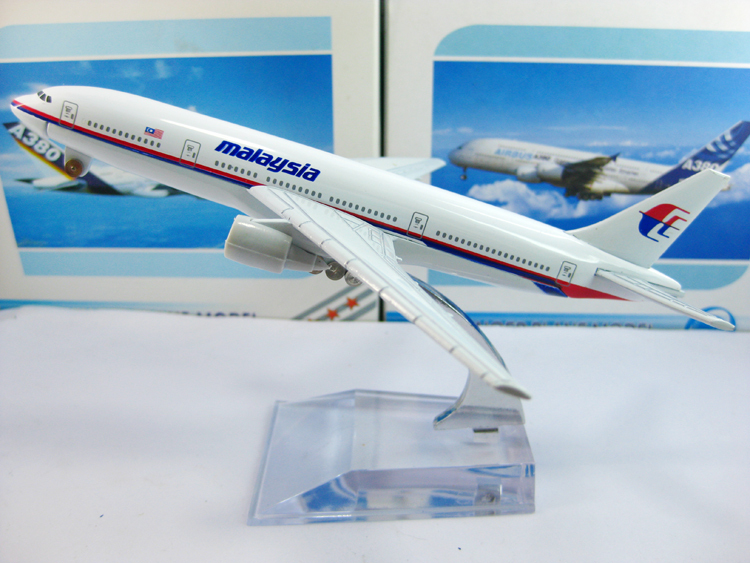 |
| This model may soon become a historical item. |
Now there is talk of rebranding the carrier. However, the problem for Malaysia Airlines for as long as it remains a government-owned firm is that it cannot bear a name which does not have "Malaysia" in it for obvious reasons. To show you how this principle works, recall the Korean Airlines 007 that was shot down for straying into Soviet airspace in 1983. The year after, its name was shortened to "Korean Air" and its livery was changed to different colors but that's about it. The options here are rather similar:
A government-led review of Malaysia Airlines – the carrier reeling from the disappearance of one aircraft and the alleged shooting down of another – is examining the case for renaming the company. Two people familiar with the situation said the Malaysian government – which through the country's sovereign wealth fund has a 69 per cent stake in Malaysia Airlines – was looking at a rebranding alongside other potentially far-reaching options to safeguard the carrier's future[...]Extraordinary circumstances aside, Malaysia Airlines has a reputation for well-maintained planes, and it may spin off these operations to make them available to other carriers (just as Lufthansa Technik does). With regard to rebranding, though, I think Malaysia Airlines' options are limited in having to bear the country's name. If the company is not divested by the government, I think the most it will do is change its paint scheme, logo and even the uniforms of cabin crew, but that's about it.
The person close to Malaysia Airlines said the government-led review would consider renaming the airline, founded in 1947, but stressed no decisions had been reached. Another person with knowledge of Malaysia Airlines cautioned that rebranding may not be straightforward because Malaysia's economy is partly built on tourism, and therefore it was important for the carrier to bear the country's name. The people familiar with the government-led review of the carrier said it could lead to a reshaping of the company – for example, its aircraft maintenance unit could be spun off.
Here in Southeast Asia, we have yet to get past the notion that "nationhood" means having an identifiable national airlines. Yes, yes, I know: Garuda Airlines of Indonesia doesn't bear the country's name in the title, but its subtitle is "The Airline of Indonesia." For better or worse, it is what it is--Malaysia's national carrier.
30 Temmuz 2014 Çarşamba
Marketing the Unmarketable: Israel's Soft Power
 |
| Not your grandfather's idea of "nation branding." |
So while Americans may not need as much convincing to go along with Israel, the rest of the world needs to be prodded along from the thinking of Israel's powers-that-be. Uriel Heilman has an excellent piece on Israel's actions when it last mounted a campaign of this magnitude in 2008:
"Speed is the top priority," said Yigal Palmor, spokesman for Israel's Foreign Ministry. "The goal is to bring your message as fast as possible to the widest possible audience." When Operation Cast Lead was actually launched on the night of Dec. 27, 2008, taking many Palestinian fighters in Gaza by surprise, the [media] group sprang into action. Diplomats from the foreign minister on down took to the airwaves, explaining to reporters from New York to New Delhi why Israel had launched the operation to curb Hamas' rocket fire into Israel. The IDF set up a press center where reporters could get quick and accurate information about the fighting, including videos of forces in combat...Another platform for its media campaign involves the use of social media. Israel, after all, is a hotbed of technology research (Silicon Wadi):
Israel stepped up its PR effort as the war unfolded. The morning after the operation began, Foreign Minister Tzipi Livni went on NBC's "Meet the Press" to make Israel's case for the war and clarify its objectives. "The situation is a situation in which Israeli citizens are targeted from Gaza Strip, a place that we left few years ago in order to create a new horizon for peace. But we got Hamas in return," Livni told NBC's David Gregory. "Our goal is not to reoccupy Gaza Strip. We left Gaza Strip," she said. "We dismantled all the settlements. But since Gaza Strip has been controlled by the extremists, and since Gaza Strip has been controlled by Hamas, and since Hamas is using Gaza Strip in order to target us, we need to give an answer to this."
The effort was not limited to traditional media. On the third day of the war, the IDF launched a channel on the popular online video sharing website YouTube, where viewers around the world could access video clips supporting Israel's case for war. The IDF posted footage of Hamas weapons storehouses in Gaza, booby-trapped schools in Gaza City, rocket crews firing from Palestinian civilian areas and Israeli medical teams treating Palestinian wounded. The videos included footage taken from cameras aboard IDF unmanned aerial vehicles flying above the fighting.Lastly, there is also, well, titillation. How better to target younger generations than to parade scantily-clad female soldiers in lad's mags? While I was aware of these appearances before, what I didn't catch was that they were sponsored by the Israeli consulate:
By the fourth day of the conflict, Israel's Consulate in New York had opened an account on the social messaging website Twitter and held a virtual press conference to answer questions from the public on the conflict in Gaza. In keeping with Twitter's format, the questions and answers were limited to 140 characters each. "the sole purpose of this opt. is 2 protect Isr's s.border & 2 allow ISR 2 live safely. this opt is indiferrent 2 politics," the consulate wrote in typical Twitter shorthand in response to a question from a user named carrotderek. "we're not at war with the PAL people. we're at war with a group declared by the EU& US a terrorist org," read another answer.
In the old days, Palmor said, Israel projected the same message with little thought to audience interest. That strategy, he acknowledged, was not successful. "One strategy is counterproductive," he said. "What is good for the United States is not good for France, and vice versa." The Israeli Consulate in New York has run with this idea. In July 2007, the consulate caused a stir when it helped Maxim, a monthly men's interest magazine, put together a five-page spread of scantily clad IDF women soldiers striking sexy poses against various Israeli backdrops.
"People perceive Israel through two lenses alone: the conflict and religion," Saranga went on. "What we want to do is add another dimension, which is the human face. People are not familiar with the Israeli face. We want to show that Israel is a normal place, that it's a place of great cultural creation, that it's a hot place in terms of lifestyle."It is shallow and superficial and I would have wished for equal-opportunity exploitation by having male soldiers strut their stuff in Cosmopolitan or something similar, but consider the target market here. Judging from US opinions of Israel, it seems to be a fairly effective rebranding strategy. There is no Middle Eastern edition of Maxim (can you imagine?), but make no mistake: Whether in spreading information obviously sympathetic to the Israeli cause or, er, giving a new definition to "field strip," the Israelis have done their homework as is usually the case.
This is the re-branding of Israel: getting niche audiences to associate Israel with positive, rather than negative, images. By that measure, Israel scored a coup when Sports Illustrated decided to use a shot of Israeli supermodel Bar Refaeli on the cover of its annual swimsuit edition in February. Instead of the image of an armed Israeli soldier firing a tear gas canister at Palestinian teenagers, the image of Israel the world woke up to was of a sizzling-hot Refaeli wearing a tiny bikini, pulling away at the bikini-bottom's strings.
29 Temmuz 2014 Salı
Is Russia on Argentina's Credit Highway to Hell?
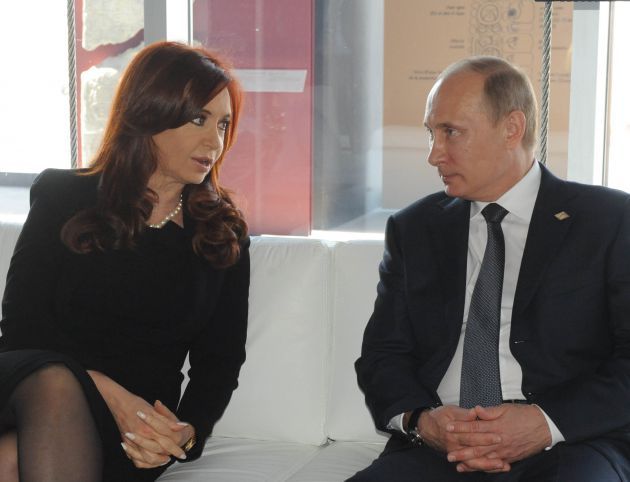 |
| One financial goner meets another? |
That said, Argentina is not entirely unique. Russia is on a similar path, though the details and the timetable differ. Russia's government, companies and banks neither need nor want to default on their debts. If, however, Ukraine-related geopolitical tensions get worse and pressures mount on Western governments to impose legal limitations on banks’ ability to transact on behalf of Russian entities, they may find themselves unable to make payments despite ample international reserves and manageable debt loads.The point isn't that Russia has sufficient reserves to make payments for its energy companies and other state-owned firms' obligations. Rather, like Argentina, it may not be allowed to make these payments due to legal machinations--i.e., sanctions:
After last week’s intensification of U.S. sanctions, Europe is preparing to detail its own set of additional sanctions this week. Absent a change of strategy by Russia -- an unlikely outcome given how President Vladimir Putin readily ignored...financial sanctions could materialize soon.World politics are messy and risk models can't predict them; what else is new? It's something to think about as Russia's fate hangs in the balance: economics will not (yet) doom Russia's economy but rather politics. Welcome, friends, to the International Political Economy Zone.
The market has yet to fully absorb this possibility. Many investors believe that the Russian geopolitical issues will somehow resolve themselves, because it is in nobody’s interest to stumble into a lose-lose situation. Yet, as with Argentina, rationality is not necessarily a good guide to what could happen. Absent a course correction, the conflict is proceeding on a path that limits the flexibility of the parties, along with the control they have on outcomes. Most investors' credit models do a pretty good job of capturing the many factors that impact debtors’ willingness and ability to pay. They have greater difficulty, however, dealing with the one-off exogenous shocks that politics can deliver. Argentina is today’s example, with all the suspense that it entails. If Russia does not change course, it could be tomorrow’s.
28 Temmuz 2014 Pazartesi
In Memoriam: Japan's Export Champion Days

I have previously written about how Japan has had trade deficits for umpteen months straight. Partially, this is due to its energy bill surging from fuel imports as it mothballed nuclear power plants in the wake of the Fukushima incident. However, there is more to this story: I have also written about how Japanese firms have moved overseas since the 1985 Plaza Accord that involved the US pressuring Japan to strengthen its currency. For one thing, this movement has led to the creation of "Factory Asia" in which Japanese multinationals have their production facilities spread throughout Asia. Even in the wake of recent yen weakness, Japan's exporting volumes have not really returned home:
[T]he value of Japan’s exports is 23 percent below a March 2008 peak, even as those of South Korea, the U.S. and Germany have grown. The yen has lost 16 percent in value against the dollar since Prime Minister Shinzo Abe took office in December 2012. That hasn’t been enough to spur growth in outbound shipments.In other words, while Japan's trade balance is negative, the value of exports has not really rebounded fro its 2008 high. The government's excuse is that the demand for goods overseas is weak--especially in emerging markets:
Japan’s government and central bank have blamed weak overseas demand, especially in emerging markets, for export sluggishness. This weakness is negative for an economy that suffered a blow to domestic demand from an April sales-tax increase.However, the real story of Japanese exports not increasing in spite of a weaker currency during PM Shinzo Abe's second spell in office is precisely because most manufacturers had already relocated--especially during years when the yen was strong:
“Japan is being left behind in the export recovery mainly because Japanese companies accelerated the shift of production abroad when the yen appreciated after the Lehman shock,” said Toru Suehiro, a market economist at Mizuho Securities Co. in Tokyo. “The loss of global market presence by Japan’s companies, especially electronic appliance makers, is also a factor.”I guess they'll have to rewrite those textbooks pretty soon when they get to the part about citing Japan as the archetypal example of export-led industrialization. Alas, those days are gone.
The impact of the move overseas by Japanese companies is striking in the U.S. automobile market, said Suehiro. U.S. sales for Japanese automakers in the six months through June rose 6.2 percent from a year earlier to 3.04 million, according to researcher Autodata Corp. Auto exports from Japan to the U.S. for the same period were down 8.5 percent, according to finance ministry data. Honda Motor Co. became a net exporter from the U.S. last year, shipping more vehicles out of that country than it imported from Japan, and both Honda and Toyota Motor Corp. set production records at their North American assembly plants in 2013.
Japan’s motor-vehicle exports to the U.S. declined 17 percent from 2008 through 2013, with total automobile output in Japan dropping 17 percent, according to the Japan Automobile Manufacturers Association.
27 Temmuz 2014 Pazar
'Libertarian Hacking' is Not an Oxymoron
 |
| Every hacker has his price--and the Koch brothers are paying for talent. |
The internal outcry at StumbleUpon last year underscores Silicon Valley’s image as a place that can feel hostile to the right. Democratic politicians dominate districts in Northern California, and a majority of donations that come from the wealthy region find their way into Democratic pockets.George W. Bush famously changed his attitude from annoyance over leftists annoying hum at every turn while president to becoming an unlikely champion of the Internet later on. The George W. Bush Institute, for instance, has hosted gatherings of of international cyber-dissidents. So, if one of the most disliked conservatives in America has become an avid ICT-phile, what's stopping, say, the Tea Party architects the Koch brothers from backing Internet concerns? After all, many of the apps that are now emerging work to undermine licensing regimes, bust unions, fight special interests and overturn entrenched market participants (presumably for as long as they aren't the Koch brothers-linked interests):
That’s enough of an opening for enterprising Republican lawmakers, who are beginning to notice that there’s an opportunity to finally make inroads here. For example, they see how state and local union-backed taxi commissions try to choke ride-sharing apps such as Uber and how special interests that represent the hospitality industry work to undermine businesses like Airbnb, which connects private homeowners with potential renters. At the conference, Washington Rep. Cathy McMorris Rodgers and Kentucky Sen. Rand Paul delivered speeches and joined panel discussions, while Jeb Bush and Wisconsin Gov. Scott Walker piped in their own comments through video presentations. The Republican National Committee and the National Republican Senatorial Committee flew in their top tech brass from Washington, D.C.Unusually for the strident Tea Party set, they're actually using a soft sell approach to woo hacking talent to libertarian causes by not overtly politicizing their digital causes. Rather, the emphasis is on emphasizing similarities in causes--and how gobs of money can be used to forward them:
The larger point is not to turn hackers into Republican backers, Tea Partyers or Koch acolytes. They are not, well, on a proselytizing mission here. Rather, the real point of the exercise is to get these hackers to develop applications that help conservative causes:This is where Lincoln Labs — with an assist from the Koch network — comes in. Many of the hackers, programmers and designers who participated in the Lincoln Labs hackathon aren’t Republicans, or even conservatives. But by holding the events with the promise of cash prizes, Lincoln Labs has found a way to connect issues raised by D.C. political operatives who don’t know the first thing about coding with solutions from technologists eager to solve problems (and maybe earn a bit of cash on the side).Finding a broad swath of conservatives and libertarians among the community of California technologists, though, is still a challenge, Lincoln Labs attendees and organizers said.
To supplement the occasional brick-and-mortar hackathon gathering Generation Opportunity has built an online hub for libertarian technologists to connect year-round with politicos and entrepreneurs. The group has built a portal called Liberty.IO as an online space where activists can submit problems they would like to solve or ideas for better apps and connect with designers and developers who know how to build them.The upside for the Koch-backed groups? By serving as the home for the libertarian tech community, they get first crack at top tech talent that’s potentially sympathetic to the “conservatarian” cause — and help with everything from smarter data collection to better campaign practices.And of course, there’s the added benefit of funding projects that they see as helping put a million little tears into the fabric of the state. As many of the activists here see it, the tech revolution is one of their most effective ways to make the services provided by the government less relevant.
It's interesting stuff, and the only question from a value-neutral position is to ask why it took them so long.
Kaydol:
Kayıtlar (Atom)
2 Ağustos 2014 Cumartesi
31 Temmuz 2014 Perşembe
Can Malaysia Airlines Be Rebranded?
|
| This model may soon become a historical item. |
Now there is talk of rebranding the carrier. However, the problem for Malaysia Airlines for as long as it remains a government-owned firm is that it cannot bear a name which does not have "Malaysia" in it for obvious reasons. To show you how this principle works, recall the Korean Airlines 007 that was shot down for straying into Soviet airspace in 1983. The year after, its name was shortened to "Korean Air" and its livery was changed to different colors but that's about it. The options here are rather similar:
A government-led review of Malaysia Airlines – the carrier reeling from the disappearance of one aircraft and the alleged shooting down of another – is examining the case for renaming the company. Two people familiar with the situation said the Malaysian government – which through the country's sovereign wealth fund has a 69 per cent stake in Malaysia Airlines – was looking at a rebranding alongside other potentially far-reaching options to safeguard the carrier's future[...]Extraordinary circumstances aside, Malaysia Airlines has a reputation for well-maintained planes, and it may spin off these operations to make them available to other carriers (just as Lufthansa Technik does). With regard to rebranding, though, I think Malaysia Airlines' options are limited in having to bear the country's name. If the company is not divested by the government, I think the most it will do is change its paint scheme, logo and even the uniforms of cabin crew, but that's about it.
The person close to Malaysia Airlines said the government-led review would consider renaming the airline, founded in 1947, but stressed no decisions had been reached. Another person with knowledge of Malaysia Airlines cautioned that rebranding may not be straightforward because Malaysia's economy is partly built on tourism, and therefore it was important for the carrier to bear the country's name. The people familiar with the government-led review of the carrier said it could lead to a reshaping of the company – for example, its aircraft maintenance unit could be spun off.
Here in Southeast Asia, we have yet to get past the notion that "nationhood" means having an identifiable national airlines. Yes, yes, I know: Garuda Airlines of Indonesia doesn't bear the country's name in the title, but its subtitle is "The Airline of Indonesia." For better or worse, it is what it is--Malaysia's national carrier.
30 Temmuz 2014 Çarşamba
Marketing the Unmarketable: Israel's Soft Power
|
| Not your grandfather's idea of "nation branding." |
So while Americans may not need as much convincing to go along with Israel, the rest of the world needs to be prodded along from the thinking of Israel's powers-that-be. Uriel Heilman has an excellent piece on Israel's actions when it last mounted a campaign of this magnitude in 2008:
"Speed is the top priority," said Yigal Palmor, spokesman for Israel's Foreign Ministry. "The goal is to bring your message as fast as possible to the widest possible audience." When Operation Cast Lead was actually launched on the night of Dec. 27, 2008, taking many Palestinian fighters in Gaza by surprise, the [media] group sprang into action. Diplomats from the foreign minister on down took to the airwaves, explaining to reporters from New York to New Delhi why Israel had launched the operation to curb Hamas' rocket fire into Israel. The IDF set up a press center where reporters could get quick and accurate information about the fighting, including videos of forces in combat...Another platform for its media campaign involves the use of social media. Israel, after all, is a hotbed of technology research (Silicon Wadi):
Israel stepped up its PR effort as the war unfolded. The morning after the operation began, Foreign Minister Tzipi Livni went on NBC's "Meet the Press" to make Israel's case for the war and clarify its objectives. "The situation is a situation in which Israeli citizens are targeted from Gaza Strip, a place that we left few years ago in order to create a new horizon for peace. But we got Hamas in return," Livni told NBC's David Gregory. "Our goal is not to reoccupy Gaza Strip. We left Gaza Strip," she said. "We dismantled all the settlements. But since Gaza Strip has been controlled by the extremists, and since Gaza Strip has been controlled by Hamas, and since Hamas is using Gaza Strip in order to target us, we need to give an answer to this."
The effort was not limited to traditional media. On the third day of the war, the IDF launched a channel on the popular online video sharing website YouTube, where viewers around the world could access video clips supporting Israel's case for war. The IDF posted footage of Hamas weapons storehouses in Gaza, booby-trapped schools in Gaza City, rocket crews firing from Palestinian civilian areas and Israeli medical teams treating Palestinian wounded. The videos included footage taken from cameras aboard IDF unmanned aerial vehicles flying above the fighting.Lastly, there is also, well, titillation. How better to target younger generations than to parade scantily-clad female soldiers in lad's mags? While I was aware of these appearances before, what I didn't catch was that they were sponsored by the Israeli consulate:
By the fourth day of the conflict, Israel's Consulate in New York had opened an account on the social messaging website Twitter and held a virtual press conference to answer questions from the public on the conflict in Gaza. In keeping with Twitter's format, the questions and answers were limited to 140 characters each. "the sole purpose of this opt. is 2 protect Isr's s.border & 2 allow ISR 2 live safely. this opt is indiferrent 2 politics," the consulate wrote in typical Twitter shorthand in response to a question from a user named carrotderek. "we're not at war with the PAL people. we're at war with a group declared by the EU& US a terrorist org," read another answer.
In the old days, Palmor said, Israel projected the same message with little thought to audience interest. That strategy, he acknowledged, was not successful. "One strategy is counterproductive," he said. "What is good for the United States is not good for France, and vice versa." The Israeli Consulate in New York has run with this idea. In July 2007, the consulate caused a stir when it helped Maxim, a monthly men's interest magazine, put together a five-page spread of scantily clad IDF women soldiers striking sexy poses against various Israeli backdrops.
"People perceive Israel through two lenses alone: the conflict and religion," Saranga went on. "What we want to do is add another dimension, which is the human face. People are not familiar with the Israeli face. We want to show that Israel is a normal place, that it's a place of great cultural creation, that it's a hot place in terms of lifestyle."It is shallow and superficial and I would have wished for equal-opportunity exploitation by having male soldiers strut their stuff in Cosmopolitan or something similar, but consider the target market here. Judging from US opinions of Israel, it seems to be a fairly effective rebranding strategy. There is no Middle Eastern edition of Maxim (can you imagine?), but make no mistake: Whether in spreading information obviously sympathetic to the Israeli cause or, er, giving a new definition to "field strip," the Israelis have done their homework as is usually the case.
This is the re-branding of Israel: getting niche audiences to associate Israel with positive, rather than negative, images. By that measure, Israel scored a coup when Sports Illustrated decided to use a shot of Israeli supermodel Bar Refaeli on the cover of its annual swimsuit edition in February. Instead of the image of an armed Israeli soldier firing a tear gas canister at Palestinian teenagers, the image of Israel the world woke up to was of a sizzling-hot Refaeli wearing a tiny bikini, pulling away at the bikini-bottom's strings.
29 Temmuz 2014 Salı
Is Russia on Argentina's Credit Highway to Hell?
|
| One financial goner meets another? |
That said, Argentina is not entirely unique. Russia is on a similar path, though the details and the timetable differ. Russia's government, companies and banks neither need nor want to default on their debts. If, however, Ukraine-related geopolitical tensions get worse and pressures mount on Western governments to impose legal limitations on banks’ ability to transact on behalf of Russian entities, they may find themselves unable to make payments despite ample international reserves and manageable debt loads.The point isn't that Russia has sufficient reserves to make payments for its energy companies and other state-owned firms' obligations. Rather, like Argentina, it may not be allowed to make these payments due to legal machinations--i.e., sanctions:
After last week’s intensification of U.S. sanctions, Europe is preparing to detail its own set of additional sanctions this week. Absent a change of strategy by Russia -- an unlikely outcome given how President Vladimir Putin readily ignored...financial sanctions could materialize soon.World politics are messy and risk models can't predict them; what else is new? It's something to think about as Russia's fate hangs in the balance: economics will not (yet) doom Russia's economy but rather politics. Welcome, friends, to the International Political Economy Zone.
The market has yet to fully absorb this possibility. Many investors believe that the Russian geopolitical issues will somehow resolve themselves, because it is in nobody’s interest to stumble into a lose-lose situation. Yet, as with Argentina, rationality is not necessarily a good guide to what could happen. Absent a course correction, the conflict is proceeding on a path that limits the flexibility of the parties, along with the control they have on outcomes. Most investors' credit models do a pretty good job of capturing the many factors that impact debtors’ willingness and ability to pay. They have greater difficulty, however, dealing with the one-off exogenous shocks that politics can deliver. Argentina is today’s example, with all the suspense that it entails. If Russia does not change course, it could be tomorrow’s.
28 Temmuz 2014 Pazartesi
In Memoriam: Japan's Export Champion Days
I have previously written about how Japan has had trade deficits for umpteen months straight. Partially, this is due to its energy bill surging from fuel imports as it mothballed nuclear power plants in the wake of the Fukushima incident. However, there is more to this story: I have also written about how Japanese firms have moved overseas since the 1985 Plaza Accord that involved the US pressuring Japan to strengthen its currency. For one thing, this movement has led to the creation of "Factory Asia" in which Japanese multinationals have their production facilities spread throughout Asia. Even in the wake of recent yen weakness, Japan's exporting volumes have not really returned home:
[T]he value of Japan’s exports is 23 percent below a March 2008 peak, even as those of South Korea, the U.S. and Germany have grown. The yen has lost 16 percent in value against the dollar since Prime Minister Shinzo Abe took office in December 2012. That hasn’t been enough to spur growth in outbound shipments.In other words, while Japan's trade balance is negative, the value of exports has not really rebounded fro its 2008 high. The government's excuse is that the demand for goods overseas is weak--especially in emerging markets:
Japan’s government and central bank have blamed weak overseas demand, especially in emerging markets, for export sluggishness. This weakness is negative for an economy that suffered a blow to domestic demand from an April sales-tax increase.However, the real story of Japanese exports not increasing in spite of a weaker currency during PM Shinzo Abe's second spell in office is precisely because most manufacturers had already relocated--especially during years when the yen was strong:
“Japan is being left behind in the export recovery mainly because Japanese companies accelerated the shift of production abroad when the yen appreciated after the Lehman shock,” said Toru Suehiro, a market economist at Mizuho Securities Co. in Tokyo. “The loss of global market presence by Japan’s companies, especially electronic appliance makers, is also a factor.”I guess they'll have to rewrite those textbooks pretty soon when they get to the part about citing Japan as the archetypal example of export-led industrialization. Alas, those days are gone.
The impact of the move overseas by Japanese companies is striking in the U.S. automobile market, said Suehiro. U.S. sales for Japanese automakers in the six months through June rose 6.2 percent from a year earlier to 3.04 million, according to researcher Autodata Corp. Auto exports from Japan to the U.S. for the same period were down 8.5 percent, according to finance ministry data. Honda Motor Co. became a net exporter from the U.S. last year, shipping more vehicles out of that country than it imported from Japan, and both Honda and Toyota Motor Corp. set production records at their North American assembly plants in 2013.
Japan’s motor-vehicle exports to the U.S. declined 17 percent from 2008 through 2013, with total automobile output in Japan dropping 17 percent, according to the Japan Automobile Manufacturers Association.
27 Temmuz 2014 Pazar
'Libertarian Hacking' is Not an Oxymoron
|
| Every hacker has his price--and the Koch brothers are paying for talent. |
The internal outcry at StumbleUpon last year underscores Silicon Valley’s image as a place that can feel hostile to the right. Democratic politicians dominate districts in Northern California, and a majority of donations that come from the wealthy region find their way into Democratic pockets.George W. Bush famously changed his attitude from annoyance over leftists annoying hum at every turn while president to becoming an unlikely champion of the Internet later on. The George W. Bush Institute, for instance, has hosted gatherings of of international cyber-dissidents. So, if one of the most disliked conservatives in America has become an avid ICT-phile, what's stopping, say, the Tea Party architects the Koch brothers from backing Internet concerns? After all, many of the apps that are now emerging work to undermine licensing regimes, bust unions, fight special interests and overturn entrenched market participants (presumably for as long as they aren't the Koch brothers-linked interests):
That’s enough of an opening for enterprising Republican lawmakers, who are beginning to notice that there’s an opportunity to finally make inroads here. For example, they see how state and local union-backed taxi commissions try to choke ride-sharing apps such as Uber and how special interests that represent the hospitality industry work to undermine businesses like Airbnb, which connects private homeowners with potential renters. At the conference, Washington Rep. Cathy McMorris Rodgers and Kentucky Sen. Rand Paul delivered speeches and joined panel discussions, while Jeb Bush and Wisconsin Gov. Scott Walker piped in their own comments through video presentations. The Republican National Committee and the National Republican Senatorial Committee flew in their top tech brass from Washington, D.C.Unusually for the strident Tea Party set, they're actually using a soft sell approach to woo hacking talent to libertarian causes by not overtly politicizing their digital causes. Rather, the emphasis is on emphasizing similarities in causes--and how gobs of money can be used to forward them:
The larger point is not to turn hackers into Republican backers, Tea Partyers or Koch acolytes. They are not, well, on a proselytizing mission here. Rather, the real point of the exercise is to get these hackers to develop applications that help conservative causes:This is where Lincoln Labs — with an assist from the Koch network — comes in. Many of the hackers, programmers and designers who participated in the Lincoln Labs hackathon aren’t Republicans, or even conservatives. But by holding the events with the promise of cash prizes, Lincoln Labs has found a way to connect issues raised by D.C. political operatives who don’t know the first thing about coding with solutions from technologists eager to solve problems (and maybe earn a bit of cash on the side).Finding a broad swath of conservatives and libertarians among the community of California technologists, though, is still a challenge, Lincoln Labs attendees and organizers said.
To supplement the occasional brick-and-mortar hackathon gathering Generation Opportunity has built an online hub for libertarian technologists to connect year-round with politicos and entrepreneurs. The group has built a portal called Liberty.IO as an online space where activists can submit problems they would like to solve or ideas for better apps and connect with designers and developers who know how to build them.The upside for the Koch-backed groups? By serving as the home for the libertarian tech community, they get first crack at top tech talent that’s potentially sympathetic to the “conservatarian” cause — and help with everything from smarter data collection to better campaign practices.And of course, there’s the added benefit of funding projects that they see as helping put a million little tears into the fabric of the state. As many of the activists here see it, the tech revolution is one of their most effective ways to make the services provided by the government less relevant.
It's interesting stuff, and the only question from a value-neutral position is to ask why it took them so long.
Kaydol:
Kayıtlar (Atom)