28 Ağustos 2014 Perşembe

Morgan Stanley & the Making of Rosneft

Morgan Stanley's John Mack chillin' with Putin back in the day.
The recent (re-)isolation of Russia after coming in from the cold after the end of the Cold War is having interesting repercussions for its Western financiers. From an IPE standpoint, the fate of the giant oil conglomerate Rosneft will be pivotal. Not only is it a gargantuan oil firm, but it is also a creation made possible through Western bankers providing the investment necessary to put it together.

Today's case in point is Morgan Stanley's involvement in the formation of modern-day Rosneft. It remains quite a reward for Igor Sechin's fealty to Vladimir Putin--the world's largest oil company by output is certainly nothing to sneeze at:
Putin and Sechin have a lot more to thank Morgan Stanley for. The American investment bank helped transform state-owned Rosneft from a business the Russian government failed to sell three times in 1998 into the world’s biggest publicly traded oil producer by output. Morgan Stanley played a key role in saving it from being acquired, and Rosneft hired three consecutive chief financial officers from the bank. In 2013, Putin approved Mack’s appointment to Rosneft’s board.

Since the Soviet Union broke up a quarter-century ago, Russia has become so closely entwined with the global economy that doing anything to unwind those ties -- or successfully impose sanctions for misbehavior -- is proving difficult for the U.S. and its allies, and awkward for western businesses that embraced Putin’s Russia. With Sechin and his oil company both under U.S. sanctions, a look at the courtship, marriage, and now separation between Morgan Stanley and Rosneft is a telling microcosm of this turnabout.
Indeed, while American trade relations with Russia are not especially large, chickens notwithstanding, investment is another matter as Western finance being limited to Rosneft and other state-owned firms closely aligned with Putin marks the end of an era:
Under the Putin regime, the line between business and government is often blurred, especially with state-controlled companies. As Rosneft expanded, in part by buying assets that Putin had forced an imprisoned political opponent’s company to sell, it became one of his favorite tools for extending Russian influence abroad.

“Rosneft was obviously not just an ordinary market participant,” said Daniel Treisman, a professor of political science at the University of California at Los Angeles and author of several books on Russia, most recently “The Return: Russia’s Journey from Gorbachev to Medvedev” in 2011.
“Sechin had been President Putin’s sidekick for years,” Treisman said. “This was a company with very good connections that was prepared to use them. I imagine the analysts at Morgan Stanley understood this.”

With the advent of a new Cold War, the U.S. barred Americans from doing business with Sechin in April, citing his “utter loyalty to Vladimir Putin -- a key component to his current standing.” Last month, the U.S. restricted companies from providing long-term debt financing to Rosneft, as Morgan Stanley and other western investment banks used to do.
The rest of the Bloomberg article delves into the nitty-gritty details of the Morgan Stanley-Rosneft relationship. Rest assured that Rosneft in its current form would not exist had it not been for Morgan Stanley providing the cash and legitimacy--both of which Rosneft has in rather short supply nowadays.

A Nice Application of the Coase Theorem

From Josh Barro.

27 Ağustos 2014 Çarşamba

Modi's India: Japan or China as Business Muse


Japanese, Chinese want the "Gujarat Model" replicated across India.

The selection of Najendra Modi as India's prime minister is taken as a sign that the rest of the country wishes to follow in the footsteps of Gujarat state that he used to govern--a liberalizing, open-for-business attitude that has seen it attract a considerable amount of foreign investment. The Japanese, in particular, seems excited. Having invested a lot in Gujarat, they look forward to similar liberalization and FDI-friendly measures being put into place nationwide:
Japanese executives at the meeting were also ebullient, praising the business sense and management capabilities of the Gujarat government, which Modi presided over for 13 years. "We don't have a very cordial relationship with China," Japanese attorney Tatsuhiro Kubo said at the Ahmedabad gathering, explaining why Japanese industry likes Gujarat, "so bonding with India is only natural."

More than a year ago, Jetro [Japan Export Trade Organization--Japan's trade promotion body] took the rare step of establishing a regional office in Ahmedabad . Suzuki Motor and Hitachi are among the Japanese companies that have invested in Gujarat. "Nearly 50 Japanese companies are in the process of setting up plants in Gujarat," said Mukesh Patel, president of the Indo-Japan Friendship Association.

In a meeting with Anandiben Patel, who replaced Modi as Gujarat's chief minister, Takeshi Yagi, Japan's ambassador to India, on June 7 expressed support for an exclusive Japanese industrial cluster in Gujarat, saying the number of Japanese companies operating in the state will soon rise from 60 to more than 100. Earlier this month, that industrial cluster began to take shape near Suzuki's existing plant in Gujarat.

Essentially, the elections in May gave Indian voters their first opportunity to say "yea" or "nay" to an economic model. Modi's party, the Bharatiya Janata Party, described what Modi accomplished in Gujarat as an "economic miracle," one that Modi promised to repeat across the country if he were to ascend to the prime minister's post.
Ironically given the Japanese lawyer's comments on their investment partly being based on India simply not being China, the model which Gujarat resembles is the so-called "Shenzen model" according to admiring Chinese (see this China Daily op-ed). Speaking of whom, the Chinese are also looking to invest in India despite historical grievances over border disputes. I guess commerce cannot be ignored:
While there is talk that Japanese investors saw which way the winds were about to blow, Chinese analysts also want to be seen as clairvoyant; they have been saying Modi's Gujarat model was built around China's Shenzhen model of development.

A direct comparision with Shenzhen, or even Guangdong, is somewhat outlandish, but there are a few similarities. During his four visits to China, Modi made inquiries into the country's system of special economic zones, which he considered important tools for rapid industrial development. Now China -- which might be looking for an edge in India -- has been pushing for special economic zones in the country. The Modi government recently gave an "in principal" approval to the request.

The coming months -- as the Modi government deals closely with investors from Japan, China and other countries -- will give a clear picture of the model Modi is working with.
As Jagdish Bhagwati put it, Indians and other Asians seemingly agree with Modi that growth must be created before it can be redistributed.

25 Brightest Young Economists

Here is a list.  By the way, six are at Harvard, more than any other school.

26 Ağustos 2014 Salı

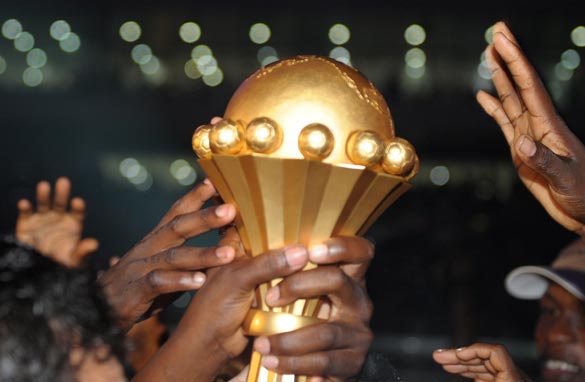
Will Ebola Stop the African Cup of Nations?

Another Ebola Victim? The 2015 African Cup of Nations.
It's only a game, the refrain goes when people take football too seriously. In Africa, though, it may be a game of life and death. Recently, a player died from being hit by a rock thrown at the end of a match. Now, the outbreak of the deadly Ebola virus for which there is no cure is threatening to stop the continent's most prestigious international tournament, the African Cup of Nations. There always seems to be interesting IPE-ish stuff going on with this tournament. Four years ago, I discussed how China was using "football diplomacy" by building stadiums for Angola to host the 2010 tournament.

For the 2015 tournament in Morocco, things are in disarray, to put it mildly. The proximate cause is safety fears amidst Ebola outbreaks in a number of participating nations. We are currently in the qualifying stages for the tournament. Some nations refuse to play other teams coming from Ebola-hit nations. Conversely, Ebola-hit nations' teams are being turned down when asking for permission to play their qualifying matches elsewhere:
Africa’s football authorities are wrestling with difficult decisions as they try to prevent their sport becoming a vector for spreading the Ebola virus. With the next round of qualifiers for the Africa Cup of Nations fast approaching, some matches have already been moved and others are in limbo while some teams have been punished for refusing to play in locations the African Football Confederation (CAF) deems safe or against teams from Ebola-hit nations.

The problems started for CAF at the end of July when the Ministry of Health in the Seychelles refused to allow the team into the country from Sierra Leone, where the virus has killed at least 374 people, for an Africa Cup of Nations qualifying match. Seychelles forfeited the game and Sierra Leone advanced to the next round. With six rounds of Africa Nations qualifying scheduled between September 5 and November 19, CAF took the initiative. In mid-August it decided to forbid matches in Guinea and Liberia as well as Sierra Leone, where the government had already banned football games.

CAF wrote to its 54 members that despite Ebola it planned to “maintain its calendar of matches across the African continent with the exception of three countries, Guinea, Liberia and Sierra Leone, where there have been a significant number of cases.” The Confederation said it had taken the decision after consultations with the World Health Organisation. CAF asked "the three nations to move their matches to neutral countries."
I've heard of "stateless people"; with Ebola, we have "stateless football teams":
For Liberia the impact of this decision is limited as it has already been eliminated. Guinea and Sierra Leone, on the other hand, face serious problems finding countries prepared to offer their teams a temporary home. Guinea asked Senegal if it could play in Dakar. The Senegalese said no. Last week, after several days of negotiations, Moroccan authorities agreed to let Guinea play their home game against Togo in the Mohammed V stadium in Casablanca on September 5.

For Sierra Leone the situation is more complicated. They are scheduled to travel to Ivory Coast, a country which is not on CAF’s banned list, on 6 September. But last week the Ivorian Sports Ministry announced that it had forbidden all sports competitions in the country. The Ivorian football authorities have not yet said whether they will relocate the match or postpone it.

Sierra Leone, meanwhile, have held talks with Ghana about moving their home matches to Accra. The response has not been encouraging. The Ghana Football Association released a statement saying: "Though keen on offering its support, the GFA are uncertain about the health implications for the country."
Make no mistale: Ebola's outbreak is affecting all sorts of other social phenomena, too.

News from Amazon

In the Business & Money category:

 
And in all books:


To users of my favorite textbooks: Thank you!  Have a great semester.

25 Ağustos 2014 Pazartesi

World's Governments vs Uber: In South Korea, India

To Gangnam, man, on the double! (wherever that is.)
Libertarians for the most part tout the ride-sharing service Uber as a way to avoid taxis whose need to be government-regulated allows them to charge exorbitant fares. With Uber, anyone who can afford a smartphone and a data plan can use his or her vehicle as a privateer taxicab. Break the monopoly! Or that's how Uber works in theory. In practice, local governments the world over have taken legal action against the app's developers for skirting regulations on who can offer tax services in their jurisdictions. I do not exaggerate when I say it's Uber against the world's officialdom.

Having come to Asia, Uber is under assault after complaints from taxicab services wary of being marginalized by the app. While Uber has not yet established as large a presence as it has in some Western nations, it's best to beat it up before it establishes a foothold. In tech-savvy Seoul--supposedly the most wired city in the world--the local government seeks a ban on Uber. It also plans to develop an official taxi app to counter it by the end of the year:
The Seoul city government said Monday it would seek a ban on a car-hailing smartphone app from Uber Technologies Inc., joining a global battle by municipalities and traditional taxi services against the service.

The local authority said in a statement that Uber is illegal under South Korean law, which forbids fee-paying transport services using private or rented motor vehicles unregistered with the authorities. The city added that it will launch in December an app that will provide similar features to Uber for official taxis, such as geo-location data on cabs nearby, information about them and their drivers, as well as ratings.
In India, Uber has come up against an even more formidable foe: the central bank. Because Uber's payments are handled by an offshore entity, the Reserve Bank of India is using a stipulation that payments-handling mechanisms must be locally based to effectively render Uber illegal:
Credit card rules, another road block for [Uber] which has been described as illegal by city authorities. And what's India done to put the brakes on? Well, the one stepping on the brakes is the RBI [Reserve Bank of India], the central bank.

It's closed a loophole. All actions made on India-issued credit cards have to go through a two-step procedure. For Uber users that means one additional step to the payment system and if they want to comply with the new rules, it would have to change its app or adopt a different model totally.

The actions are free [of obtaining a taxi license] with pretty much with Indian rivals have to do. This is what local taxi companies have been complaining about. [All Uber] payments are collected and transferred to a Dutch bank and the procedure goes against India's [foreign exchange control] regulations and in a way, this is what the RBI is trying to address. 
To be more specific, the RBI regulations in question concern limiting capital flight emanating from foreign exchange transactions:
 "It has come to our notice that there are instances of card not present transactions being effected without the mandated additional authentication validation even where the under lying transactions are essentially taking place between two residents in India," RBI said in its circular issued on Friday. A transaction is considered local where both the purchaser and service provider are in India.

"It is also observed that these entities are evading the mandate of additional authentication by following business models which are resulting in foreign exchange outflow. Such camouflaging and flouting of extant instructions on card security, which has been made possible by merchant transactions being acquired by banks located overseas resulting in an outflow of foreign exchange in the settlement of these transactions, is not acceptable as this is in violation of the directives issued under the Payment and Settlement Systems Act 2007 besides the requirements under the Foreign Exchange Management Act, 1999," the RBI said. 
Also see Quartz discussing the politics behind this move. Talk about having enemies in high places. Unlike Uber and its fans, I am hardly convinced that they are on the right side of technological history. Are taxis the buggy whips of the early 21st century