29 Eylül 2014 Pazartesi

So, When Does Russia Exhaust Its Forex Reserves?

Sergey Lavrov, bang your shoe on the lectern for emphasis.
Poor, poor Russian Foreign Minister Sergey Lavrov. He spent most of his time lamenting the unfairness of this world during his visit to the UN over the weekend. Regardless of what you think about Russia's actions with regard to Ukraine--I think it's a money drain the Westerners should've been left to sort out if Russia had any sense--there's no doubting that its economy is in bad shape. It was already in recession a few months ago, and the additional sanctions from its largest trading partner, the European Union, will certainly not help.

As much as Russia benefits from the ancien regime of the UN--the Security Council remains composed of the victors of WWII like itself, Russia has yet to break into that even more exclusive club of Western powers. Sure, it used to be part of the security-oriented G-8--the economics-oriented G-7 plus Russia--but those days are gone. Whether rightly or wrongly, Russia has been put in the West's doghouse at an inopportune moment: (1) It was already in recession pre-EU sanctions; (2) the EU-sanctions have estranged it from its main export market for energy; (3) the price of energy is dropping besides; (4) Russia and its firms now have trouble raising money abroad; and (5) Russian banks have substantial foreign borrowings that are coming due over the next few months.

Add up (1)-(4) and it looks pretty bad for Russia all around--especially its international finances with little foreign exchange coming in and much of it going out. Yes, Russia did save up some when energy prices were high over the past few years, but those may not be enough. The Financial Times offers this assessment of how long it will take to deplete Russian reserves:
In an assessment paper on the Russian economy, EU economic officials in Moscow warn that the three big banks alone will need $75bn from the central bank over the next 18 months, draining its reserves.
Combined with the requirement to keep at least $180bn of foreign exchange reserves to cover six months of imports, that would leave the central bank with just $115bn to defend the currency in case of speculative attacks or sudden capital flight. In early March, the bank converted $11.3bn into roubles in a single day. “It therefore cannot be excluded that Russia’s macro-financial situation over time could become one of financial distress,” the paper concludes.
To be honest, I am not sure how the FT came to this assessment. As of July, Russia had $407.8B in currency reserves; $468.7 billion if you include its precious metal holdings. So it's more like $407.8B-($75B+$1805B) = $152.8B that it will have left to defend the ruble against possible currency speculation after setting aside bank financing and enough money to buy exports for six months as per the convention of reserve adequacy. It again sounds pretty substantial, but in this day and age, you have to wonder.

Then again, 18 months' time may even be generous. Reuters reports that a year may be all that's left in the tank:
Russia has considerable reserves to draw on - currently around $469 billion in gold and foreign exchange - and no immediate need to tap the markets for new capital. Many argue the measure would be more symbolic than punitive.
However, the country's dependence on increasingly unstable oil and gas revenue and commitments by Moscow to provide financeto sanctioned companies prevented from raising money abroad could see it backed into a corner. "It's quite difficult to tell how long they have, I'd put it at more than one year. But it's not static," said Viktor Szabo, a portfolio manager at Aberdeen Asset Management. The strain on those reserves is growing, Szabo said. Economic growth is ebbing fast, with gross domestic product expected to grow by 0.3 percent at most this year and energy export revenues are falling. A run on the currency would also shorten the time Russia can continue in isolation, Szabo said.
And here's another take after considering falling energy export revenues' effects on state finances:
A particular headache is the falling price of oil. Oil and gas account for around two-thirds of Russia's exports and close to half its federal budget revenues. Over the course of a year, each $1 fall in the oil price wipes around $1.4 billion off federal tax revenue. The state budget is based on an oil price of $104 for 2015, and Deputy Finance Minister Alexei Moiseev has warned recently those projections may be optimistic, with prices below $100 now a possibility.

Craig Botham, an economist at UK fund manager Schroders, also calculates Russia's foreign exchange reserves would take little more than one year to be depleted. "If we assume the full $80 billion of external debt maturing this year is financed by the central bank ... and the same amount of financing is needed each year, the average monthly rate of decline in the reserves so far this year - $6.7 billion - continues indefinitely as the central bank continues to defend the currency, then FX reserves are exhausted some time in 2016," he said.
For all its posturing, I honestly believe Russia has bitten off more than it can chew and overplayed its hand. But hey, whoever said it's a fair world? Go ask Sergey Lavrov. 

US Bombed Wrong Refineries in Syria; Iran Seeks to Stop Oil Price Slide; Sanctions Won't Impede Arctic Drilling

US Bombed Wrong Refineries in Syria

Oil is in the news in many countries in many ways. Let's take a look starting with a couple of paragraphs buried in the Financial Times report Barack Obama Admits US Underestimated Isis.
Allied aircraft on Sunday struck three makeshift oil refineries in an area controlled by Isis in an expansion of attacks intended to damage the militant Islamist group’s financial infrastructure.

Oil has proved crucial to financing Isis’s operations, netting several million dollars a day. But the observatory said the refineries struck early on Sunday, in and around Raqqa, were owned by civilians and not Isis. A separate air strike on a plastics factory on the outskirts of Raqqa resulted in the death of a civilian, the group said.
So, we blow up refineries owned and operated by civilians and it is buried in the news, with no hint of an apology or restitution offered to the refinery owners or to Syria.

Russia Discovers Vast Pool of Oil 

Two days ago, Russia announced Arctic Well Drilled With Exxon Strikes Oil.
Russia’s state-run OAO Rosneft said a well drilled in the Kara Sea region of the Arctic Ocean with Exxon Mobil Corp. struck oil, showing the region has the potential to become one of the world’s most important crude-producing areas.

The announcement was made by Igor Sechin, Rosneft’s chief executive officer, who spent two days sailing on a Russian research ship to the drilling rig where the find was unveiled today. The well found about 1 billion barrels of oil and similar geology nearby means the surrounding area may hold more than the U.S. part of the Gulf or Mexico, he said. 

The discovery sharpens the dispute between Russia and the U.S. over President Vladimir Putin’s actions in Ukraine. The well was drilled before the Oct. 10 deadline Exxon was granted by the U.S. government under sanctions barring American companies from working in Russia’s Arctic offshore. Rosneft and Exxon won’t be able to do more drilling, putting the exploration and development of the area on hold despite the find announced today.

Output from the Kara Sea field could begin within five to seven years, Sechin said, adding the field discovered today would be named “Victory.”
Exxon was given until October 10 when other companies had to comply with sanctions immediately. Regardless of why that happened, sanctions are ridiculous.

Instead of complaining that Exxon got favoritism, we should simply kill all the sanctions.

Sanctions Won't Impede Arctic Drilling

Bloomberg reports Russia Oil Chief Says Sanctions No Bar to Arctic Drilling.
The most powerful man in Russia’s oil industry says U.S. sanctions won’t prevent the development of discoveries in the Arctic Ocean.

Igor Sechin, chief executive officer of state oil producer OAO Rosneft (ROSN) and a long-time ally of President Vladimir Putin, spent two days traveling by plane, ship and helicopter last week to announce a billion-barrel crude strike in the iceberg-prone Kara Sea region of Russia’s Arctic Ocean.

“We will continue working no matter what,” Sechin said in an interview on board a polar research vessel as he prepared to unveil the find he named Victory. “We will plan the work for next season. As I said, now we’ve drilled only the first structure -- at Universitetskaya. There are more than 30.”

The development of Arctic oil reserves is one of President Putin’s grandest ambitions. As Russia’s existing fields in Siberia run dry, the country needs to find new reserves as it vies with the U.S. to be the world’s largest oil and gas producer.

Sechin said the opportunity offered by today’s oil discovery meant Rosneft would have no problem attracting investors and technology providers. Something he said was possible while respecting the company’s existing agreement with Irving, Texas-based Exxon.

If Exxon is forced to leave the project, “of course we’ll do it on our own and attract the necessary technologies and different partners who don’t have limitations on cooperation,” said Sechin, who featured in Bloomberg Markets 50 Most Influential list this year.

The well drilled in the Kara Sea found about 1 billion barrels of oil, Rosneft said. The crude is “super-light,” the company said, meaning when it’s refined it will produce a high proportion of gasoline and diesel. That’s likely to make it more valuable than Russia’s existing export grade, Urals.

The well was drilled before the Oct. 10 deadline Exxon was granted by the U.S. government under sanctions barring American companies from working in Russia’s Arctic offshore.
US Poised to Become World’s Leading Liquid Petroleum Producer

Back in the States, the Financial Times reports US Poised to Become World’s Leading Liquid Petroleum Producer.
The US is overtaking Saudi Arabia to become the world’s largest producer of liquid petroleum, in a sign of how its booming oil production has reshaped the energy sector.

US production of oil and related liquids such as ethane and propane was neck-and-neck with Saudi Arabia in June and again in August at about 11.5m barrels a day, according to the International Energy Agency, the watchdog backed by rich countries.

With US production continuing to boom, its output is set to exceed Saudi Arabia’s this month or next for the first time since 1991.

Riyadh has stressed that the rise of the US should not detract from its own critical role in oil markets. It says it has the ability to increase its output by 2.5m b/d if needed to balance supply and demand.

Prince Abdulaziz Bin Salman Bin Abdulaziz, Saudi Arabia’s deputy oil minister, said earlier this month that the kingdom was the “only country with usable spare oil production capacity”.

However, even Saudi officials do not deny that the rise of the US to become the world’s largest petroleum producer – with an even greater lead if its biofuel output of about 1m b/d is included – has played a vital role in stabilising markets.

Brent crude hit its lowest level in more than two years last week at about $95.60 a barrel, down from a peak of over $125 a barrel early in 2012.

Over that period, the growth in US production of more than 3.5m b/d has almost equalled the entire increase in world oil supplies.

The US industry has been transformed by the shale revolution, with advances in the techniques of hydraulic fracturing and horizontal drilling enabling the exploitation of oilfields, particularly in Texas and North Dakota, that were long considered uncommercial.
Iran Urges Opec to Halt Oil Price Slide

In spite of turmoil in the Mideast and sanctions on Russia, oil prices are the lowest in two years. Mideast oil producers are not pleased with that outcome and Iran Urges Opec to Halt Oil Price Slide.
Iran’s oil minister called on Opec nations to work together to prevent a further slide in crude prices, highlighting the split among members of the cartel over how to react to the sharp drop in oil to two-year lows in recent weeks.

“Opec members should make efforts to offset their production to keep the prices from further instability,” said Bijan Namdar Zanganeh on Friday, according to the Iranian oil ministry website, Shana.
   
Oversupply in the North Sea and Atlantic Basin has coincided with greater North American production.

Meanwhile, sustained output from Iraq and rising Libyan production – despite bloodshed in both countries – has weighed on the Brent price as has weaker demand from Europe and China.

This month, both the International Energy Agency – the wealthy nations’ energy watchdog – and Opec lowered projections of crude demand next year.

This has fostered speculation of a cut in the oil cartel’s output targets, in defence of the key $100 a barrel price level.

Estimates of fiscal breakeven oil prices for this year – the price at which the budget is balanced – vary across Gulf nations.

Iran’s stands at about $130 a barrel while Saudi Arabia is at $89 and the UAE at $74, according to data compiled by Citigroup
That oil prices are generally trending lower in spite of global turmoil says more about declining demand especially in China and Europe than it does about any increased production in the US.

Mike "Mish" Shedlock
http://globaleconomicanalysis.blogspot.com

Spain Manufacturers Warn of Another Slowdown; Consumption Recovery Ends, Retail Sales Contract, Price Deflation Sets In

The alleged recovery in Spain is already over. Retail sales are down month-over-month and year-over-year in July. August and September are both projected to be weak.

Vial translation from El Economista, Manufacturers and Retailers Warn of Another Consumption Slowdown.
After a slight recovery in the first months of the year, stagnation set in since June, according to almost all employers and associations of producers and distributors. The retail index INE already pointed to stagnation in June and a drop of 0.5% in July from a year earlier.

Although the decline in July from the previous month is a somewhat lower 0.2%, the situation appears to be worsening. August data will be released this week and forecast for both August and September are not positive.

Aurelio del Pino, president of Aces, the association of supermarket chains such as Carrefour, Eroski, Lidl Supercor or says in this line that "the data already published and forecasts that we confirm our claim that any increase in VAT would been disastrous for consumption."

It's something you notice the trade, but also the major manufacturers. "The recovery we have had in the first few months has been very weak," says Ignacio Larracoetxea president Promarca, an association that encompasses most of the brands leading food, beverage, household and healthcare.

And the sector is not the only well that is alerting the break. Last week, the Bank of Spain and warned that the latest information regarding the third quarter shows a "somewhat less expansive behavior of private demand" and domestic consumption, as recorded in his newsletter this September. In the case of household consumption, says survey indicators of households and retailers were in the average July and August at a lower level than the second quarter.

Reducing prices

To try to curb this stagnant consumption, or falling in recent months, large retail chains have not hesitated to continue lowering prices, even if it had to reduce their margins and also lower their figures fracturing.
Price Deflation Sets In

On September 5, Dow Jones Business News reported Spanish Prices Firmly In Negative Territory, Deflation Beckons.
INE, as the statistics institute is known, said Spain's consumer price index fell by 0.5% on the year in August, the biggest percentage decline since the country experienced a dip in prices in October last year. In July, prices had dropped by 0.3% after a few months of small increases.

Spain's European Union-harmonized consumer-price index, which is a slightly different measure than Spain's own, was also down 0.5%. That compares with a 0.4% decrease in July.

Spain emerged from more than two years of recession last summer, and is currently growing at one of the fastest rates in the eurozone--0.6% between March and June, and 1.2% over a 12-month period.
Expect Slower Growth 

It's safe to say Spain's growth has slowed if retail sales slowed.

A September 25th report shows Illegal Activities Boost Spain's GDP by $11 Bln.
Spain's National Statistics Institute says money generated by drug trafficking, prostitution, smuggling and illegal gambling contributed some 9 billion euros ($11.4 billion) to the national economy last year.

The institute said Thursday that the country's gross domestic product is 26.2 billion euros larger — at 1.05 trillion euros — when estimates for illegal economic activities as well as money spent on investigation and research and military armament are included. Illegal activities represented 0.9 percent of total economic activity.
So Spain GDP is up 1.2% and 0.9% of that growth is due to an accounting change that allows counting drugs, prostitution, and illegal activities as part of GDP.

Debt and Deficits

Back in April, I noted Public Debt Threatens to Exceed 100% of GDP in 2014. And take a peek at headlines for Spain Misses budget Deficit Targets.

Spain Unemployment Rate


Youth Unemployment


On the whole, there has not been much of a recovery, and what recovery there was, now appears to be over.

Mike "Mish" Shedlock
http://globaleconomicanalysis.blogspot.com 

28 Eylül 2014 Pazar

Elephant in the Room Minsky Moment

The "elephant in the room" is debt. Try as they might, central bankers have not been able to spur credit, hiring, or much business expansion because of the elephant. Things are even worse in Europe.

Via email, this is a guest post from Steen Jakobsen, chief economist of Saxo bank.

Debt - The Elephant in the Room
‘Interest on debt grows without rain’ – Yiddish proverb

This proverb explains most of what goes on in policy circles these days. We are now watching Extend-and-Pretend, Episode VI: Promises for improvement amid ever growing debt levels.

Short put, we’re still working with the same dog-eared script we were introduced to all of five years ago, when markets had stabilized in the wake of the financial crisis: maintain sufficiently low interest rates to service the debt burden. Pretend to have credible plan, but never address the structural problem and simply buy more time. But while we were able to get away with this theme for an awfully long time, the dynamic is now changing as the risk of low inflation (and even deflation) is a brick wall for the extend-and-pretend meme. Yes, interest does grow without rain, and the cost of maintaining and servicing debt grows especially fast in a deflationary regime.

Mads Koefoed, Saxo Bank’s macro economist projects US growth at around 2.0% for all of 2014. That will be the sixth year with US growth near 2.0% - so despite lower unemployment, despite a record high S&P500, the economy has a hard time escaping that 2.0% level. Any talk of higher interest rates is hard to take seriously when US growth is going nowhere and world growth is considerable weaker than expected in January or as recently as July, for that matter. It seems everyone has forgotten that even the US is a part of the global economy.

The fourth quarter is always the most politically interesting time of year. Countries need to get their new budgets in order. The EU, IMF and World Bank will need to pretend they agree or accept the weaker data, which has to mean bigger deficits. It’s a tiresome exercise to watch denial-in-action as EU governments and other policymakers try to make something so obviously unpalatable go down easy in their internal reporting. It’s obvious that buying more time (extending) is always the number one priority, followed by projecting (pretending) the forward looking growth will reach an ever higher trajectory in order to make the budget fit within the supposed constraints. Or in France’s case, the recent unilateral abandonment of meeting budget targets for the next two years is already a fait accompli.

Who’s next?

Such behavior would cost you your job in the private sector, but in the economic model of 2014, which reminds us more of Soviet Union than a market based economy, its par for the course. But, many would protest, it would be even worse if we hadn’t done so much to “save the system”, right?

Well maybe, except for the fact that those economies where belief in State Capitalism is strongest:  Russia, China and France, are all at the end of the line. Time has caught up. Negative productivity, capital flight and a system built on protecting the elite is failing. France is now moving from recession to depression. China is moving quickly from denial towards a mandate for change, Russia’s future has not looked this bleak since the late 1990’s.  Meanwhile the US continues on sluggish 2.0% growth. Investors and pundits seem to have forgotten that we were promised 2014 would be the end of the crisis. Instead, we are speeding towards the inflection point at which debt becomes harder to service because pretend-and-extend policy making have created a depression in investment and consumption.

The public debt loads continue to inflate across Europe: Portugal’s public debt has ramped to a staggering 130% of GDP – up from about 70% in 2007. Greece’s public debt load, even after the restructuring of Greek debt a few years ago, has swelled to 175% of GDP. The EU now has far more systemic risk than at the beginning of the crisis. With zero growth or as our economist Mads sees it, 0.6% with the arrow pointing down, debt levels continue to rise relative to GDP. And most importantly, the current flirt with deflation will make servicing the growing debt even more expensive. The nightmare for ECB and world is deflation as it’s a tax on debtors and a boon to net savers. The new reality is that we currently stand face-to-face with the very deflation risk that just about everyone denied could ever happen when Q1 outlooks were written.

Two other global threats, or time bombs, if you will, outside of the EU are risks from the growing costs of servicing debt in China and the USA. In China, the governments national and local have piled up considerable debt, but it is the overall debt service costs in all of China that are the real concern, which have only grown so large with the dangerous assumption by  Chinese banks, companies and citizens that they can count on a public bailout. According to a Societe Generale analyst, total debt service costs (including maturing debt and roll overs) in China area at nearly 39% of GDP.  Compare that with the closer to 25% of GDP for the USA in 2007.

In the US, interest on US government debt cost over 6% of budget outlays in 2013. This is relatively down from its worst levels when interest rates were much higher, but only because FOMC has so drastically lowered the costs for the US government to issue debt with a zero interest rate policy. And now the debt load is vastly larger than it was before the financial crisis – at 80% of GDP (net debt according to IMF) versus 45% of GDP a mere 10 years ago. So are we actually to believe that the Fed can lift the entire front-end of the curve from 0-1% (current rates out to three years) to 2-4% over the next two years without massive further stress on the deficit and only adding to the debt? Servicing 2% interest when growth is 2% means you are doing worse than standing in place if you also have a budget deficit.

Whatever the timing, the USA, China and Europe are all headed for another Minsky moment: the point in debt inflation where the cash generated by assets is insufficient to service the debt taken on to acquire the asset. The US productivity growth last year was +0.36%. The real growth per capita was about 1.5%. Anything which is not productivity is consumption of capital. So, the only way to grow an economy without productivity growth is temporarily with the use of debt – about 75% debt and 25% productivity growth in this case.

Since the 1970s, US productivity growth rates have fallen 81% - the move onto the internet has ironically made us bigger consumers and less productive. Had we remained at pre-1970s productivity, the US GDP would have been 55% higher and the outstanding debt to GDP would be easily fundable.

I just returned from Singapore on business – Singapore, to me, used to be the most rational business model around. Its founder Lee Kuan Yew was one of the greatest statesmen in history. Now, productivity is collapsing in Singapore. They are, like us, becoming the Monaco of the world, an economy based on consumption and not on productivity and growth. The developed economies are growing old in demographic terms, but we’re still not wise enough to realize that our current model is a Ponzi scheme rushing toward its inevitable Minsky moment. No serious policymaker or central banker is talking about the truth told by simple maths and hoping that things turn out well. Hope is not good policy and it belongs in church, not in the real economy.

Steen
Mike "Mish" Shedlock
http://globaleconomicanalysis.blogspot.com

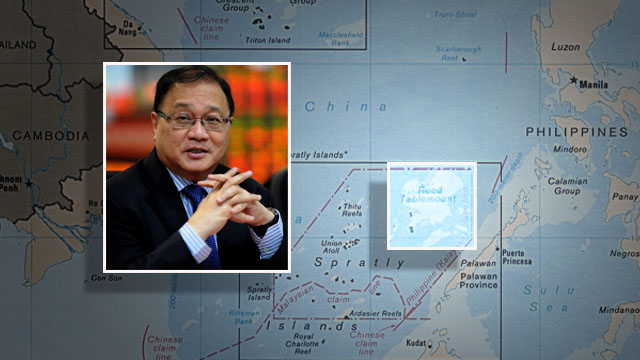
Drill Baby Drill! In the Philippines' Disputed Waters

For a profit, would you dare to fight the Chinese?
The mother of all "political risk"-laden investments is probably this one: Say a country embroiled in territorial disputes over potentially oil- and gas-rich waters auctions blocks for exploration. If you were an energy firm, would you dare bid and, more bravely, invest in disputed waters? Let's also add this complication: exploring these areas may anger the region's strongest power with its largest military. It's just asking for trouble, right? Better safe than sorry, eh?

This situation is exactly what faces the Filipino-British concern Forum Energy PLC, whose chairman is one of the Philippines' savviest businesspersons, Manuel Pangilinan. After putting in a winning bid during auctions that most international energy majors stayed away from for reasons given above--offending China may not be a path to success in the 21st century world economy--Philex is being pressured by the Philippine government to commence with drilling. Earlier on, Pangilinan made a "conciliatory" gesture by offering joint exploration to China's CNOOC. Commercial prospects aside, the latter state-owned firm did not realistically consider this offer for the obvious reason that it would have lent legitimacy to the Philippines' ownership of these disputed areas in auctioning exploration rights:
The 11-point proposal includes a Framework Agreement between Philex and CNOOC “relating to an area of mutual interest which will be defined as the area covered by SC 72.”

“Other disputed areas (such as the Spratlys) could be included by agreement,” wrote Pangilinan. SC 72 refers to Service Contract 72, signed in 2010, in which the Philippine government awarded Forum Energy Plc. (FEP) exploration rights to a basin within Reed Bank. Philex owns 64.45 percent of FEP, a London-based listed oil and gas exploration firm focused on the Philippines. FEP in turn owns 70 percent of SC 72.

SC 72 is a seven-year exploration contract that can be extended y three years. Its 25-year production period can be extended by another 15 years.
The Chinese have not played along with this PR stunt, obviously:
Manuel Pangilinan said that Filipino-British company Forum Energy PLC communicated the offer to China National Offshore Oil Corp. to explore Reed Bank, northwest of the Philippine island of Palawan. Philippine and Chinese vessels had a confrontation there three years ago. Pangilinan said the Chinese company, also known as CNOOC, has not responded but Forum is continuing its attempts to engage with the Chinese company. He said the project has not attracted other investors because it is in an area of conflicting territorial claims and other investors did not want to offend China.
It seems Pangilinan's group has been getting cold feet since it's been four years and they haven't really done anything. Do they lack the capabilities, do they fear China...or both? Being ever so gung-ho, it appears  the Philippine government is pressuring him to commence with the drilling:
Pangilinan said Forum still intends to drill two wells in first half of 2016."We will do it on our own if we have to ... as long as we are not disturbed," he said. The Department of Energy has extended Forum's delayed drilling program by a year, giving it up to Aug. 15, 2016 to fulfil its contractual obligations. Pangilinan said weather would permit drilling only from March to May.
Exploration rights have been extended, but you have to begin to wonder if Pangilinan and company are really willing to tempt fate by commencing on drilling anytime soon. Comically, the Philippine "military" (it is lame-to-non-existent especially in terms of naval capabilities) has even guaranteed the safe operations of Forum Energy:
I really hoped the reporter had misquoted [Philippine President] Aquino or merely hyped his statements. But I checked the speech posted on the government’s website and there it was (translated from Pilipino): “We have a clear message to the world: The Philippines is for Filipinos, and we have the capability to resist bullies entering our backyard,” he said.

Either we have a president who is a liar or one who deludes himself into believing he heads a country with enormous naval power. Didn’t he even ask his Defense Secretary what exactly is the Navy’s “capability” to fight bullies in the disputed seas? He would have been told, it consisted essentially two frigates—the World War II vintage BRP Rajah Humabon and the 48-year old US Coast Guard hand-me-down BRP Gregorio del Pilar.
It's like a nightclub owner making the imp Justin Beiber his bouncer, but therein lies the rub.

Reflections on Catalonia, Crimea, Iraq, California, Nation Building

Catalonia Independence Vote to Proceed on Schedule 

Arthur Mas, president of Catalonia declared today that the vote for independence of that region will go as scheduled on November 9. Spain contends the vote is illegal and vows to stop it.

El Economista reports Arthur Mas Calls for Vote on Independence of Catalonia.
President of Catalonia, Artur Mas nationalist, officially called for a vote on the independence of this rich region of Spain for the November 9, challenging the Spanish government began the process to prevent it.

In a ceremony at the gallery Gothic Palace of the Generalitat, the seat of regional government in Barcelona, ​​Artur Mas, supported by his executive and representatives of other nationalist parties, signed the decree of convocation of this non-binding referendum.

"This is the way democracies are expressed and political projects are born. Voting it is the responsibility of the Democrats do not circumvent it," then said in a brief speech.

"Catalonia wants to talk, want to be heard, want to vote," he said Mas, who continues to ask Madrid to allow the query as London did in Scotland, where the "no" won Sept. 18 in a referendum with broad participation.
The proposal flew like a lead balloon in Madrid. Prime Minister, Mariano Rajoy Initiated a Process to Suspend the Referendum.

Reflections on Catalonia, Crimea, California

There is a lot of puffery in Spain given the resolution is nonbinding, unlike the vote for Scottish independence.

In the US, if California wanted to cede from the union and form its own country, look on the bright side: California independence would be a huge upside for the rest of us.

Such a referendum, if allowed to stand, would take a lot of socialist votes out of the US House of Representatives. That would be a good thing. Unfortunately, there will never be support in California to cede from the union.

Crimea Votes Overwhelming to Join Russia

In Crimea, citizens voted 96.77% for integration of the region into the Russian Federation. Some claim the vote was rigged. Perhaps so, but by how much?

A Gallup Poll in Crimea following the referendum shows overwhelming support.

  • More than eight in 10 (82.8%) say the referendum reflects most Crimeans’ views.
  • About three-fourths of Crimeans (73.9%) say Crimea’s becoming part of Russia will make life better for themselves and their families, just 5.5% disagree.
  • Crimeans are overwhelmingly likely to view Russia’s role in the crisis as positive (71.3%) rather than negative (8.8%).
  • Outside of Crimea, responses are practically reversed (66.4% see Russia’s role as negative, 15.6% positive).
  • Though Ukrainians outside of Crimea are somewhat ambivalent about the United States’ role in the crisis (39.0% say it has been positive, 27.7% negative, and 21.6% neutral), Crimeans are far more unified in their view that the U.S. has played a negative (76.2%) rather than a positive (2.8%) role.

Justice was served in Crimea. The people clearly got what they wanted, and they did so in a peaceful, democratic process, undoing a haphazardly pieced together nation that simply did not belong together as configured.

Who am I (or anyone in Kiev) to question what an overwhelming percentage of the Crimeans want?

Nonetheless, arrogant outsiders with zero legitimate interest insist "the vote must not stand" and Russia must return Crimea to the Ukraine.

Instead, I propose, the US ought to consider outcomes like the Crimea vote and the Ukrainian civil war before it goes poking sticks at bears and stirring up geopolitical trouble.

Reflections on Nation Building

Nation building by outsiders does not work, ever. Results are especially bad when outside forces  haphazardly piece together nations to suit political whims.

Iraq and Ukraine are proof enough.

In Iraq, the Kurds want their own nation. The US is against the idea.

But why shouldn't the Kurds have the right of self-determination?

I seem to recall at least one great nation got its start that way. Anyone else remember? And isn't the voting booth preferable to war?

Mike "Mish" Shedlock
http://globaleconomicanalysis.blogspot.com

27 Eylül 2014 Cumartesi

Sick Man of Europe is Europe; Blame the Socialists, Progressives, Greens, and the Euro Itself

Joel Kotkin writing for New Geography hits the nail smack on the head with his assessment Sick Man of Europe is Europe.
Throughout the continent, public support for a united Europe fell sharply last year. Opposition to greater integration has emerged, with anti-EU parties gaining support in countries as diverse as the United Kingdom, Greece, Germany and France.

The new reality is epitomized by France’s ascendant far-right political figure, Marine Le Pen, who is now leading in many polls to win the next presidential election.

These attitudes suggest that the EU could be devolving from a nascent super-state to something that increasingly resembles the Holy Roman Empire, a fragmented landscape of small, unimportant states wrapped in a unitary, but ephemeral crepe. This challenges the view of some Americans, particularly but not only on the left, who see Europe as a role model for the U.S. 

Some pundits, such as Paul Krugman, routinely describe Europe’s approach to economic, environment and social policy as more enlightened than America’s. Wherever possible, progressives push for European-style action in areas such as curbing carbon emissions and rapidly converting to “green” energy.

Several years ago Germany and the Netherlands were exemplars as opposed to the much-disdained PIGS (Portugal, Italy, Greece and Spain). But German growth rates have plummeted, going negative in the last quarter, along with France and Italy. More stagnation is likely as energy costs surge and key export markets, notably in Russia and China, begin to contract. Today, the “sick man” of Europe is not any one country, or collection of countries; the “sick man of Europe” is Europe.

Europe’s poor economy stems in large part from policy. The strong welfare state so admired by progressives here has also made Europe a very expensive place to do business. High taxes and welfare costs, long tolerable in an efficient economy like Germany, have a way of catching up with companies and countries. This has been particularly notable after the financial crisis; since 2008 the unemployment rate has shot up 5 percentage points while dropping steadily in the Untied States.

All this suggests that Americans would do better than look to Europe for future solutions to our own problems. However attractive the European model may seem to our pundit class, the reality on the ground shows something more to be avoided than embraced.
Blame the Socialists, Progressives, Greens, and the Euro

The socialists ruined France and Italy. And the Euro which was supposed to be a uniter has been anything but.

There is more bickering than ever before on what constitutes sound fiscal policy. Germany wants one thing,  France and Italy another. Some countries want something in between and others waver back and forth.

More importantly, what the people want, is not what the politicians want. The result has been the rise of Marine Le Pen in France, Beppe Grillo in Italy, and Golden Dawn in Greece. Unstable governments and alliances exist in several countries.

Energy costs have soared in Germany thanks to Green policies. German businesses pay twice as much for energy as US counterparts.

For example, a typical medium-sized German industrial company pays 9.14 euro cents per kilowatt hour compared with 4.82 cents/kWh in Texas, according to research carried out by Ecofys, a consultancy, and the Fraunhofer Institute for Systems and Innovation Research.

The founders of the Euro project thought fiscal matters would unify over time. Instead, politics and policies diverged.

The fact remains: No currency union in history that did not also have a fiscal union has ever survived.

With horrendous demographics in most of Europe, impossible to untangle socialist promises in the "Club-Med" countries and France, and no hope for a sensible fiscal union, the situation is bleak.

My take: A Disruptive Eurozone Breakup Awaits.

Mike "Mish" Shedlock
http://globaleconomicanalysis.blogspot.com